It goes against the direction of the Lee Jae-myung government which is centered on renewable energy.
A nuclear power plant is similar to an apartment without a toilet. Massive production of nuclear waste follows the generation of electricity. Nuclear power plants are nuisance that leave radioactive waste, which remains dangerous almost permanently as a burden for future generations. Therefore, Germany decided to abandon nuclear power on ethical grounds. It was a resolution characteristic of Germany, where civic consciousness has long matured. Countries such as Denmark, Austria, Italy, and Switzerland, whose civil societies are as mature as Germany’s, have also declared phase-out of nuclear power.
Nevertheless, many countries are still operating nuclear power plants. If we observe their situation, there is a common feature: nuclear fuel rods are supplied exclusively by a few companies. These companies have different names, but they all have international financial capital as there major shareholders. For about 100 years, international financial capital has monopolized uranium mines. And now, by controlling companies that supply nuclear fuel rods, it provides fuel rods to hundreds of nuclear power plants around the world. The prices are not transparent. Under the pretext of trade secrets, enormous amounts of money are changing hands.
The situation is widespread around the world: nuclear fuel suppliers take the profits, while the countries using the fuel are left to deal with the nuclear waste. The Korean nuclear power mafia is also under that shadow. Not only our backward media but also bureaucrats in the Ministry of Industry’s energy sector are subjects of suspicion. While Korea is advancing toward global leadership in many other fields, it is hard not to hold these bureaucrats responsible for the country lagging behind only in energy transition.
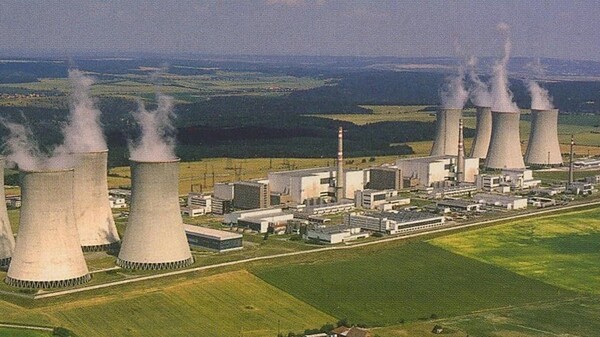
In this situation, on the 29th of June, the government nominated Kim Jeong-gwan, president of Doosan Enerbility, as the new candidate for Minister of Trade, Industry and Energy. The nominee is suspected of being the person who engineered the Czech nuclear power plant contract.
The export of nuclear power plant is not something to be taken lightly. Four years ago, when there was an accident at Taishan nuclear power plant near Hong Kong, France-the country that exported this type of nuclear reactor-was thrown into sudden anxiety. This issue of responsibility has arisen. The export was carried out by a private company. When the company goes bankrupt, however, the accompanying responsibilities ultimately fall to the state.
The same goes for the Czech nuclear power plant contract. In the long run, there is a high risk of losses. The risk is borne by public enterprise and citizens, while the profit is taken by private company-making it an irresponsible business structure. They are suspected of having carried out the following irregularities during bidding process of nuclear contract. First, a risky fixed-price contract where they incur losses if the construction period or budget is exceeded, so-called, “on time within budget.” Secondly, the condition that at least 60% of the components and manpower must be supplied locally in Czech Republic. The third condition is the requirement to propose a low bid price that leaves almost no profit, resulting in a low profit margin. The praise for concluding a contract is a manifestation of the vice of ‘taking credit for oneself while deferring responsibility for a later time’. It is a custom unique to the nuclear power industry. The nominee cannot be free from this responsibility.
It reminds me of something that happened 10 years ago. At that time, vice-minister Cho Seok of the Ministry of Knowledge & Economy manipulated the situation surrounding the extension of Wolsong Nuclear Power Plant unit 1’s operational life. “Don’t you remember the way our nuclear industry operates? Don’t we take approval as a foregone conclusion and start putting in money first? If they don’t give us approval, we will lose 700 billion won-that’s what we should shout.” Faced with difficulties in extending the lifespan of aging nuclear power plant, they resorted to expedient, disregarding international standards. This is a case where so-called bureaucratic mafia, in collusion with the nuclear power industry, openly committed a crime.
Such a fait accompli strategy was carried out swiftly during the chaotic period around the presidential election. After the contract proceeded rapidly under the direction of unaccountable bureaucrats, at the first Cabinet meeting, the new President found themselves in a protected position without knowing the details of the Czech nuclear power plant contract. As a matter of practice, reporting to the President is tantamount to implicit approval. Therefore, it is customary that there should be sufficient prior review before making a report. Without such a process, it can only be seen as a shockingly abrupt report action, meticulously designed to utilize media coverage.
There are also past allegations concerning Kim Jung-kwan, a candidate who is a former official of the Ministry of Economy and Fiance. There are also allegations that, as the head of marketing, he played a decisive role in the unprecedented advance payment to Doosan, which was awarded half of the 6 trillion won advance payment for New Hanul Units 3 and 4 nuclear power plants two years ago. In the recent Czech nuclear contract, Doosan is benefiting as a major supplier of key equipments. If he becomes a minister, he can serve as a public shield, defending against criticism of subsequent contracts, policy support, and structural arrangements with Doosan, thereby concealing the provision of typical collusive policy favors to a private company.
A minister is essentially a position to which the people delegate authority. It is unimaginable for such a person to be appointed to an important position like this. If something goes wrong with the Czech nuclear contract, KHNP(Korea Hydro & Nuclear Power) which is a state-owned company will take responsibility. The company makes money, but the responsibility should fall on the government. The new President is now right at the center of the nuclear power mafia’s playbook.
The Ministry of Industry is the central government agency responsible for the balanced development of industries as a whole, energy and resource strategies, industrial technology innovation policies, and industrial and trade affairs. It is he department responsible for driving the engine of national economic growth. It is extremely strange to nominate someone from the nuclear power sector for such a position. The global economy will operate under RE100 system in the future. It is a department whose work is directly linked to national survival through energy transition.
I have only one possibility in mind. President Lee Jae-myung is instructing nominee Kim Jeong-gwan to take responsibility for and conclude the Czech nuclear contract before Ministry of Industry’s energy division is eventually integrated and transitioned into Climate and Energy Ministry. It reflects concerns that Kim Jeong-gwan should take responsible action to ensure there are no national problems under any circumstances, including the possibility of even considering giving up the nuclear power plant contract. If not, appointing Kim Jeong-gwan as a nominee is an unthinkable option.
Translated by Lee Sang-hoon
Original text; Mindlenews 2025-07-17 (Korean)
https://www.mindlenews.com/news/articleView.html?idxno=14577
Categories: Uncategorized
 New Silk Road for Life and No-Nukes
Leave a comment