Establish a system for cross-monitoring nuclear power plants
Humanity is walking on a precarious cliff edge.
Highly unstable. While the cause of the recent aviation accident has not yet been identified, President Yoon Suk Yeol’s deliberate action of inviting foreign aggression is shocking. Striking North Korean target at its origin is an intentional act of provoking war. Seeing this, the author immediately thought of nuclear mine field. In the Ukraine war, there were four drone attacks on Zaporizhzhia Nuclear Power Plant in 2024. I am hearing news about drone attacks even in New Year while writing this article. Any of our 25 nuclear power plants could turn into a scene of chaos with just a drone-level bombing attack during wartime. Even a single explosion could sever our territory and threaten our survival as a country. We are now standing on a precarious cliff.
A more fundamental threat is nuclear waste. Even after 70 years, no country has found a solution. There is not even a theory on how to solve nuclear waste problem. In most cases, the only option is to temporarily store it within the premises of nuclear power plants. Without proper safety facilities, it is akin to offering oneself to nuclear disaster. Moreover, while storing nuclear fuel in the storage tank the collant must dissipate the residual heat. If not cooled, it will overheat and explode.
Not only the coolant of the reactor in operation but also the cooling water of the storage pool can lead to significant tritium release issues on case of leakage. Isn’t the Japanese government, which is discharging nuclear wastewater, justifying itself by claiming that a certain level of radioactive leakage occurs in any nuclear power operation during operation? Of course, the Fukushima nuclear wastewater dumping by Japan is fundamentally different. The Rokasho reprocessing plant is being positioned to serve as a preemptive justification of processes essential to entering into a nuclear base state. Facilities for reprocessing spent nuclear fuel for nuclear weapon production, such as Hanford (USA), Sellafield (UK), and La Hague (France), are notorious as major sources of deadly radioactive emissions. Russia and China, which have been producing nuclear bombs in large quantities, are also suffering from severe radioactive contamination within their deep inland regions. Nuclear energy is something that harms not only the environment but also causes severe damage to those who handle it.

The forces that have led nuclear bomb production are the international financial capitalists who have long monopolized uranium mines. The international financial capital group, which once encouraged the development of atomic bombs dropped on Hiroshima and Nagasaki through the Manhattan Project, now monopolizes the fuel for nuclear power plants. The nuclear fuel rod business, quite literally, a gold mine. Only a few companies have been exclusively supplying nuclear fuel rods to around 400 nuclear power plants worldwide. Despite knowing that nuclear power plants can serve as a base for nuclear weapons production, international financial capital group is strongly suspected of actively promoting this. Neither the United States nor Russia is an exception. In a way, it seems that nations are acting as their pawns, and the entire global community appears to be held hostage for profit. Humanity is deceiving itself in silence while passing down a legacy that will cause devastating harm to future generations.
Nuclear power plant is subject to the principle of sovereignty residing with the people.
Moreover, there are now too many risk factors caused by natural disasters. It is not just the three major nuclear power plant accidents. The risk factors caused by the climate crisis have also increased. Nuclear power plants along European rivers frequently shut down due to rising water temperature used for cooling, and increasingly frequent wildfires also pose a threat. Three years ago, a wildfire near Uljin nuclear power plant in South Korea almost burned down transmission lines. If the electricity needed to operate a nuclear power plant is cut off, the reactor becomes exposed to the risk of explosion. In addition to frequent earthquakes, there is also a risk of explosion if power is cut off due to flooding caused by a tsunami. With the added burden of such climate crises, our reality is akin to living with a nuclear time bomb over our heads.
Energy transition to address the climate crisis is something that must be undertaken as soon as possible, especially considering thermal pollution caused by nuclear power plants and the reduction in carbon storage capacity. However, this is also an issue closely tied to time. However, there is a critical task we must undertake, regardless of time. It is safety assurance until the nuclear power plants cease operation and even after they have been shut down.
How is France, a nuclear power giant, ensuring thorough measures for such a critical matter? Although the La Hague region faces critical radioactive contamination issues, France’s separate sovereign organizations, the executive branch and the parliament, are independently monitoring to prevent risks. The executive branch and the parliament each have their own separate monitoring agencies. Within institutions originating from different sources of authority conducting cross-monitoring, nuclear power sites can not neglect safety management. Operational issues, such as irregularities in parts supply or deficiencies in processes which frequently occur in our country, are bound to be fully exposed.
Originally, it is logical that operational decisions for nuclear power plants are made with the consent of the entire nation. Not only Germany, but also many leading democratic countries around the world, including Switzerland, Austria, Italy, Denmark, Belgium, and Taiwan, are moving in that direction. That is the path of sovereignty residing with the people.
A minor accident at a nuclear power plant directly impacts the economy.
Accident of nuclear power plant impacts the national economy directly. A few years ago, at the Taishan nuclear power plant in Guangdong, China, a serious problem occurred where damaged nuclear fuel caused excessively high radiation levels inside the reactor. When the design of the reactor was called into question due to excessive vibration of internal structures, France which bore responsibility, suddenly became tense and alert. If radiation is released, the economy of the Guangdong region, considered the heart of China’s economy, would collapse. Even without a major accident, a mere radiation leak can cause tremendous damage. In July 2021, the Chinese government immediately shut down the reactor to investigate the cause, and it ultimately took a year to restart.
In 2020, Japanese cars were found to have excessive radiation levels at Russia’s Vladivostok customs, leading to the rejection of their clearance for entry into Eurasian countries. How severe is the Fukushima radiation that even cars have become contaminated? With tens of thousands of components, it is impossible to know where the radiation might originate, making a fundamental response difficult.
If an accident occurs at any of the nuclear power plants clustered along the southeastern coast of our country, not only human lives but also industries such as automobiles, shipbuilding, and steel will face a crisis. The economy, built up over half a century, would also suffer a significant blow. What would become of our small territory and our people?
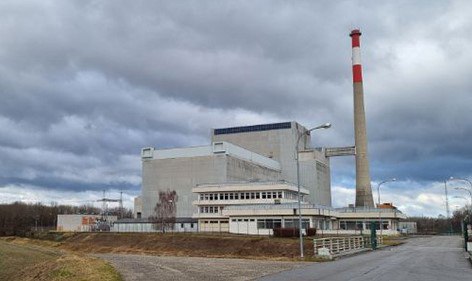
Measures for cross-monitoring systems must be devised to increase the likelihood of preventing accidents.
It is hard to trust a safety management approach that favors internal interests. The likelihood of safety increases when cross-monitoring is implemented, rather than supervision by just one side. Is it only France? No, it is not. In the United States, the operation of the Nuclear Regulatory Commission (NRC), which appears to be part of the executive branch, is deeply influenced by congressional authority. By being involved not only in personnel matters but also in financial part, it operates independently from the executive branch while also enabling the function of cross-monitoring. How is Japan? Nuclear power plants in Japan undergo regular inspections every year. They can only be restarted with the approval of the local governor of prefecture. The monitoring of local governments is being effectively implemented, which enables cross-monitoring.
Germany has maintained a system in which independent expert groups conduct cross-monitoring at all levels after the operation of nuclear power plants until their closure. This type of cross-monitoring must be carried out without fail. By doing so, it can lead to a shift that strengthens expertise in preventing risks, breaking away from chronic bureaucratization.
However, the Nuclear Safety and Security Commission (NSSC), which belongs to the executive branch, monitors Korea Hydro & Nuclear Power (KHNP), a subsidiary under the Ministry of Trade, Industry and Energy. The arm naturally bends inward. The causes of all the corruption related to nuclear power plants lies here. I hope for the upcoming 7th republic. Like France, a separate nuclear power plant monitoring body should be established within the National Assembly. Or like Germany, an independent expert group-based monitoring system should be implemented. Alternatively the monitoring authority of local governments should be strengthened. It is necessary to take extraordinary measures, such as elevating the status of the Nuclear Safety and Security Commission (NSCC) so that, like the United States, the National Assembly can effectively oversee its personnel and budget. This is not a choice, but an obligation.
Editing: Guest Editor Lee Won-young leewysu@gmail.com
(Writer Lee Won-young is the director of the Korea Land Future Research Institute and the head of the Nuclear Power Plant Risk Public Information Center. He mainly carries out anti-nuclear power movement and movement to stop nuclear wastewater dumping through walking marches.)
Translated by LEE Sang-hoon
Source; mindlenews :on 2025-02-05 (by Korean)
https://www.mindlenews.com/news/articleView.html?idxno=11390
Categories: Uncategorized
 New Silk Road for Life and No-Nukes
Leave a comment