Rowing diligently is the destiny of mankind.
Now we’re approaching the end. If we walk for about three more days, we will enter downtown Tokyo. At that time, I wrote a title for a collection of letters to be delivered to the National Assembly and was also recommended a box to store the USB stick in which these letters were stored.
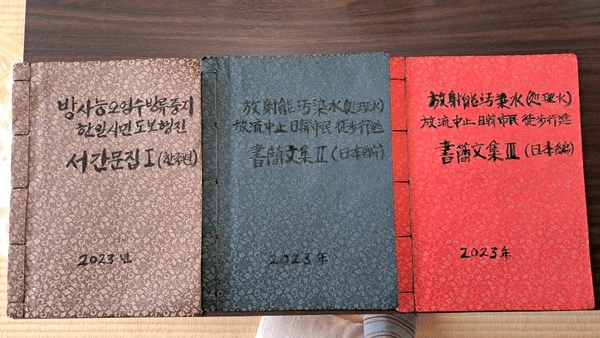

When I searched the website on the way to Yokohama, Professor Emeritus Jang Hoi-ik of the Department of Physics at Seoul National University, who is an advisor to the Korean Society for Nuclear Energy, criticizes the controversy over contaminated water science.
[Jang Hoe-ik] Don’t use the word science carelessly.
The noteworthy part of the sentence is,
“Due to the by-products of today’s material civilization, our seas are inevitably polluted even if we try our best to protect them. Therefore, if possible, even pollutants that have already been discharged should be collected and treated separately. “Intentionally putting pollutants that should not be in the sea into the sea is an extreme crime that seeks to kill life on Earth.”

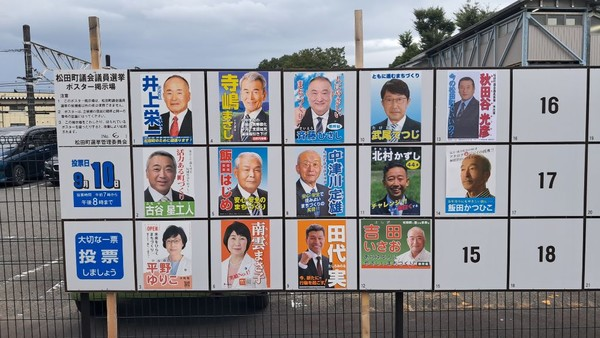
Although the Japanese comrades walking together are trying hard, experiencing the atmosphere of Japanese society, which is largely silent on the nuclear contaminated water issue, reminds me of the words of the late President Kim Dae-jung, who devoted his life to realizing democracy, in his last official appearance.
“Don’t vote for a bad political party, don’t read bad newspapers, go to rallies, post things on the Internet, and even stare at the wall and curse. “There’s only so much you can do if you put your mind to it.”
This is the part. Anyone can swear at a wall alone. However, voicing your thoughts out loud can be both easy and difficult. Sound is an event that escapes its own domain. The sound bounces back and reaches your ears. not familiar. Therefore, making a sound, even if you are alone, is crossing a boundary. In the first place, it is not easy to cross that boundary and express your thoughts outwardly. It is as difficult as soaking in hot bath water on a cold winter. But at first we only dip our feet and send signals to our bodies, but isn’t it possible to eventually dip our whole body?
Once you have the experience of cursing bad power out loud at the wall, the next steps are easy. Now you can use text instead of sound. You can express your thoughts. At least you can reply. Then the sea of communication will open.
The foundation of democracy lies in communication. The more you chew on former President Kim’s wall theory, the more delicious it becomes. At this point, I am reminded of my previous article warning about citizens’ indifference to the dangers of nuclear power plants. I introduce it below.
[Lee Won-young] ‘Can you sleep? ‘Citizens of Ulsan!’

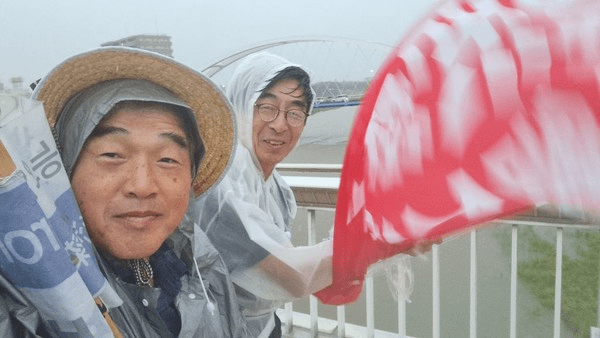


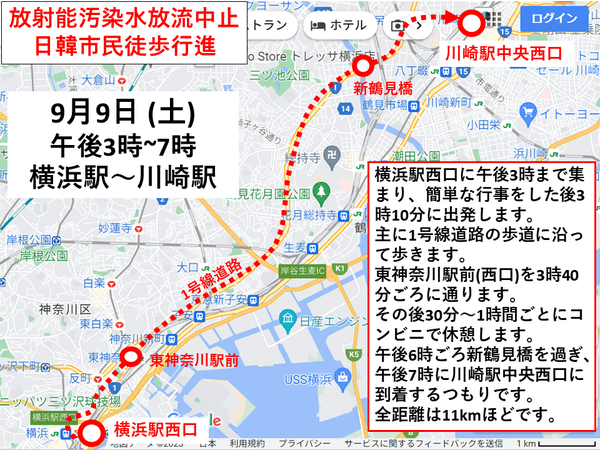
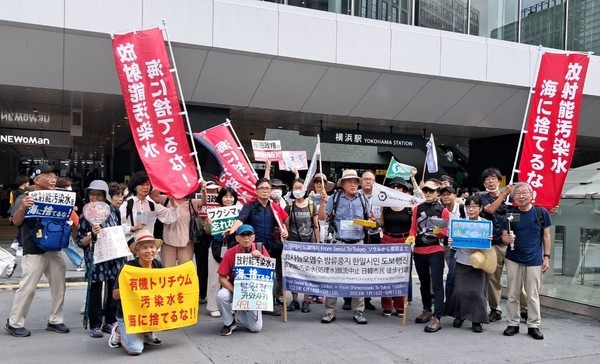

When waiting for a signal at an intersection, I shout out with my companions.
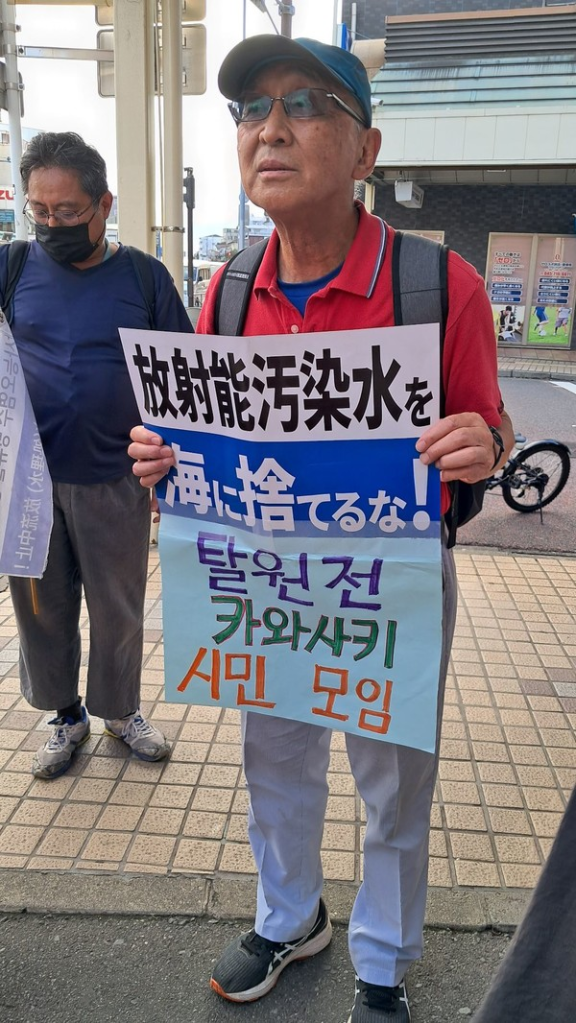
‘Hosano osenseio umini nagasuna (「放射能汚染水を海に流すな!」)
(Do not throw radioactive contaminated water into the sea)
Hosano osenseio umini steruna (「放射能汚染水を海に捨てるな!」)
(Do not throw radioactive contaminated water into the sea)
‘Kodomoga abunai oseunaiio nagasuna’
(Children are at risk, don’t throw away contaminated water)
Citizens hear this sound and turn their heads to show approval.

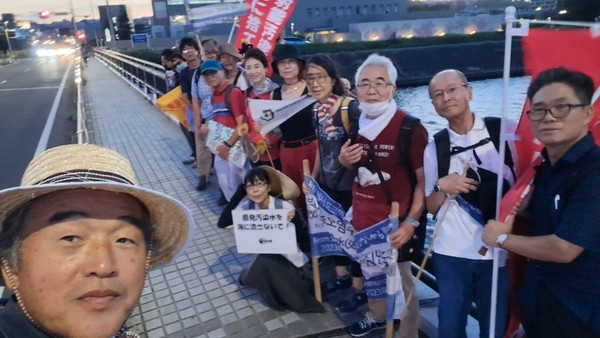
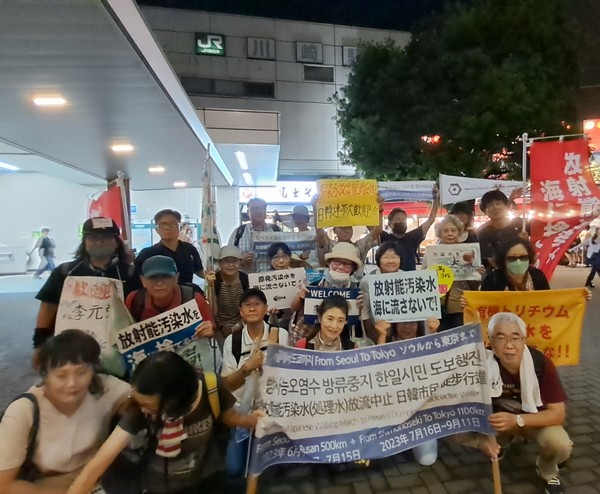
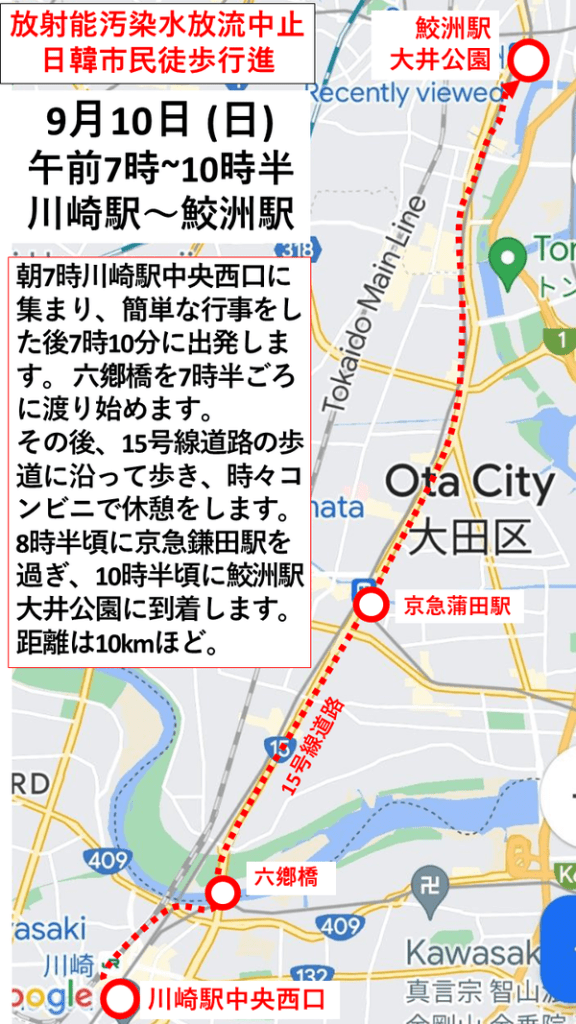
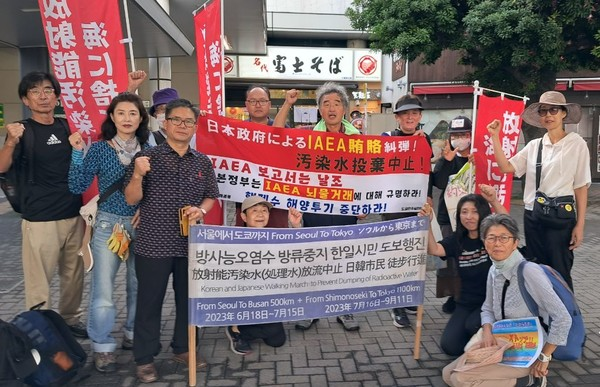
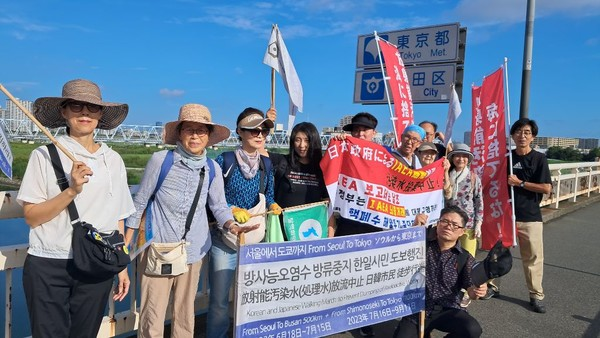


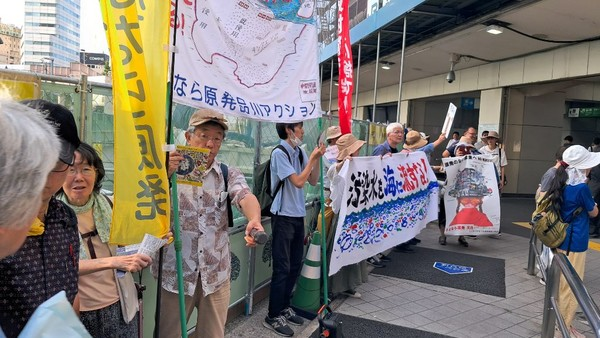
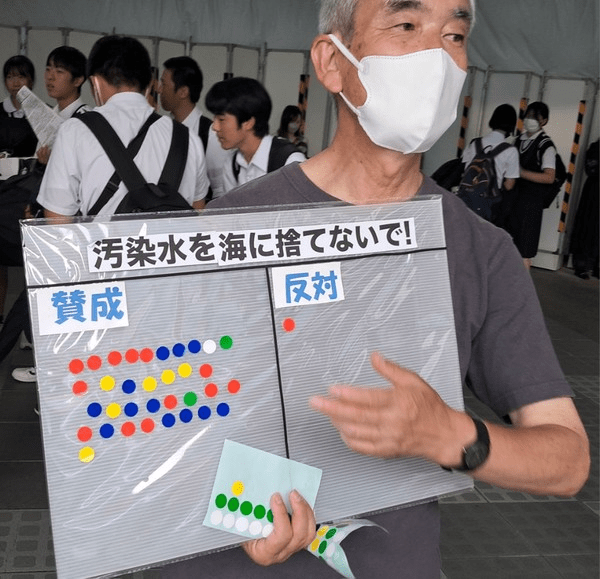
We arrived at Shinagawa Station not long after departure. Many comrades welcome us. I loudly shouted my statement to the citizens walking around the station plaza, saying,
“Children are in danger. We are all parents or grandparents. We must stop the discharge of contaminated water.”
According to an impromptu survey being conducted on one side of the plaza, an overwhelming number of citizens support ‘Don’t dump polluted water into the sea!’ at Shinagawa Station in Tokyo. This result is completely different from the opinion poll results published by Japanese media so far. We are fighting a winning fight.
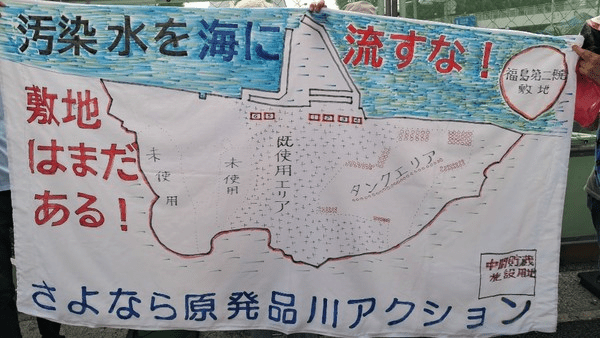
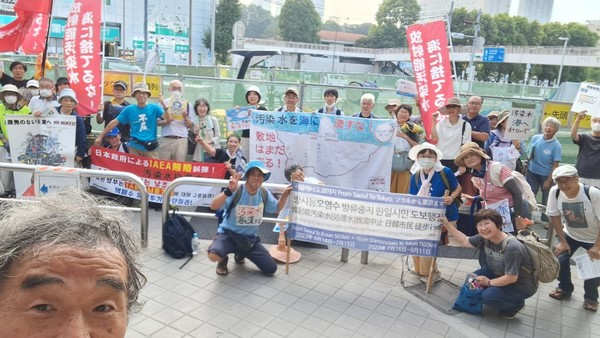
Jeongyoon Lee, a Korean nuclear power plant engineer who also serves as a policy member of the Nuclear Power Plant Risk Public Information Center, of which I am the representative, made a realistic diagnosis around this time. I introduce this below.
[Lee Jeong-yoon] Pseudo-nuclear wastewater science that destroys public safety
The following is part of its contents.
“Prime Minister Kishida, who returned from the trilateral summit between Korea, the United States, and Japan on August 18, committed nuclear waste dumping at Fukushima less than a week later on August 24. This was the first such dumping since the 1996 London Agreement banning ocean dumping of nuclear waste. This is an unprecedented illegal act in history. U.S. Secretary of State Tony Blinken and White House official Kurt Campbell immediately declared their support. This suggests that there were close prior discussions with the U.S. Ocean dumping of nuclear waste is illegal under international law. That is a self-evident fact. From the beginning, it was only a justification to discharge emissions in compliance with the international safety standards established by the International Atomic Energy Agency (IAEA). However, there was no independent, scientific, safe and transparent procedure by the IAEA. Last July. 4th, the IAEA report submitted to Japan did not verify the data presented by Japan. There was only a political strategy based on political and diplomatic interests.”
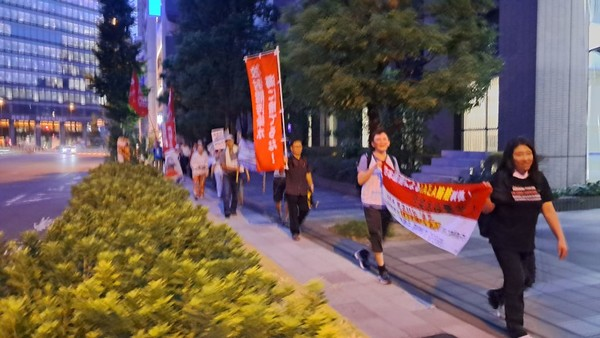
Let’s take a look again. The London Protocol was created in 1996 in response to the Japanese government’s anger over Russia’s dumping of radioactive waste. It came into effect in 2006, and Japan officially joined in 2007. If we look at this section introduced on Namu Wiki,
“In 1993, Japan was greatly outraged when the Russian Navy’s radioactive waste dumping ship was discovered to have dumped about 900 tons of its country’s liquid radioactive waste in the East Sea, 190km southeast of Vladivostok. Russia and Japan joined the ‘London Convention’ in 1972. Because Japan was in an advantageous position, it continued its offensive. At the time, Japan strongly warned Russia that discharging radioactive waste into Russia could cause serious environmental problems not only in neighboring countries but also around the world. However, the day after the Russian president left Japan after a meeting between the two countries, Russia once again secretly released nuclear waste and was caught by the undercover environmental group ‘Greenpeace’. Japan was filled with enormous anger and anti-Russian sentiment intensified. So they exerted enormous influence on the maritime Stronger regulations on waste were created, and the 1993 London Convention amendment revised the annex to completely prohibit ocean dumping of all nuclear waste. The 1996 Amendment Protocol completely revised the London Convention and further strengthened the ban on ocean dumping of nuclear waste. Meanwhile, the provisions were changed to allow ocean dumping only in extremely limited cases.”
According to Dr. Hong Ki-hoon (Korea Ocean Research & Development Institute), an expert in this field, the London Protocol corresponds to the ‘international norms on ocean dumping’ stipulated in Article 210 of the UN’s International Convention on the Law of the Sea. Violating this is a crime. Nevertheless, this time, the Japanese government took the lead and committed environmental crimes that surpassed those of Russia. How on earth should we understand this?
The problem is that sanctions against this are weak. The logic of power that the law is far and the fist is close is being revealed much more clearly to the international community. The reality of the international community is that there are only stipulated treaties and no sanctions for violations. In this way, the one and only Earth cannot survive.
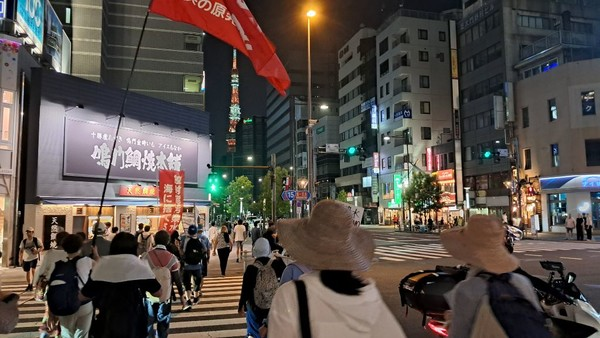
We are borrowing the Earth from our descendants. If this continues, we are doomed. If left unattended, capital power will simply repeat its predatory behavior according to its own nature. These forces must be punished. A mechanism to impose penalties on those who recklessly abuse their power is the minimum condition for our survival.
To reach the hill across the river, we must row diligently. Otherwise, you will be swept away by the flowing river. The refrain of Buddha’s Heart Sutra, ‘Let’s go, let’s go together, let’s go to that hill’, also contains the meaning that we cannot reach that hill without making any effort. In and out of life, we must row diligently. Rowing is the destiny of mankind.
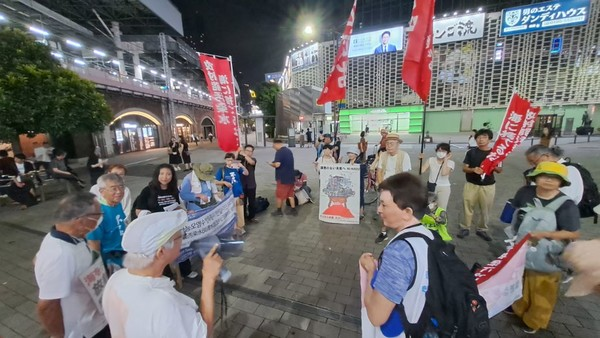

Finally, it’s Shimbashi Station. It is the final destination of a 1,600km journey in a hot summer. I feel overwhelmed yet calm. Before arriving here, I had no idea whether I would ever be able to cover this long distance, but now that I have arrived, I feel calmer than I expected. We also take time to share our thoughts with each other. I expressed my gratitude that I was able to arrive safely thanks to the cooperation of my comrades.
Tomorrow is the last day, September 11th, and it is time to head to the Japanese Diet.
Edited by: Wonyoung Lee, Guest Editor
(The author, Wonyoung Lee, is a former professor at the University of Suwon, who led a Korean-Japan citizen walking march to stop the discharge of radioactive contaminated water for about three months from June to September 2023. This article and photos are a record of that story.)
Wonyoung Lee, Guest Editor leewysu@gmail.com
Translation by yoonhwa Cha
Categories: Korean-Japanese citizen walking march
 New Silk Road for Life and No-Nukes
Leave a comment