Shameful Japanese government
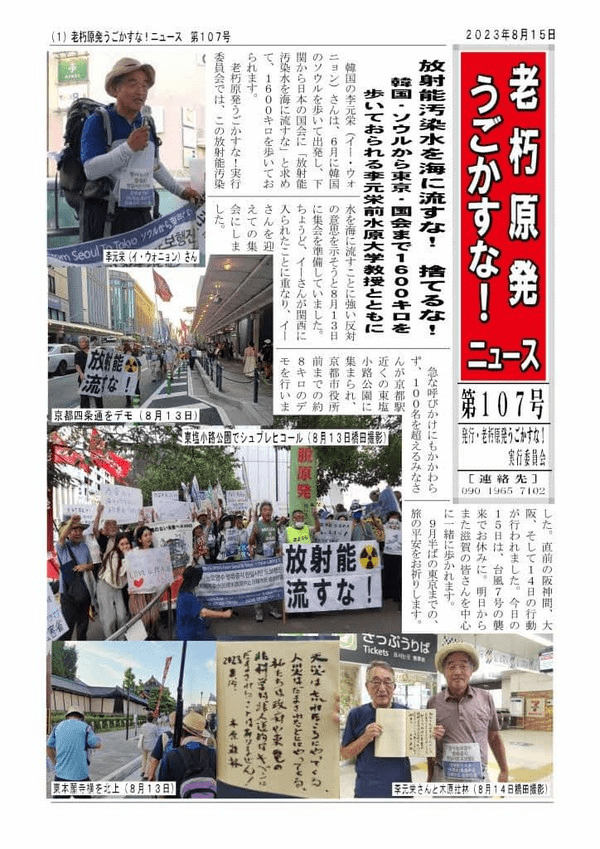
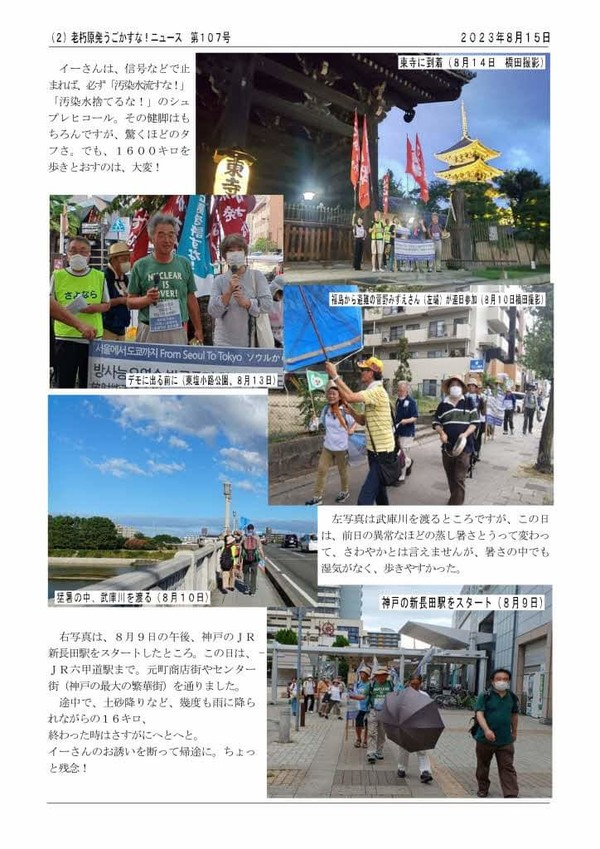
The Kyoto march on August 13 seems to have had quite a stir in Japanese civil society. Although it is a small newspaper edition, it contains photos of the march and various other details. It was an article that made me feel rewarded for my journey from Korea.
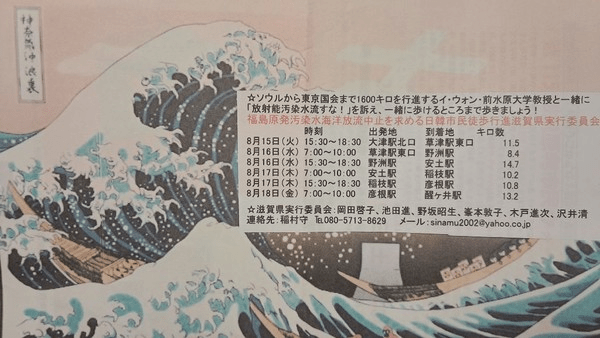
As we left Kyoto and marched to Shiga Prefecture, Typhoon No. 7 struck. Since this typhoon was passing through the Kansai region, I had no choice but to officially announce the halt of the march. However, as I have to adhere to the entire schedule, I have to somehow move regardless of the typhoon and go to the announced departure location tomorrow. This is because Japanese comrades are waiting there to accompany us. Moreover, cancellation of reservations at accommodations is not possible, so I have to go there tomorrow to avoid incurring any losses.

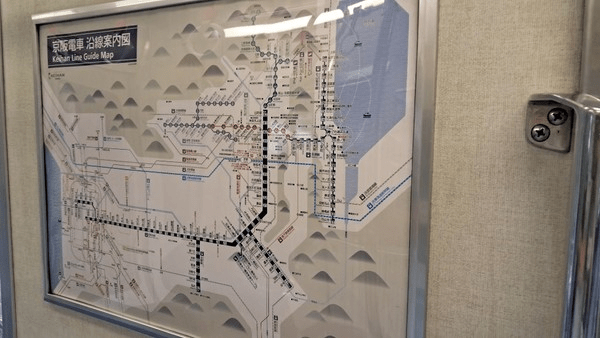
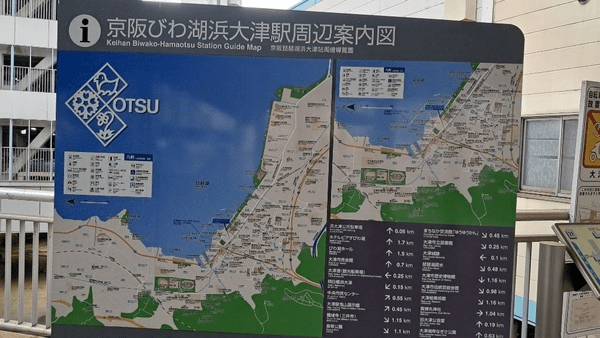


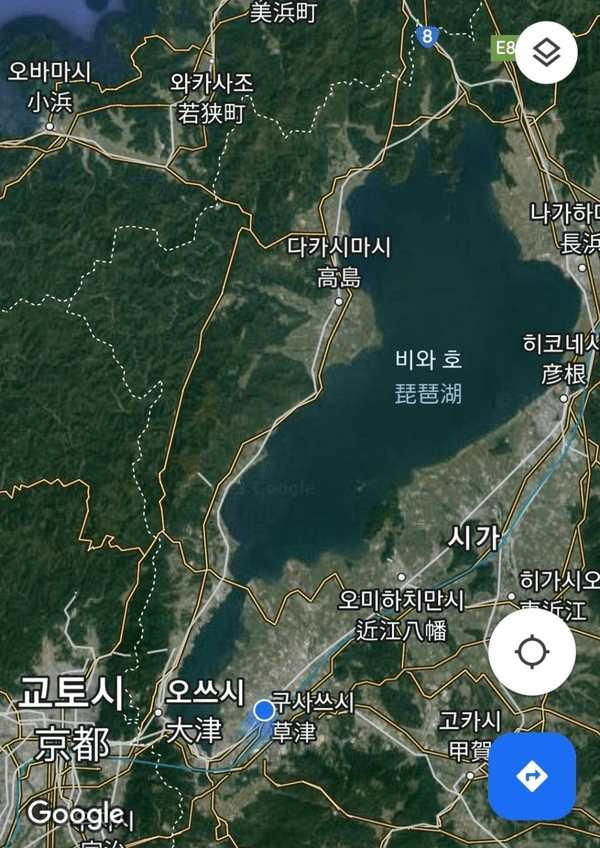
However, using transportation is difficult. This is because JR lines and public transportation between regions have stopped operating. I looked carefully and there was a train going to Lake Biwa. First, I decided to go to Lake Biwa. It is a very large natural lake that was formed a long time ago. The ecosystem is alive and clean, making it a source of water for the Kansai region. The faucet at the hotel I stayed in Kyoto said it was drinking water. This is something to be thankful for Lake Biwa.
When I leave Biwakohamaotsu Station, Lake Biwa immediately comes into view. It’s a cool view. Looking at the surface of the water, the wind doesn’t seem to be that strong. With a typhoon of this magnitude, walking wouldn’t be that difficult. First, I decided to go towards Ishiyama Station. There was also a famous bridge called Setanogarahashi, so I crossed it. I soon felt close to the Kusatsu area. Since there was no transportation anyway, I decided to walk about 8 kilometers. I pass through this area, feeling a bit of a strong wind blowing through the empty streets as there are no cars passing by.

The village cemetery caught my eye while I was resting behind the building when the wind was blowing hard for a moment. In Japan, like in the West, cemeteries are located within villages. As I watched this, I became lost in thought.
Life is brief. It is children and the next generation who continue our lives. Contaminated water is a terrorist attack on ourselves. The same goes for nuclear power plants, of course. At least things are different before and after the Fukushima nuclear accident. When I see people who still support nuclear power plants, I naturally get angry. It is even more difficult to remain silent and tolerate politicians and educated people who ignore Germany’s example of nuclear phase-out. My march is also supported by that anger.





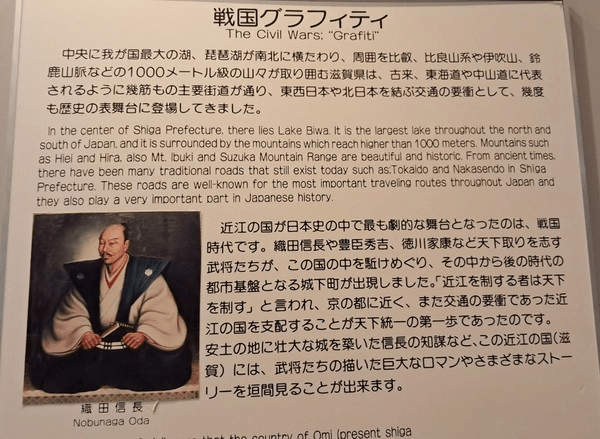
I met the famous Japanese general Oda Nobunaga. I visited an exhibition hall near Azuchi Castle, where he was based. Explanations within the exhibition hall explain the strategic importance of this area. By utilizing this area, Nobunaga put an end to the chaos of the Warring States Period and ushered in the dawn of the unification era.
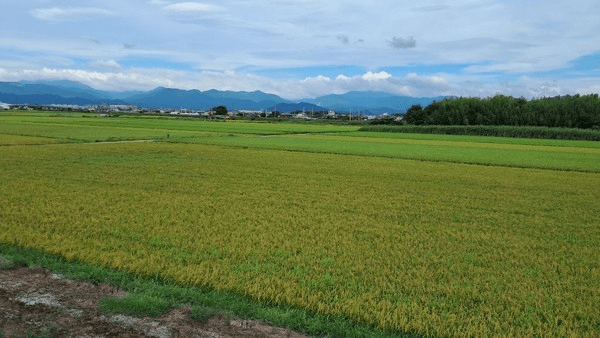

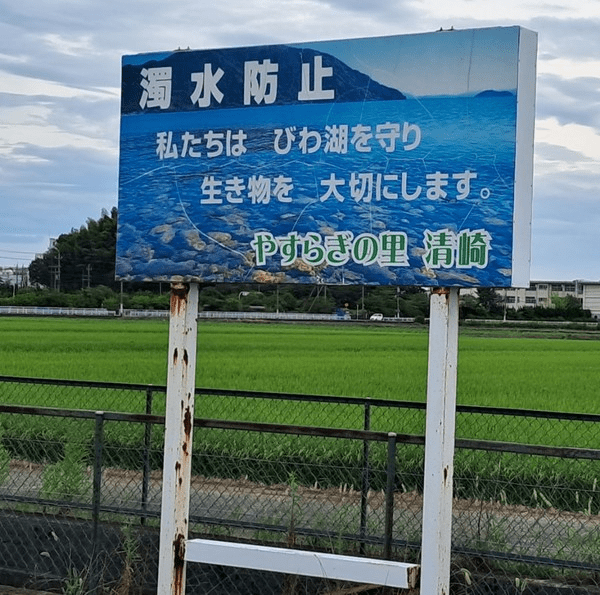

In this way, they should move towards preventing muddy water, but the Japanese government is going in the opposite direction.
While walking, I see an article revealing that the Japanese government has been planning bad things.
In order to save costs at home, contaminated water was transported in an expedient manner. I can’t believe the country is willing to commit such a shameless crime.
Power that is not checked is bound to be abused. No matter what the Japanese government does, it does as it pleases because the people are quiet. It’s been like this for a hundred years. But Japan is now a democratic country. The ‘owner of this land’ must step forward and make things right.



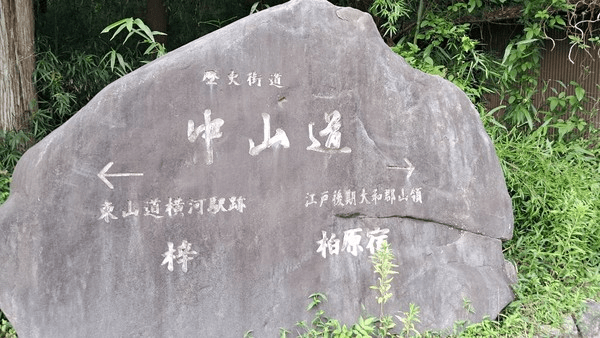
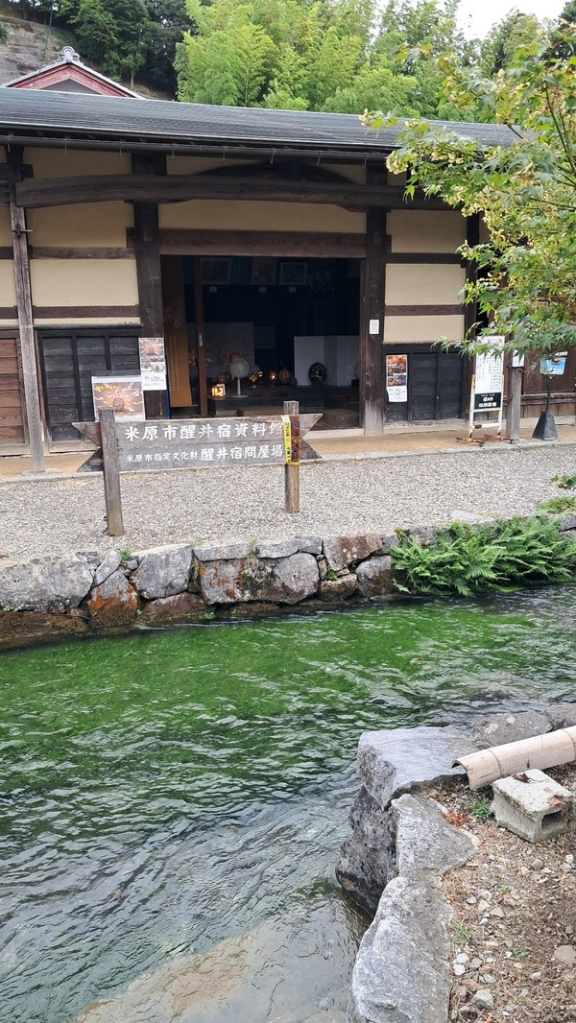
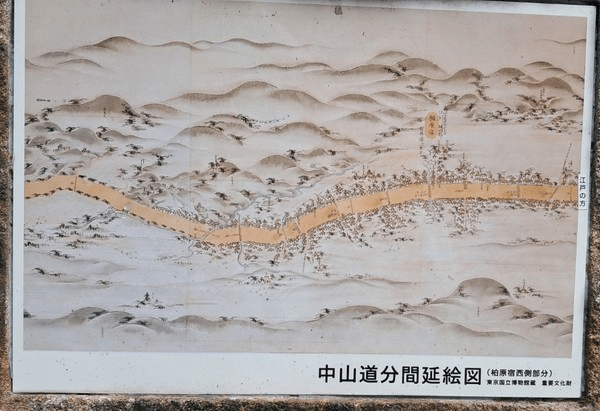
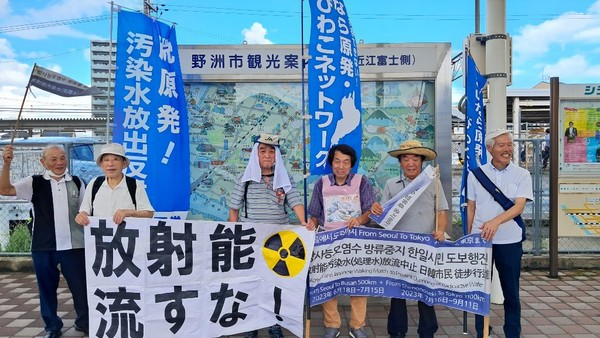
A map showing the route from Hikone City through Maibara City and over the hill to Sekigahara. I especially enjoyed the section where I walked through Samegai Station and through Nakasendo Village. Although the scenery is beautiful, it is the most difficult course of this Japanese march in terms of both difficulty and distance. While crossing the road, there were sections where I couldn’t walk because the sidewalk disappeared. At times like that, my comrades in Shiga Prefecture would keep their car on standby and safely transport me only for that section.
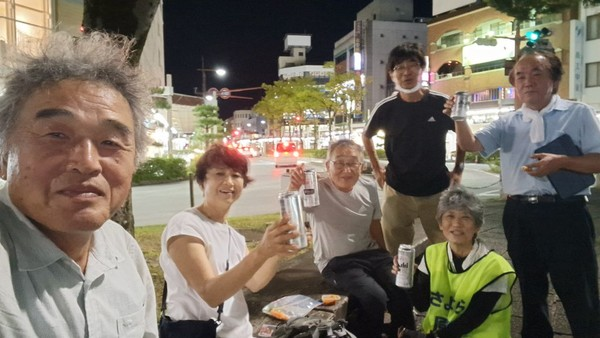
As I was crossing the Nakasendo (Middle Mountain Road), Inamura-san, who had looked after me during the march to Shiga Prefecture, sent me the following message through Kuwano Yasuo-san.
“Lee Won-young’s feat clearly had a huge impact on anti-nuclear power plant activists in Shiga Prefecture. This action to stop the discharge of contaminated water from nuclear power plants by walking 1,100 km across Japan, including Honshu, covering a total of 1,600 km, is in line with the spirit of our anti-nuclear power movement. It gave strength to the movement in Shiga Prefecture that has been shouting “Let’s protect Lake Biwa!” and “Let’s abolish nuclear power!” As 12 years and 5 months have passed since the Fukushima nuclear power plant accident, our actions have become manneristic and seem to be deteriorating over time. At this time, you taught us infinite vitality and softness. Thank you! Lee Won-young! Let’s stop the discharge of water together!! 2023.8.18. Korea-Japan walk demanding a stop to the discharge of contaminated water from the Fukushima nuclear power plant into the ocean. “March Shiga Prefecture Executive Committee”


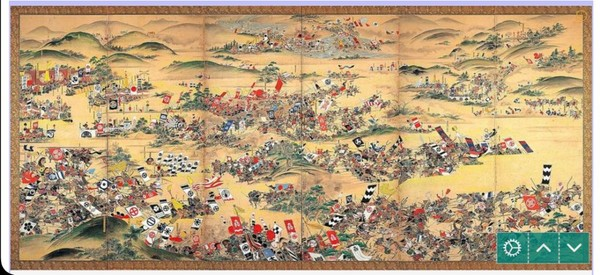
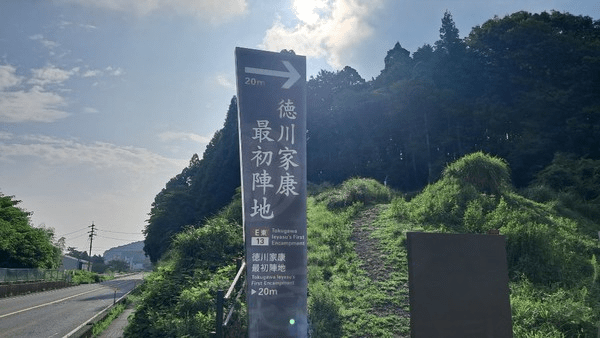
As I pass through Nakasendo, I encounter Sekigahara Field, a famous historical site in Japan. And I face the place where Tokugawa Ieyasu first camped in this battle. By winning this fateful battle, he rises to the top. The Tokugawa shogunate, which lasted for 300 years, steadily built up the nation’s wealth through the ceramics trade. That commercial capital became the source of Japan’s power that sought rapid change with the Meiji Restoration. His contribution and long-term perspective, which established his power before the Yusin Dynasty, are also recognized by Korean scholars.
I would like to receive his energy from winning this battle and achieve a watershed that stops contaminated water and leads to the phase-out of nuclear power plants.

How would Tokugawa Ieyasu understand the behavior of the Japanese establishment, which bows to the United States, ignores the people’s wish for peace, and is only focused on maintaining power? The current Japanese government is shameful.
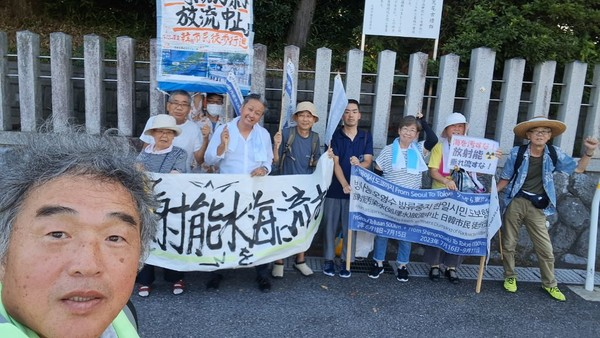


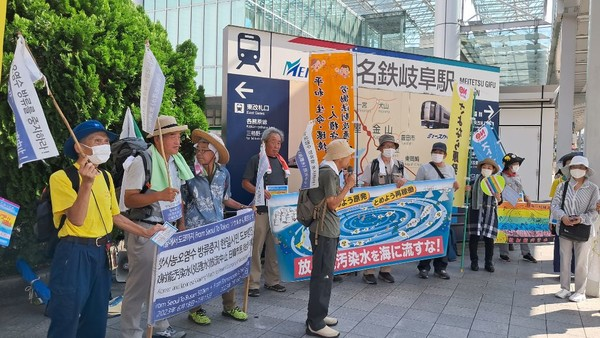

This scene was published in the local edition of Chunichi Newspaper. The contents of the article are the same as those already introduced.
The point of my remarks at the time was,
“The release of radioactive contaminated water destroys at once the trust that Japan has built up through its many contributions to the global community after World War II. The actions of one regime that destroys this trust that the Japanese people have built together for a long time, “The sovereign people should never tolerate this.”

Edited by: Kim Mi-kyung, Editorial Member
Author Lee Won Young leewysu@gmail.com
Translation Yoonhwa Cha
Categories: Korean-Japanese citizen walking march
 New Silk Road for Life and No-Nukes
Leave a comment