Hypotheses about undersea hazards that Japanese scholars must test
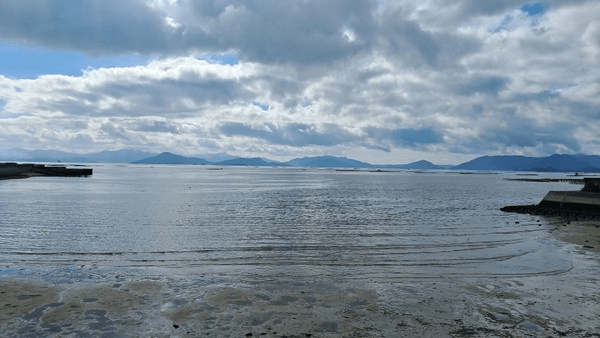

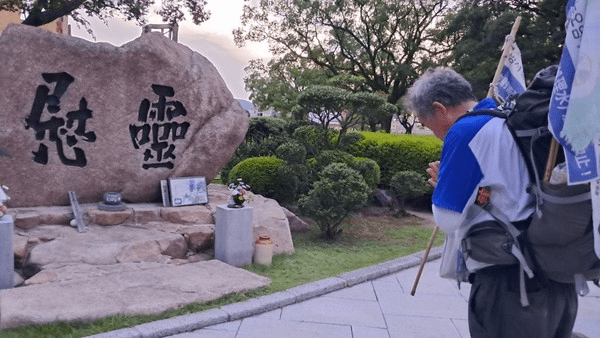
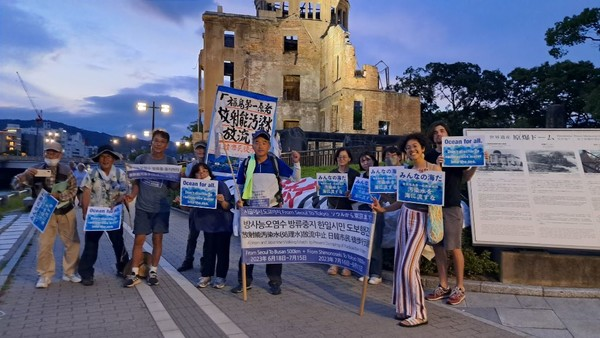

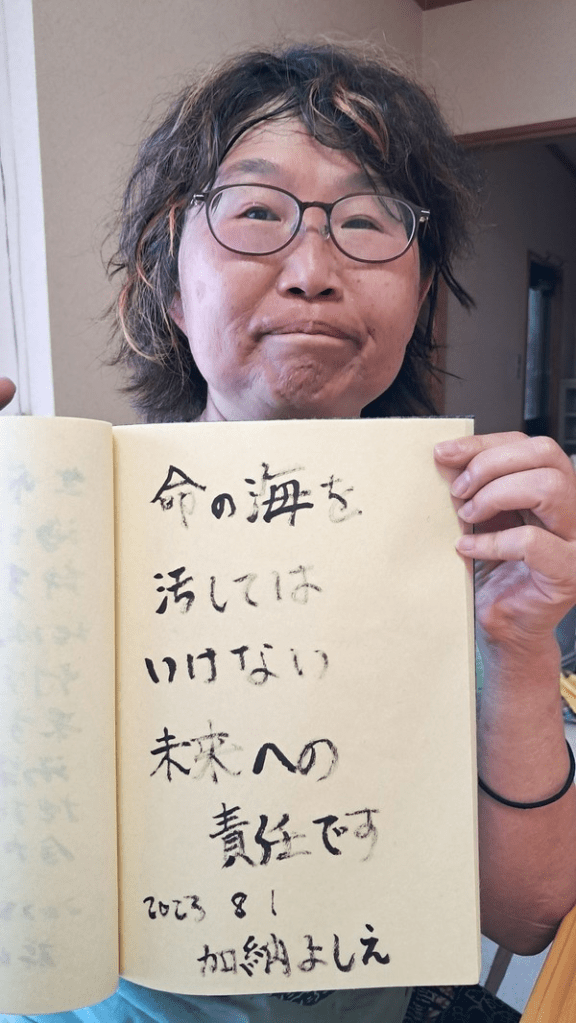
After arriving in Hiroshima, I created a message to send to the citizens. This is for a press conference.
<Hiroshima can stop it.>
The essence of the nuclear polluted water problem is that it destroys the marine ecosystem, including plankton and the food chain. Destroying the mother of all life.
Why is storage difficult?
Is storage expensive?
Why throw it into the sea?
I don’t understand.
Before the London Convention, the Earth Charter stipulated that radioactivity should not be increased.
It is also a violation of several international laws.
Is Japan a country that breaks its promises?
We must stop the transition from a nuclear victim country to a nuclear perpetrator country.
In the first place, such important issues should be decided by the people themselves. Like countries like Switzerland, Austria, Italy and Sweden. This is not something that should be left only to politicians.
While we were walking, some youths and women made friendly gestures toward our march. Most are hoping to stop discharging water. they know In a instinct. Throwing away is not the way.
There is a case from Miyagi Prefecture. This is possible if the number of regions opposing ocean dumping increases. If Hiroshima residents oppose it, it will have a huge impact. Japan, a nuclear victim, should not become a nuclear perpetrator.
The words from Hiroshima are persuasive. It will resonate throughout the world.
Residents of Hiroshima, let’s march to Tokyo together.
July 26, 2023
Korea-Japan Citizens’ Walking March to Stop Discharging Radioactive Contaminated Water
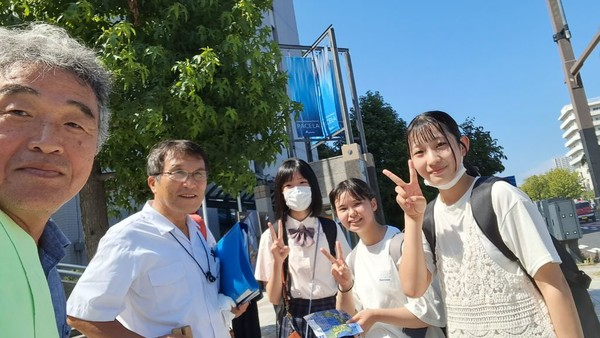
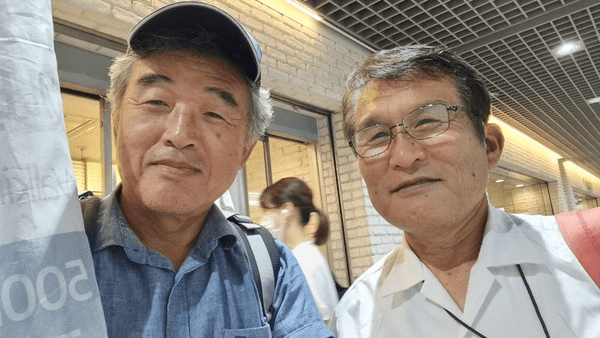
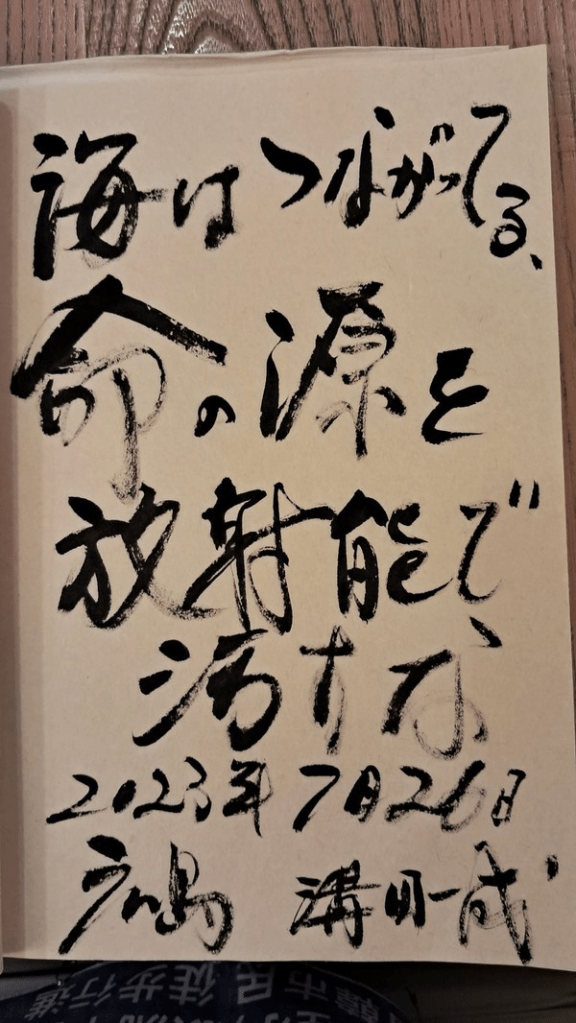
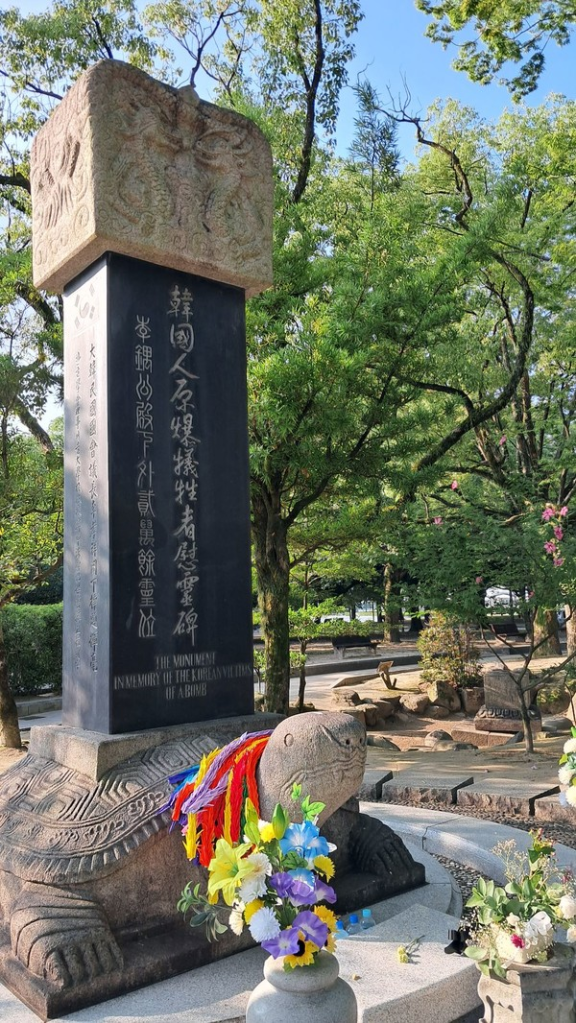
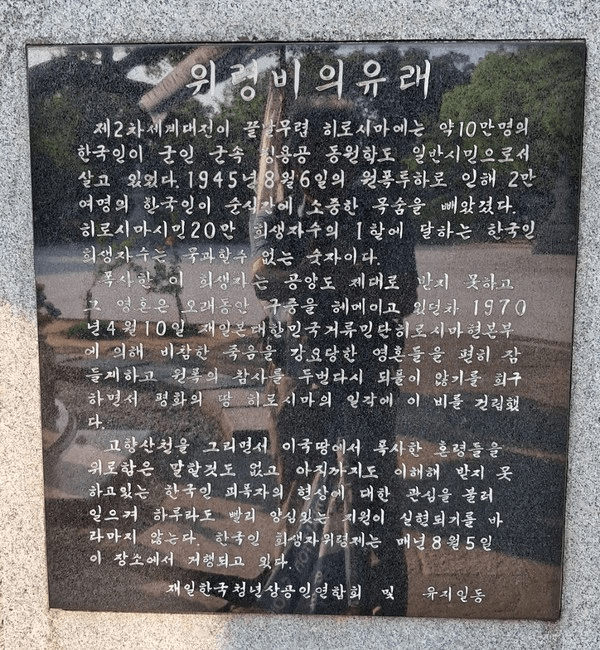
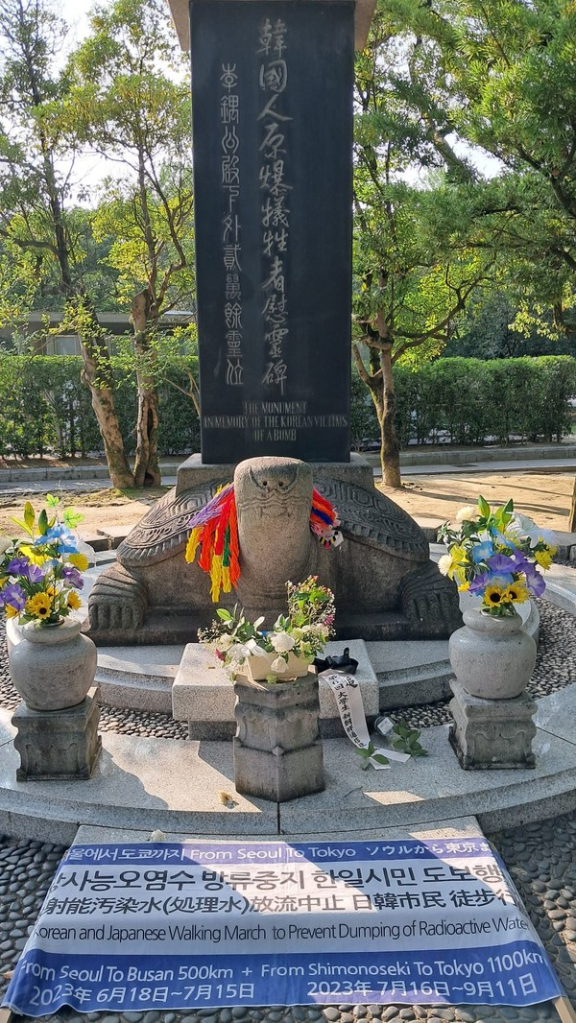
The key to changing the world’s nuclear problem now lies with the ChoSeon hibakusha (including Koreans). Free from the San Francisco Treaty, Korean hibakusha and their descendants have the right to seek compensation from the United States. When that right is recognized and causes enormous financial damage to the United States, the leadership on the nuclear issue will also change. In that sense, the second and third generation hibakusha currently living in the Hapcheon area can play an important role.


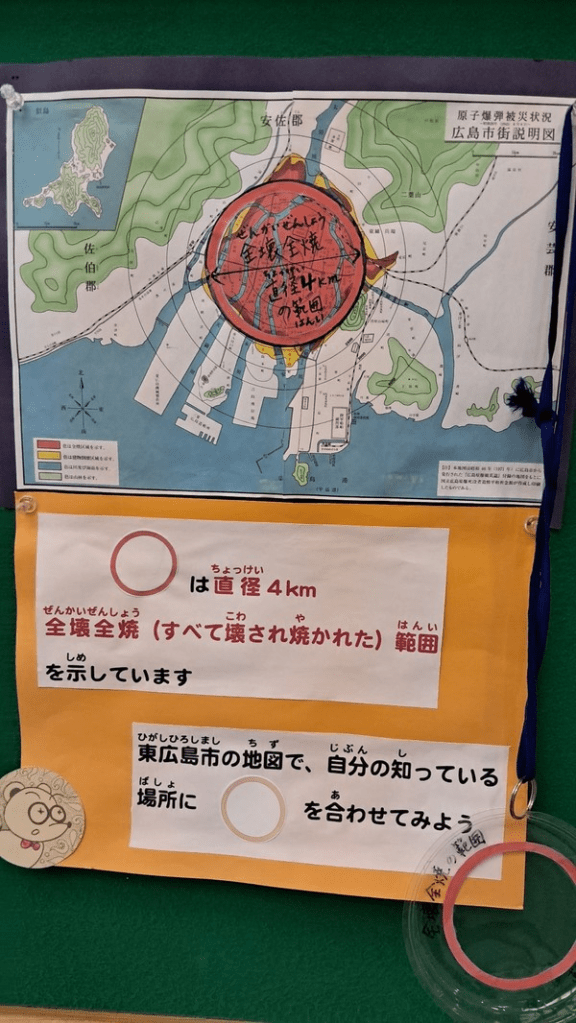
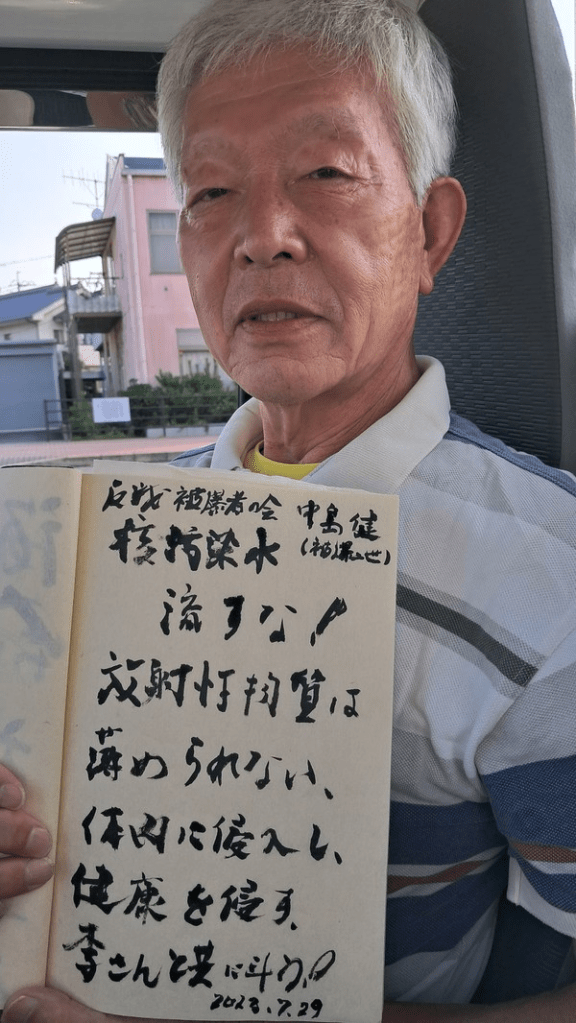
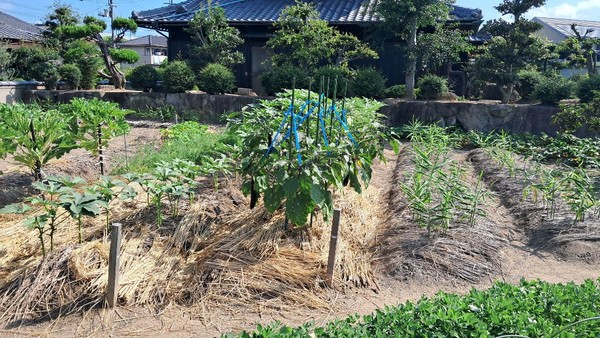
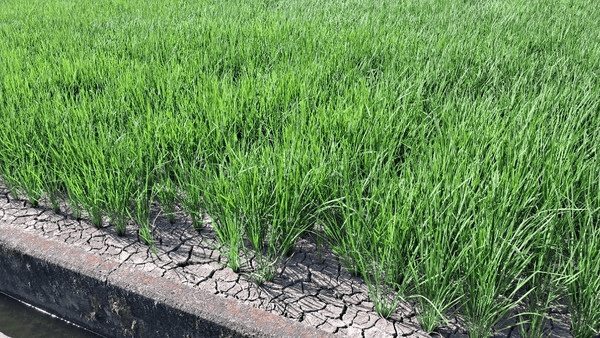
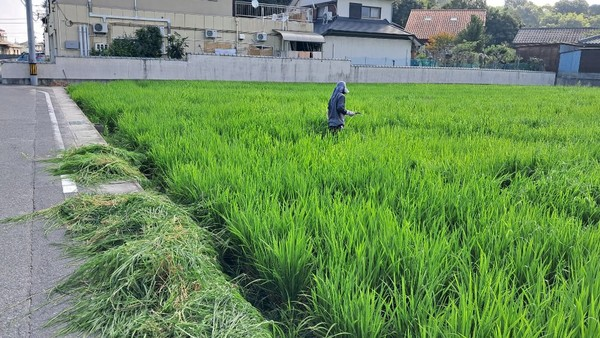
Although it has always been the case, healthy food has become more important in today’s century-old lifespan era. Some intellectuals disparage these ecological efforts, saying they are outside of the modern economic system. However, in Europe, including Germany, such ecological technology forms a large axis in the universal economic system. Japan and Korea are already in that trend.
During this march, I learned that such ecological efforts are widespread in rural Japan. As such, it is time to once again upgrade farming methods that rely solely on machinery and oil. Rather, isn’t the technological supremacist disparagement of some intellectuals expanding and leading to misjudgments like Kishida’s? It’s time to wake up.

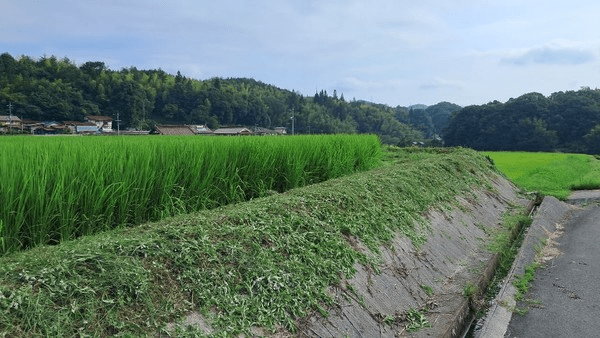
Looking at the cut grass on the rice field banks, I can feel the farmer’s will and diligence to not apply herbicides. The toxicity of herbicides even kills microorganisms in the soil, which neutralizes the soil viscosity that supports rice paddy banks and ultimately becomes a clue to the collapse of rice paddies.
At this point, I am reminded of my diary from a lecture held in Daegu, Korea in early July. In this data, lecturer Lee Jeong-yoon, a lecturer at the time, points out that among the radioactivity, there are hotspots where heavy matter sinks and stagnates rather than flowing through ocean currents.
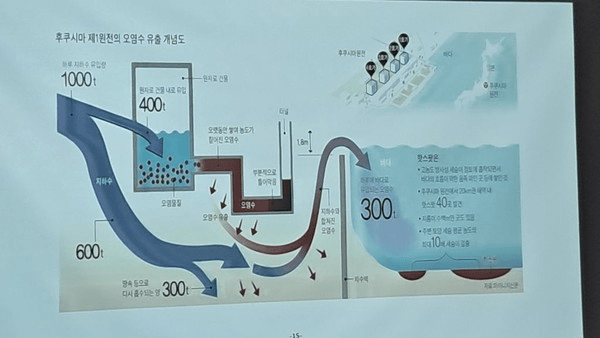
My note is exactly this part.
‘In addition to the risk of being the base of the food chain, I would like to point out another risk that the author is still hypothesizing. This is because radioactivity penetrates the stratum and kills microorganisms, thereby weakening the tensile strength inside the soil. A common finishing method for civil engineering work is the soil method. The principle is to utilize the tight tensile force of microorganisms in the soil. It’s like applying herbicides to rice fields, causing plant roots to weaken and the microorganisms that held the soil together to die, causing the rice fields to collapse. The problem is that if something like that happens in the sea, there are different risks than on land. This is because of the enormous water pressure. There is a high possibility that cracks will occur in the stratum that must withstand water pressure, and this poses a risk of triggering an earthquake.’
Although it is still in the hypothesis stage, fellow physicists at the university agreed that it was a reasonable inference. Now that I think about it, I don’t think it has anything to do with the unexplained tsunami that has been frequently observed along the coast of Japan recently (October).
[Kyunghyang Shinmun] Consecutive tsunamis of ‘unknown cause’… Japan is nervous
I would like to seriously ask a Japanese marine seismologist or marine geologist. About the possibility of this hypothesis. If there is a possibility that this could happen, the Japanese government should never dispose of nuclear contaminated water.


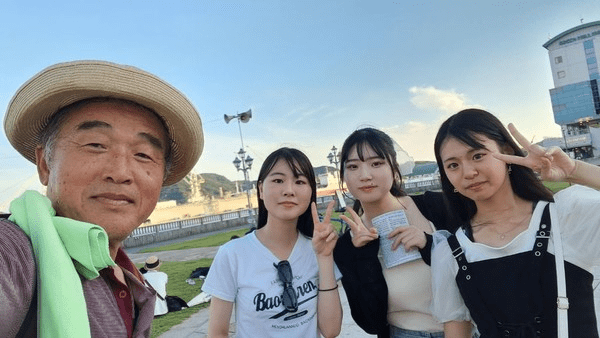

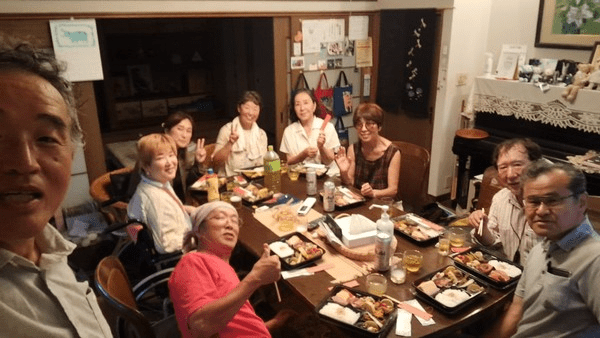
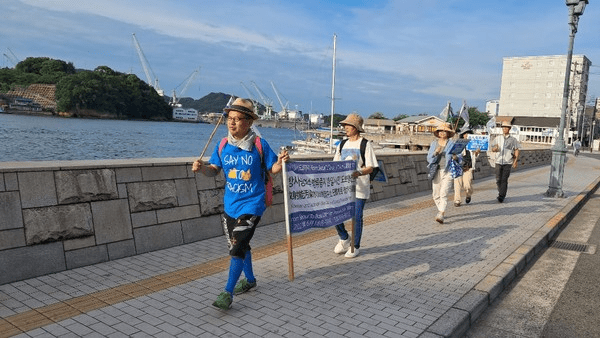
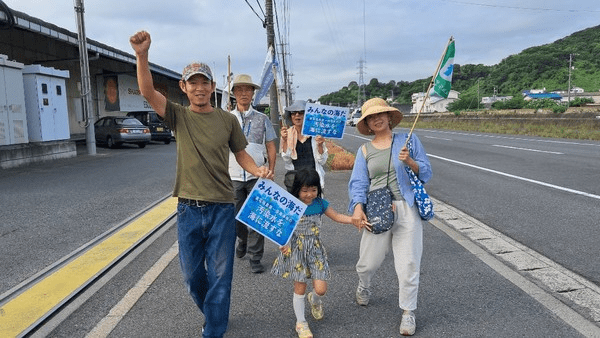

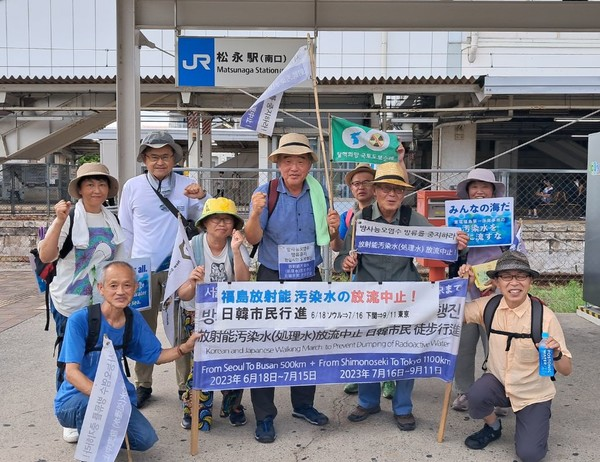

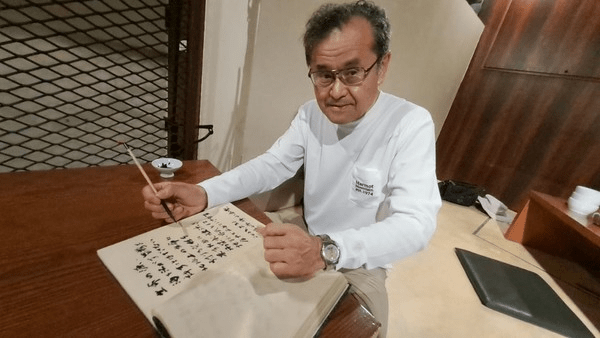
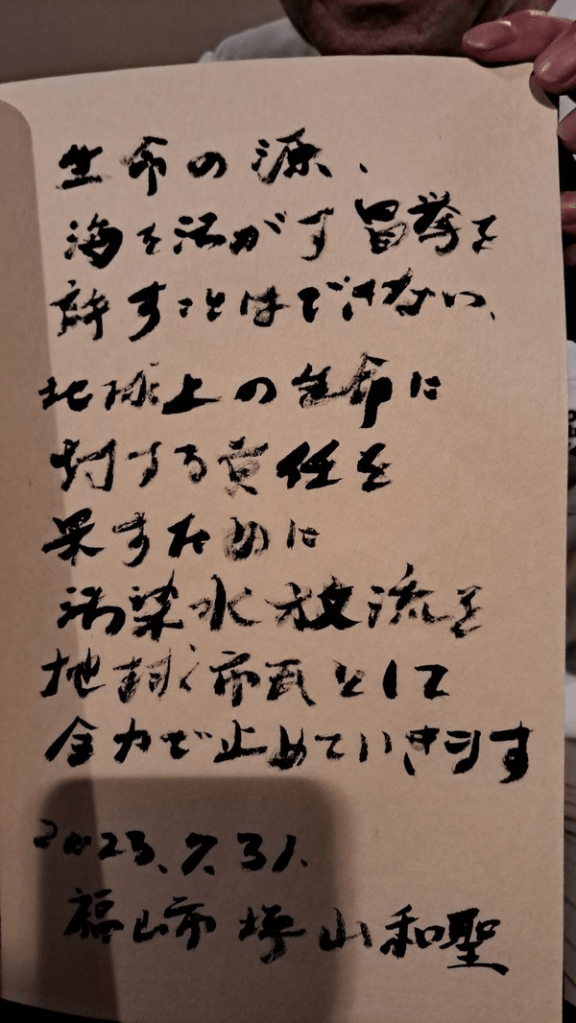

It was widely reported by the Onomichi Shimbun, a local newspaper in Hiroshima. Onomichi City is an important city that serves as a hub city as it is a transportation hub on the Seto Inland Sea.
[Onomichi Shimbun]
From Seoul, Korea to Tokyo, walking 1,600 kilometers.
Japanese citizens have a weak sense of ownership – oppose the discharge of treated nuclear power water into the ocean
On the 31st, former Korean university professor Lee Won-young (66), who opposes the Japanese government and Tokyo Electric Power Company’s plan to discharge treated water from the Fukushima Daiichi Nuclear Power Plant into the ocean or the restart of the nuclear power plant, joined Onomichi’s citizen group [Step Toward Fukushima] ] Members. Professor Lee appealed, saying, “The decision to release radioactive contaminated water (treated water) into the sea must be made directly by citizens, not by the government.” “Japan should follow the example of Germany, which completed the phase-out of nuclear power.” [Ikuno Tsutae]
Former Professor Wonyoung Lee
Contaminated water with radioactive substances continues to be generated in large quantities due to melted nuclear fuel from the Fukushima Daiichi Nuclear Power Plant accident 12 years ago. As the 1,000 tanks at the nuclear power plant site are approaching their limit, the Japanese government and Tokyo Electric Power Company this summer purified the treated water (but diluted the tritium that cannot be purified with seawater) with a polynuclide removal system (ALPS) to the nuclear power plant. Plans are being made to release it into the ocean using an undersea tunnel 1 kilometer across.
Former professor Lee, who is involved in the anti-nuclear power plant civil movement in Korea, is appealing for the realization of a nuclear-free society by attaching a message to his chest that reads “Stop discharging radioactive contaminated water” and urging citizens of Korea and Japan to cooperate with each other. He is walking 1,600 kilometers alone from Seoul, the capital of Korea, to Tokyo, and arrived in Onomichi on the evening of the 30th.
He departed from Seoul on June 18, entered Shimonoseki from Busan by PuKwan ferry, and traveled east on the Sanyo Road starting on the 16th of last month. He aims to arrive in Tokyo on September 11 by visiting local governments along the way and interacting and exchanging opinions with nuclear abolition groups and local lawmakers.
“I want to tell both the Japanese and Korean governments that it is important for citizens to express their opinions directly,” said former professor Lee. “I have been walking here for more than two weeks, and the response from citizens, especially women and young people, is comparatively much better.” He says his honest feelings.
And he points out, “In countries such as Switzerland, Austria, Italy, and Sweden, decisions on important issues are made directly by citizens, but in Japan, the government decides. Discharging polluted water is not a matter for a country’s prime minister or government to decide. Citizens “They have to speak their minds.”
“In Korea, 85% are against this issue, and even if President Yoon Seok-yeol was the only one who supported it, there is an atmosphere in Korea that does not forgive his decision. Even in Japan, a survey has been reported showing that 80% of citizens do not agree. “Because discharge of water is an international issue, citizens of both countries must think together and oppose it,” he continued.
He then criticized the imperfection of Japanese democracy, saying, “Japanese citizens have a weak sense of ownership that they are the main characters. If the same problem happens in Europe, citizens will not remain silent.” “The role of the citizens of Hiroshima, who are nuclear victims, is especially important. If nuclear wastewater is released as planned by the government, Japan will become a nuclear perpetrator internationally. Expressing opposition from Hiroshima has more power than expressing opposition from other regions. “He said.
As a specific method, he recommended walking together, saying, “Writing or directly participating in the march… Now, there is even the Internet.”
City Councilor Yamane Moto (Citizens’ Union), who participated in the exchange meeting, encouraged former professor Lee, saying, “I have decided to support the spirit of the march. I will wholeheartedly join in the spirit of the march.”
In Tokyo, we plan to go to the National Assembly and submit [messages opposing the release of treated water] collected from both countries to Prime Minister Kishida and the Speakers of the House of Representatives and the House of Representatives.
Edited by: Kim Mi-kyung, Editorial Member
Author Wonyoung Lee leewysu@gmail.com
Translation Yoonhwa Cha
Original Article >> https://www.hanion.co.kr/news/articleView.html?idxno=30187
Categories: Korean-Japanese citizen walking march
 New Silk Road for Life and No-Nukes
Leave a comment