Japanese citizens know what is right.
While walking through Yamaguchi Prefecture, I meet many young people.
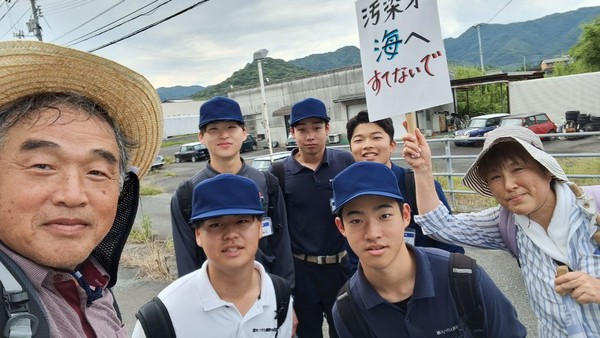
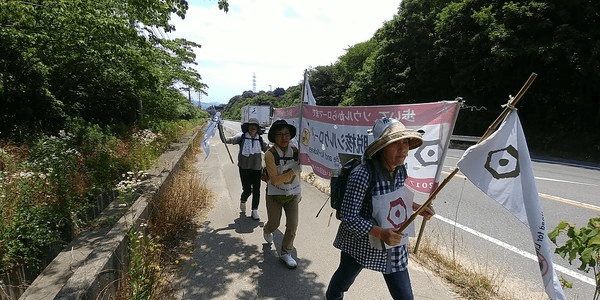
Fumie Miwa san (三輪文惠) walked 22 kilometers from Shin Yamaguchi to Ube Station during the My Life NoNukes Silk Road six years ago. I was so happy to see her.
Record of walking with Fumie-san on the 2017 Life NoNukes Silk Road
Fumi-san, who led today’s march. Enjoy interacting with drivers in oncoming traffic.
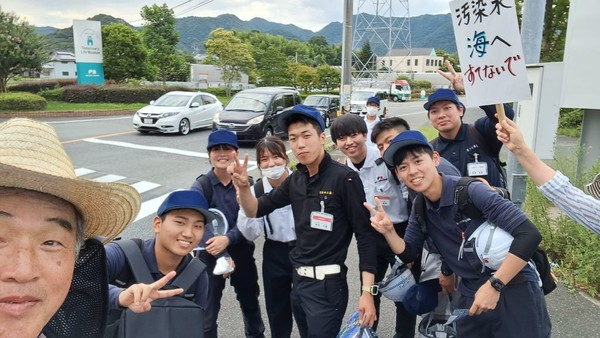


My article was reported in Ube Shimbun (2023-7-21). According to the translation by Japanese comrades,
Appeal to stop ocean discharge
Korean and Japanese citizens march due to Fukushima treated water
The [Fukushima Walking March to Stop the Discharge of Contaminated Water into the Ocean] from Korea entered Ube on the 19th. On the same day, 12 people, including Director Lee Won-young and citizens who oppose the construction of the Kaminosaki nuclear power plant, marched, calling for a halt to ocean discharge.
This is an action by Korean and Japanese citizens to oppose the ocean discharge of treated water containing radioactive substances such as tritium stored at Tokyo Electric Power Company’s Fukushima Daiichi Nuclear Power Plant, which the Japanese government and the IAEA (International Atomic Energy Agency) say meets safety standards.
On the 16th, leader Lee marched through Shimonoseki City during his visit to Japan. He, along with local opposition activists, plans to walk approximately 1,100 kilometers with the goal of reaching the Tokyo National Assembly building on September 11 to appeal.
A schedule of walking approximately 10 km each in the morning and afternoon. He walked between JR Higashi Shinkawa Station and Tokonami Station on the morning of the 19th. Along the way, a rally was held at the Josei Coal Mine Memorial Hiroba in Tokonami 1-chome to commemorate the victims of the coal mine accident. Director Lee said that no matter how much the contaminated water is diluted, the absolute amount of radioactivity remains the same. He appealed that discharging polluted water into the ocean, the mother of all life, should not be allowed.
At the Fukushima Daiichi Nuclear Power Plant, treated water containing radioactive substances such as tritium that remains after treating contaminated water is stored. The government said that radioactive materials other than tritium have been purified until they meet regulatory standards, and plans to release tritium into the ocean by diluting it significantly with seawater until it falls below regulatory standards. The timing is set to be around this summer.
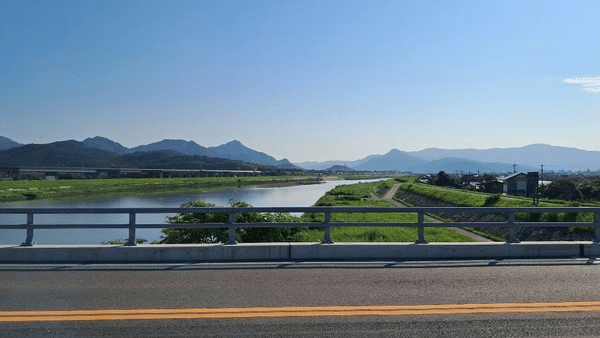
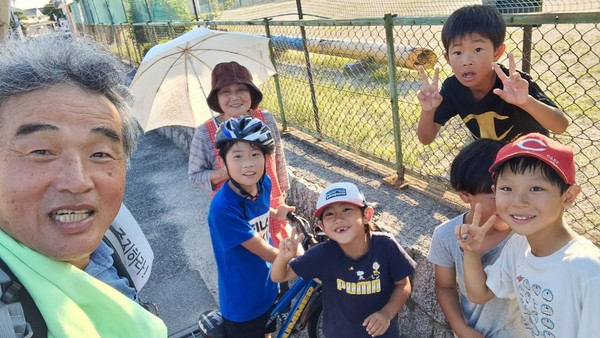
As I was leaving a village in the Hofu region of Yamaguchi Prefecture, I met a local woman and children. I showed them the pamphlet and told them that I was walking to Tokyo. They cheer my story. The woman is amazed by the details of the march and explains it to her children. Children also make gestures showing that they are already aware of the problem of radioactive contaminated water.
After saying goodbye to them, I was walking for a while, and the kid in white clothes in the photo above came to me on a bicycle and gave me these snacks. It’s an unforgettable scene for me.


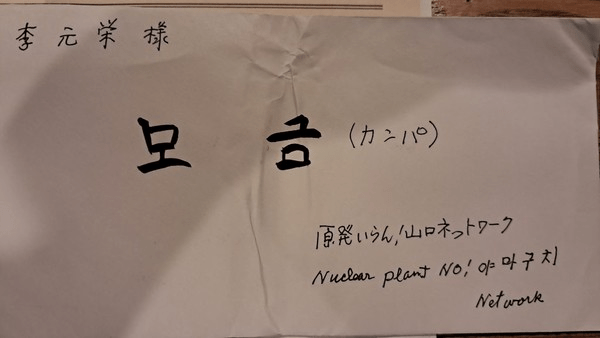

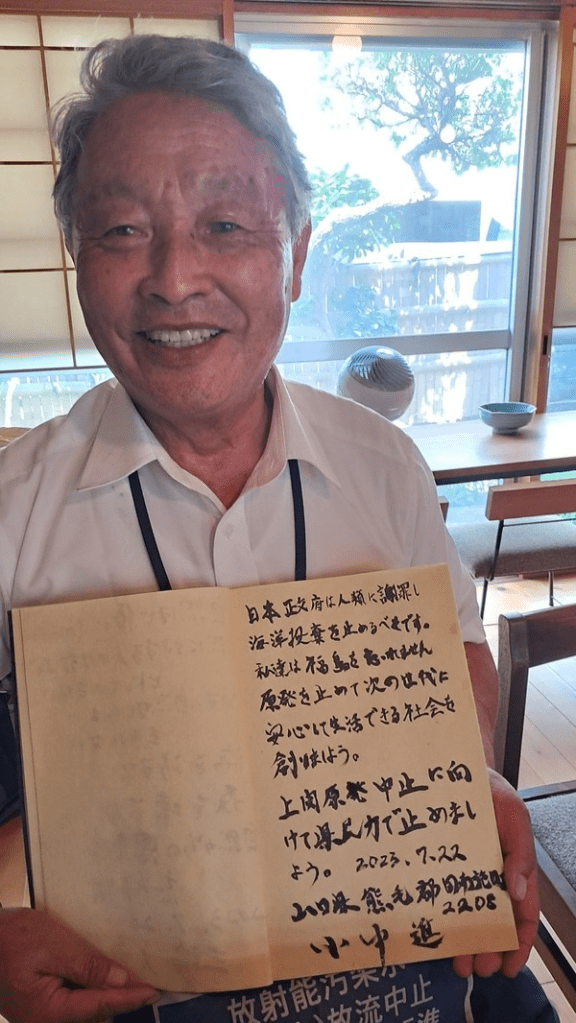

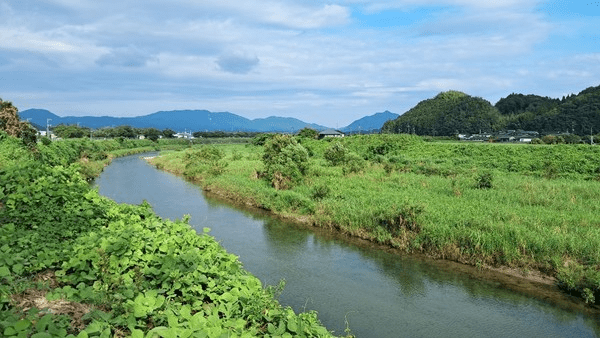
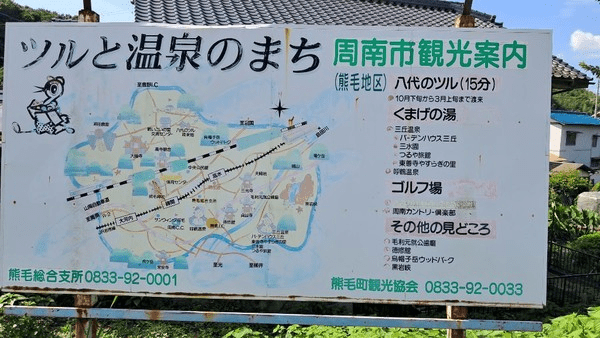
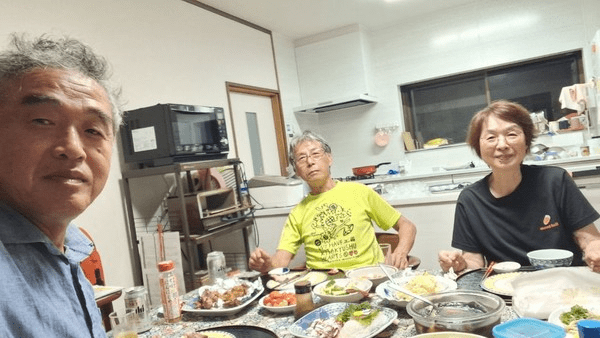


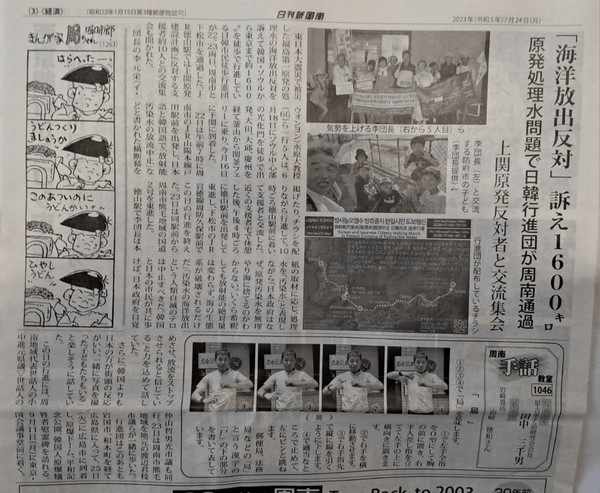
The Korean-Japanese citizens’ walking march was reported in detail in the local daily newspaper, Shunan Shimbun (July 24).
March 1,600 kilometers to protest against ocean emissions
A marching group passed through Shunan due to the issue of treated water from nuclear power plants.
Rally with opponents of Kaminoseki nuclear power plant
A Japanese-Korean walking march marches approximately 1,600 kilometers from Seoul, South Korea to Tokyo to appeal against the ocean discharge of treated water from the Fukushima Daiichi Nuclear Power Plant, which was hit by the Great East Japan Earthquake. They passed through Shunan City and Kudamatsu City on both the 22nd and 23rd. At JR Tokuyama Station, an exchange rally was held with about 10 supporters opposing the Kaminoseki nuclear power plant construction plan.
The leader, Lee Won-young, a 66-year-old professor at Suwon University, and a group of five people set off on foot from Gwanghwamun, central Seoul, on June 18. He took the Pukwan ferry from Busan via Daejeon, Daegu, and Gyeongju and arrived in Shimonoseki on the 16th of this month.
On the 22nd, they started in front of Heta Station on the JR Sanyo Main Line in Shunan City at 7 a.m., marched while hanging banners and distributing leaflets with the words “Stop Discharging Radioactive Contaminated Water” written in Japanese and Korean, and arrived in front of Tokuyama Station around 10 o’clock. Interacted with supporters. After resting at a nearby supporter’s house, the march departed from Tokuyama Station around 4 p.m., headed east, and finished the day’s march in front of Suhokubo Station on the JR Kantoku Line in Kudamatsu City. They departed from front of the station on the 23rd and traveled east on National Route 2 in the Kumage area of Shunan City.
At Tokuyama Station, in response to our newspaper’s interview, Director Lee described the treated water as “contaminated water” and said, “I don’t know why the Japanese government is forcing contaminated water from nuclear power plants into the sea. “No matter how diluted, the absolute amount of radioactivity does not change and the ocean ecosystem is destroyed.” “The terrorist act of self-destruction of mankind, such as the discharge of polluted water into the ocean, must be stopped. “I believe that if the citizens of Korea and Japan walk together, we will be able to awaken the Japanese government and stop the discharge of water,” he said emphatically.
And, “The response on the street is better in Japan than in Korea. “There are children who took pictures with us,” he said happily.
The march on this day was also accompanied by former Prefectural Council member Sumu Konaka, secretary representing the Shunan region, and city council member Techio Nakayama, secretary Hikari. On the 23rd, city council members walked together to Watanabe Kimie in the Kumage area of Shunan City.
The marching group will then enter Hiroshima Prefecture via Iwakuni City and Waki Town, arriving at Hiroshima City on the 25th (Tuesday) and visiting the Atomic Bomb Dome, Peace Memorial Park, and the memorial to Korean Atomic Bomb Victims. They arrive in front of the Tokyo National Diet Building on Monday, September 11.
Edited by: Kim Mi-kyung, Editorial Member
Author Lee Won-young leewysu@gmail.com
Translation Cha Yoon-hwa
Categories: Korean-Japanese citizen walking march
 New Silk Road for Life and No-Nukes
Leave a comment