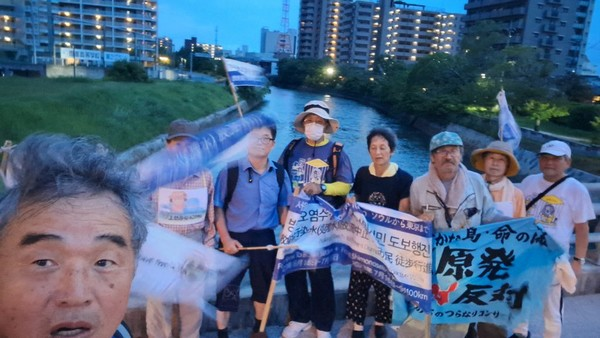
I was welcomed by Japanese anti-nuclear comrades and started walking with them.

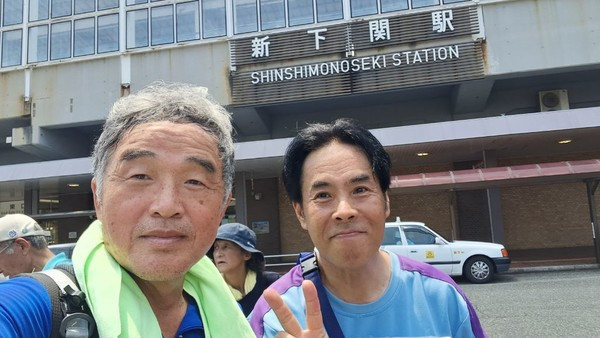
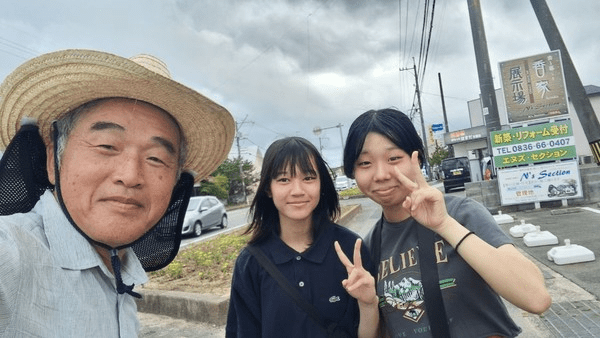
When I arrived at Shimonoseki, many comrades came out. Due to the large number of passengers on the PuKwan ferry, entry procedures were delayed. Even though I showed up an hour late, they waited for me for a long time. There are many people who walked with me during the Life Denuclearization Silk Road six years ago. These are the people with whom I shared news of my pilgrimage, such as my meeting with the Dalai Lama and my arrival in Rome.
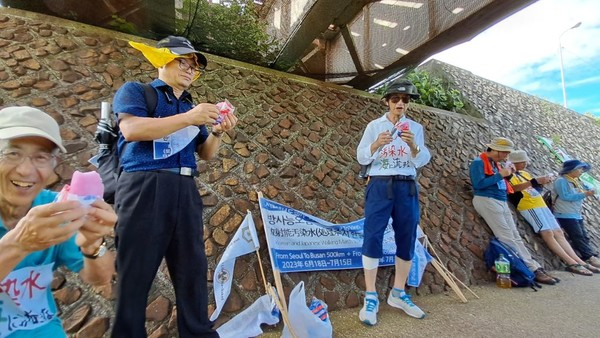
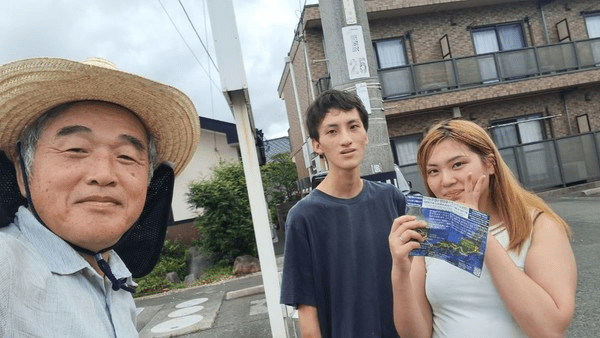
I hand out pamphlets and explain about this march. Explains the reason for walking to Tokyo and the itinerary.
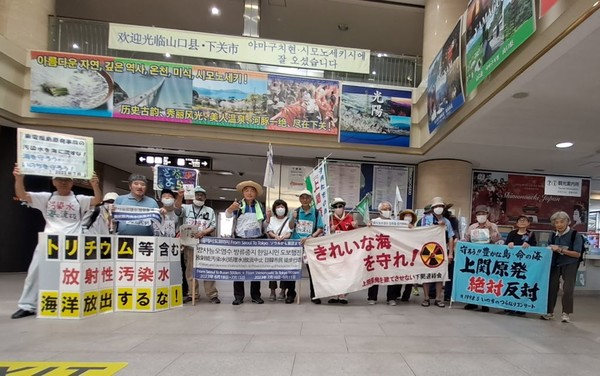

When I arrived at Shimonoseki Port, many anti-nuclear comrades came to meet me. When I walked from Hiroshima to Nagasaki six years ago during the 2017 Silk Road Pilgrimage for Life and Denuclearization, there were many comrades who walked with me in this area.
The first march in Shimonoseki was reported in the Busan Ilbo(daily newspaper).

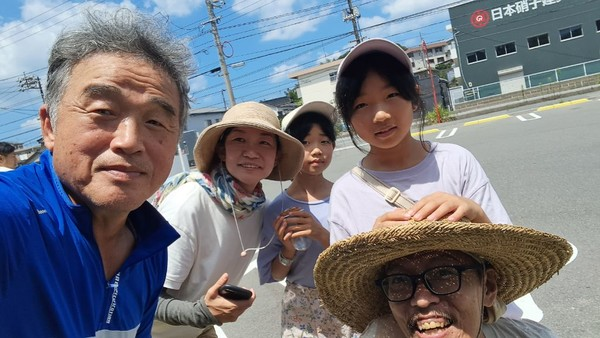
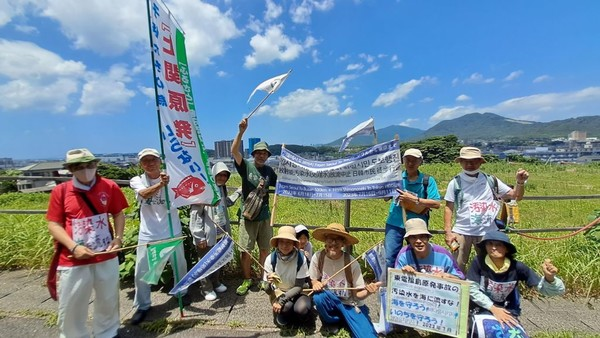

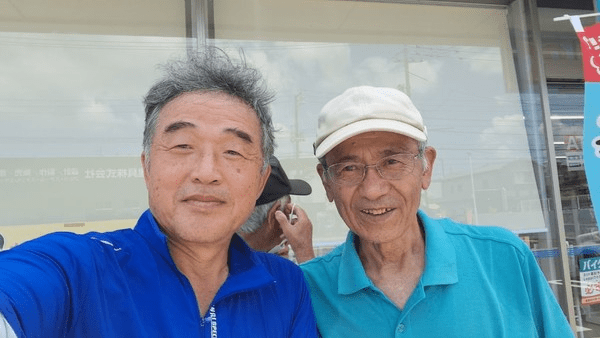


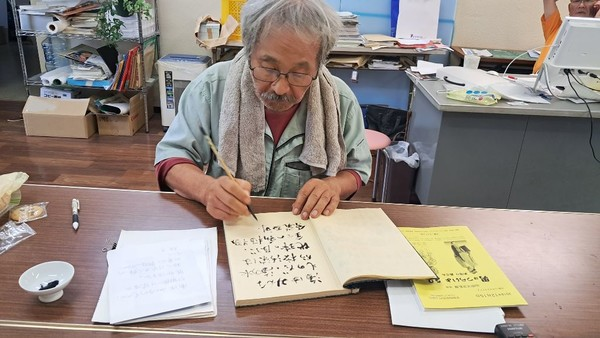
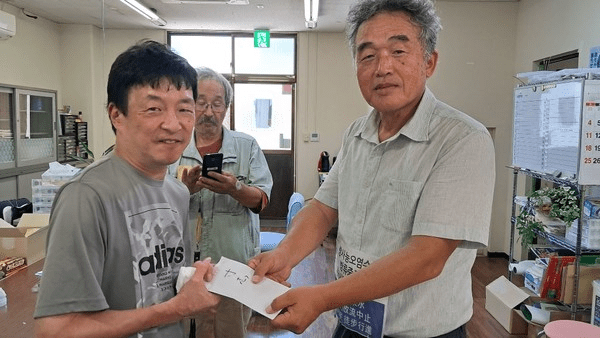
This Korea-Japan citizen walking march was possible thanks to Yasuo Kuwano. Comrade Young-Hoon Jeong wrote a detailed article about this.
His message is meaningful.
“Fukushima nuclear power plant contaminated water should not be dumped into the sea.
The sea is the mother of all life
Mistakes should not be repeated.
’23. 7. 16.
“Yasuo Kuwano”

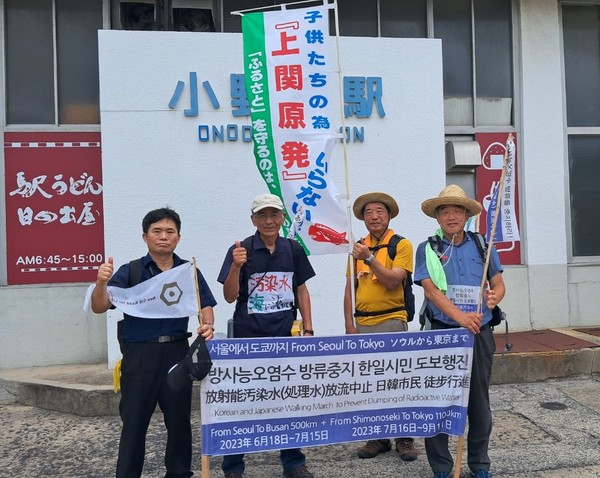

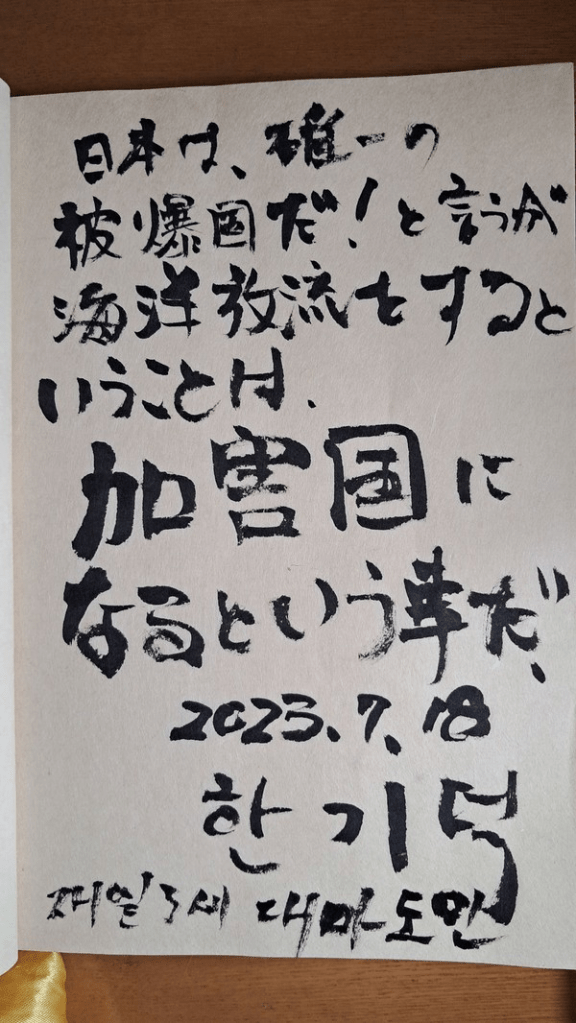
After hearing about my march, Ki-deok Han, a third-generation Korean living in Japan from Tsushima (Tsushima Island), came out to walk. He is from Nagoya and settled in Tsushima a long time ago. He also lived in Korea for two years, so he speaks Korean well. The current issue in Tsushima is the direction of public opinion regarding the movement to establish a nuclear waste disposal site. After this walking march, I decided to visit Tsushima Island and listen to current issues.
So, a few days ago, on November 2nd, I went there for 2 days and 1 night with Professor Hae-chang Kim and comrade Young-hoon Jeong. Introducing the record,
Comrade Young-Hoon Jeong compiled his visit to Tsushima into an epic poem as follows.
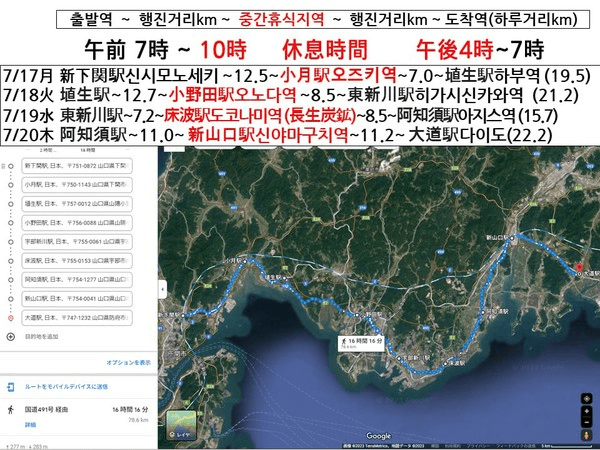
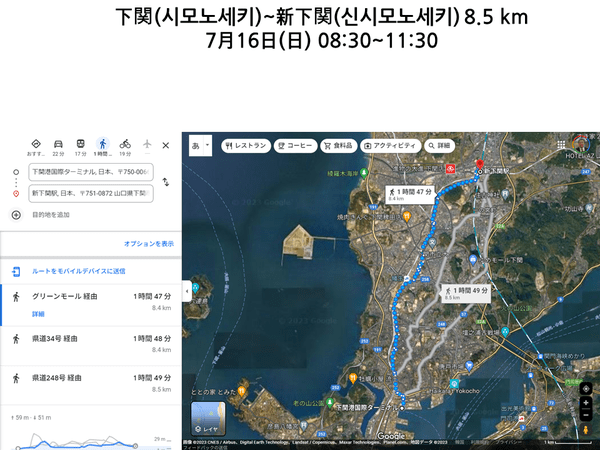
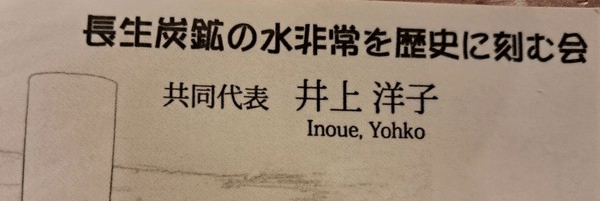
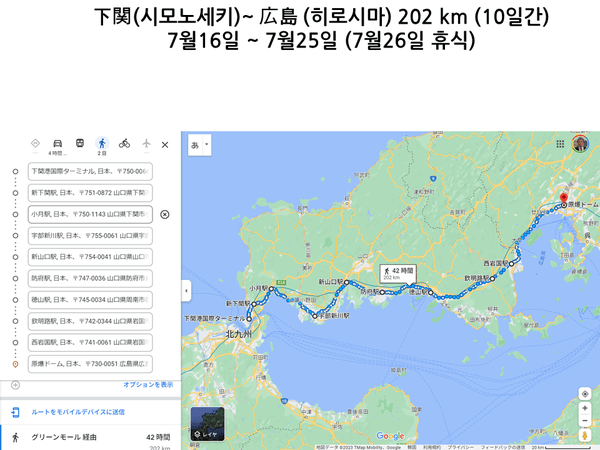
The map above is a walking course in Yamaguchi Prefecture. It has a lot of curves. There are shorter, straighter routes, but I chose this route because I wanted to go through the Josei Coal Mine.
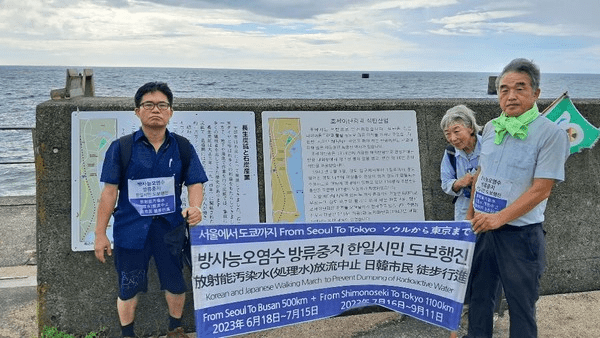
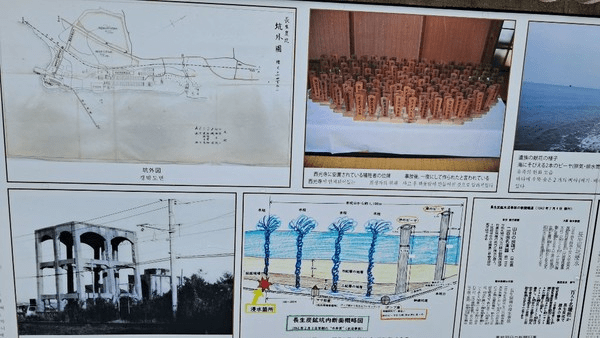
It is a submerged underwater coal mine. This is a place where a coal mine under the sea collapsed and many people died. In particular, there were many victims of Korean people who were forcibly conscripted during the Japanese colonial period. The remains have not yet been found. This is a virtual cross-section of the submersion. After visiting this place in June 2017, I wrote a related article for the Kyunghyang Shinmun.
“~Josei (長生) It’s a coal mine accident. It’s a place where there was an accident worse than the recently screened movie . In February 1942, 136 Koreans and 47 Japanese people died in this coal mine off the coast of Ube City, Yamaguchi Prefecture. A tragedy occurred in which it was submerged all at once. In an article (Park In-sik) quoting (Park In-sik), there is also the following testimony: “Josei Coal Mine has a seabed coal seam along the coastline. They had no choice but to mine in shallow strata. When they went down to the mine shaft, the sea was directly overhead, so the workers were terrified that it would collapse. While they stopped work and ate their lunch, they could hear the sound of the engine of a fishing boat passing above their heads. They could clearly hear the sound of the propeller passing by. They were always terrified because it felt like the ceiling was going to collapse at any moment.”
The serious problem is that while mining coal in this narrow sea, there have already been accidents in which dozens of people were submerged three times in 1911, 1915, and 1921. Despite this, they were forced to mine coal again. My heart is shattered. This means that they killed the workers knowingly. The sins of the Japanese government at the time were very bad. Who is responsible? Unless we reflect on this and take responsibility for it, something like this will happen again. This part is the connection point. Even after the Fukushima nuclear accident, the Abe administration is promoting nuclear power plants again. And even after experiencing Three Mile, Chernobyl, and Fukushima, humanity is pushing for nuclear power plants again. “Yamaguchi and the global community have a heavy task ahead of them.”
In fact, even at this very moment, the Japanese government’s mistakes are being repeated. That’s the problem. Mistakes are repeated! Does the Japanese government lack the universal values that humanity should have?



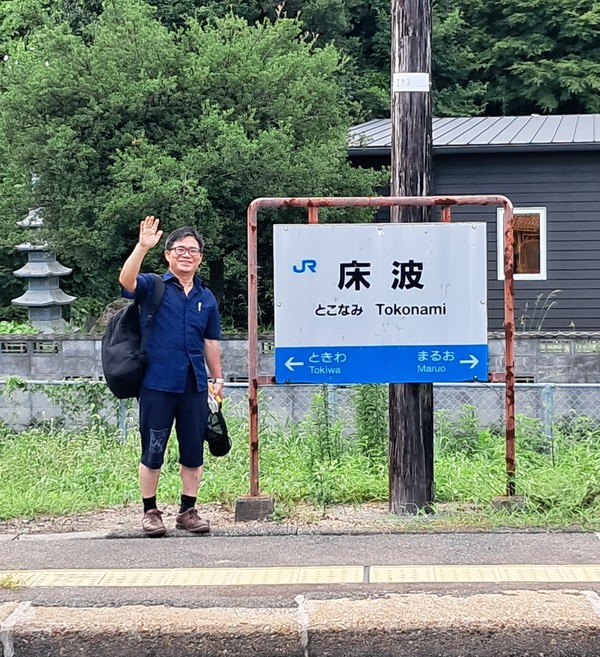
It is time for Comrade Jeong Young-hoon to return. He returns to Shimonoseki and takes a ship to Busan. Although it was only a short time, he says he had a lot to write about. He will continue to fight passionately even after returning to Korea. And he plans to come back by the time the march arrives in Tokyo. Immediately after he returned to Korea, introducing an article he contributed,

Edited by: Kim Mi-kyung, Editorial M
Author Wonyoung Lee leewysu@gmail.com
Translation yoonhwa Cha
Categories: Korean-Japanese citizen walking march
 New Silk Road for Life and No-Nukes
Leave a comment