I gather the will of Korean citizens and leave for Japan.
Daegu MBC vividly reported on the walking march, which was carried out with enthusiastic support from Daegu citizens.
[Daegu MBC Report] March against Japanese polluted water discharge…Daegu citizens ‘support’
The Korea-Japan Citizens’ Walking March, which had been ignored except by internet media, was covered for the first time by this major media outlet. Many people are now aware of this march.
Around this time, an important column by Professor Hae-chang Kim (Kyungsung University, environmental engineering) was introduced to the media today with the following title.
[Professor Kim Hae-chang’s column] Why we cannot trust the IAEA final report
The part of particular note in this column is:
“In the radiation exposure assessment of the IAEA report, the largest contribution to committed effective dose (total dose expected to occur over the rest of one’s life) is the consumption of seafood, and the radionuclides that contribute the most to the dose through consumption are iodine-129 and carbon-14. , iron 55, and selenium 79, and the contribution rate exceeds 90%. He also clearly indicated that nuclides other than tritium, which cannot be removed by ALPS, account for a larger proportion of the impact. Not only has ALPS not been functioning properly as designed, but it has been generating large amounts of treated water containing residual radioactive materials. The total amount of contaminated water and radioactive materials that has already been released cannot be estimated. It is unknown how much the amount will increase in the future. “It is unknown to what extent it will affect the global environment. It is also unknown whether the damage caused by this will be reversible.”

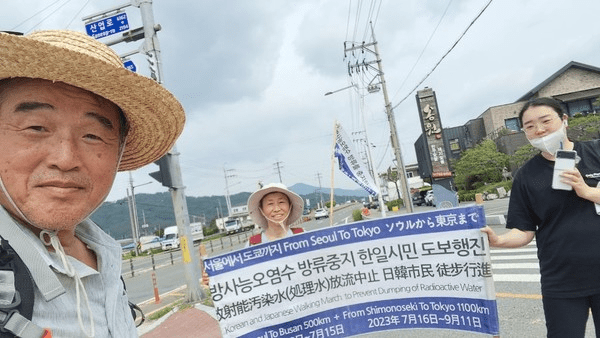
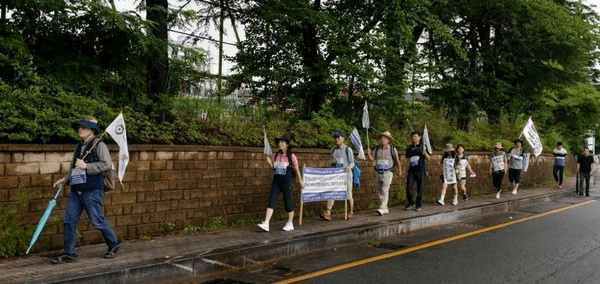


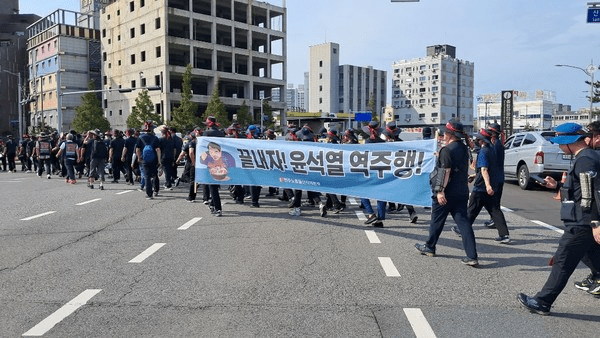

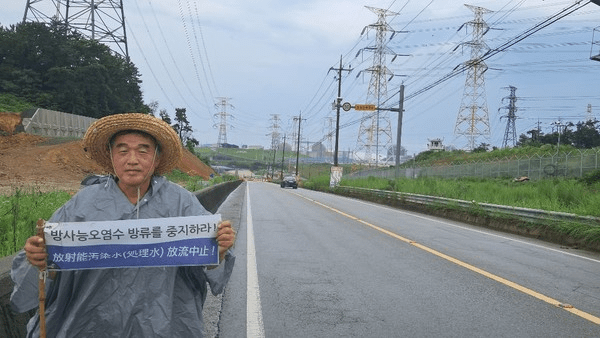

As we crossed from Ulsan to Busan, we marched with Professor Seungryeol Lee, who came from Daegu. Professor Lee, who majored in English literature, will retire in February of next year, and is also a comrade who has fought against corruption in private schools while serving as chairman of the Yeungnam University faculty council (directly elected by over 700 professors). He had a long relationship with the late Kim Jong-cheol of Green Criticism, and currently serves as the standing representative of the Daegu Environmental Movement Federation, and is one of the elite figures in Korean civil society. A few days ago, he also led a march in Daegu.
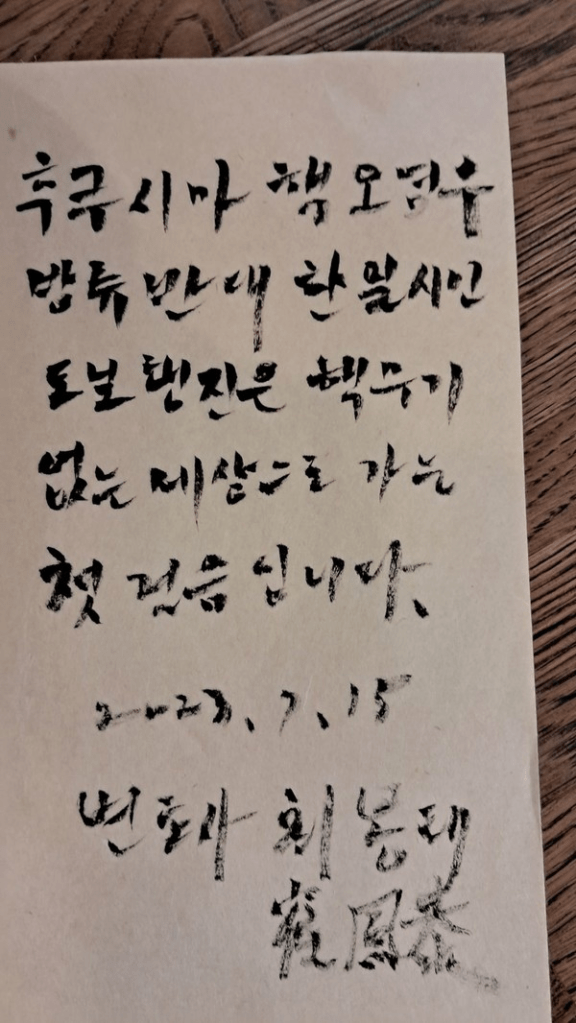
After marching with me, he left the following message on his Facebook page.


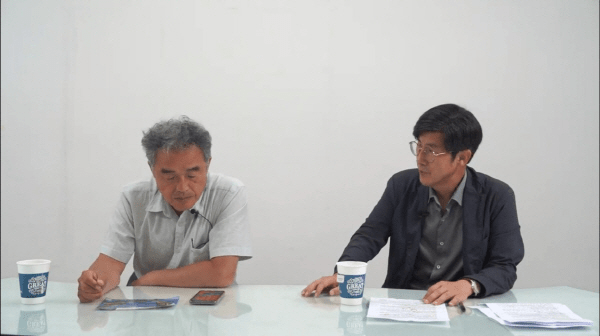
Upon arriving in Busan, I had a roundtable discussion with Professor Hae-chang Kim at Kukje Newspaper.
Below are some of the points I discussed at this meeting:
《 Former Professor Lee claimed, “There are no organizations or rules managing nuclear safety around the world, and even if there are, they are ineffective.” He said, “In the past, the UN integrated environmental issues across the planet and created the World Charter for Nature in 1982 and the Earth Charter in 2000. Article 6, Paragraph D of the Earth Charter states, ‘Radioactivity must not be increased. He said, “There is a content that says, ‘You must not emit it,’ and there are restrictions on this part under international law,” adding, “This rule still works, but it is being ignored by the logic of the Japanese and U.S. governments’ power.”
(intermediate omitted)
Former Professor Lee emphasized that international cooperation is needed to resolve the contaminated water crisis. This Korea-Japan walking march is one of these efforts. He said, “There is a need for the heads of local governments in cities such as Busan, Ulsan, Mokpo, and Gangneung that border the ocean to speak with one voice.” He added, “It could also be a way for these cities to work together with small cities in Japan to speak with a common voice.” emphasized. He continued, “Through these efforts, one way could be for citizens of various countries, including Korea and Japan, to unite and file a complaint with the Special Procedures Unit under the UN Human Rights Council.”
Former Professor Lee said, “Ultimately, the international community’s united efforts will be able to create a solution,” and “This Korea-Japan campaign is a private-level measure for such efforts.”
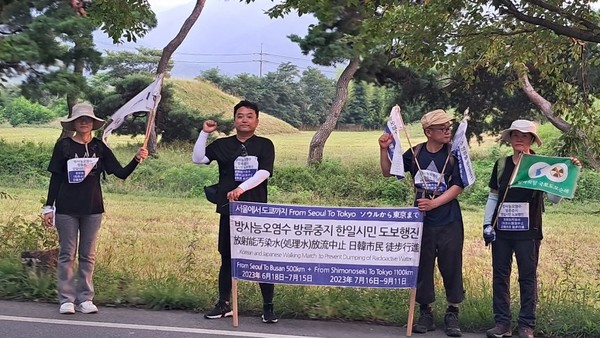
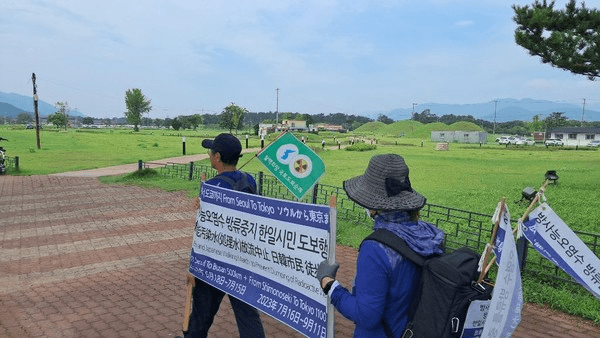
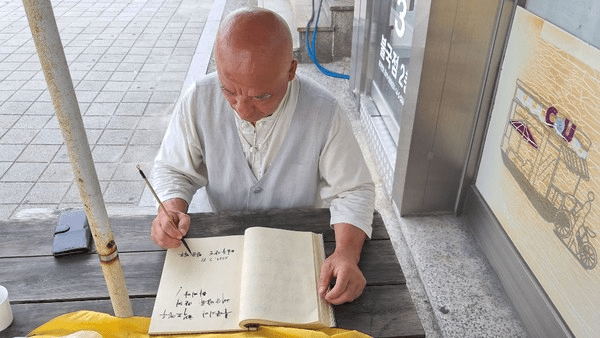
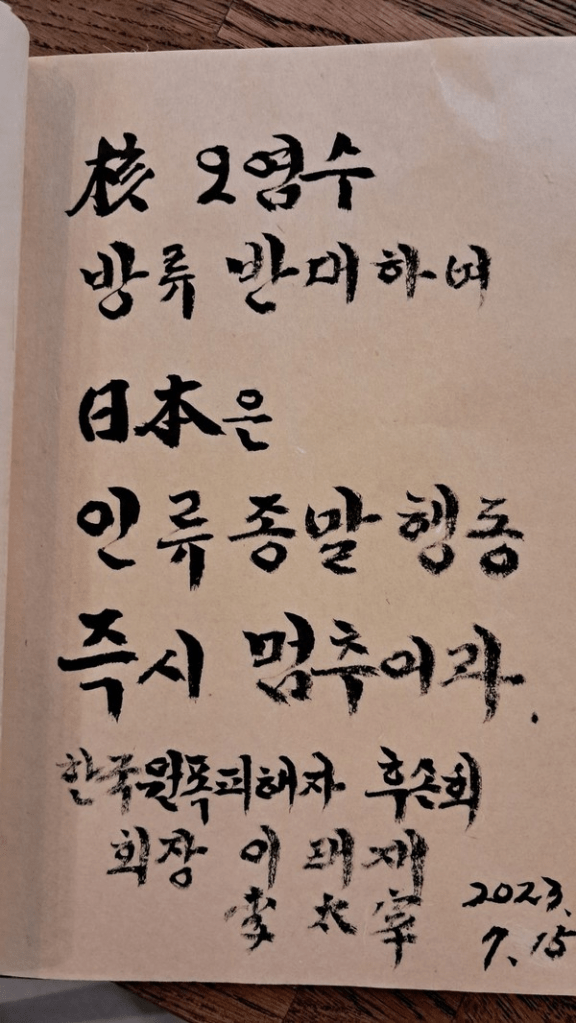
The Korea-Japan Citizens’ Walking March team will cross the Genkai Sea on the ferry to Shimonoseki on the 15th. When they arrive in Japan on the morning of the 16th, they plan to walk the 1,100km distance from Shimonoseki to Tokyo for two months to inform local residents of the seriousness of the problem of contaminated water discharge. In this process, we plan to deliver notebooks containing messages from Korean and Japanese citizens who share the purpose of the march to the Korean and Japanese governments and the National Assembly.
The marching group will perform and inform citizens of the purpose of the march at the departure ceremony held at Busan City Hall Square at 11 am on the 15th. Former Professor Lee said, “We will create a time for Korean and Japanese citizens to deal with common problems,” and pledged, “We will make the process known internationally and grow it into a performance that many people around the world will pay attention to and participate in.”>>
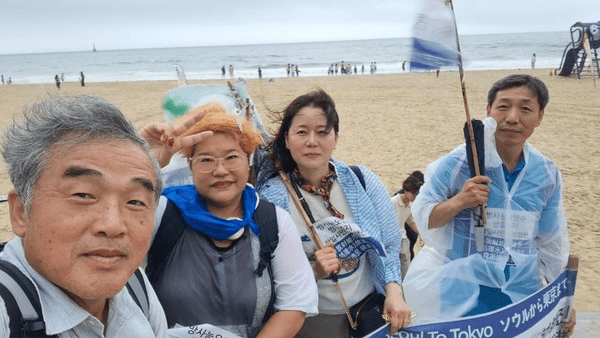
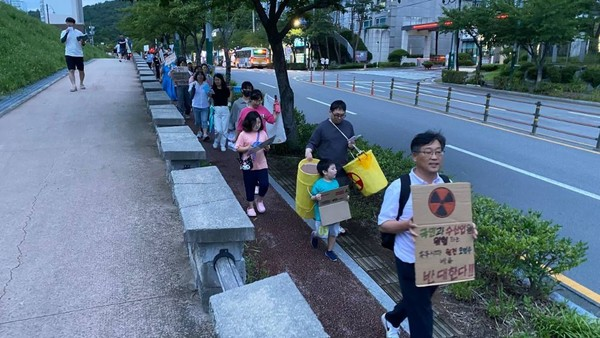
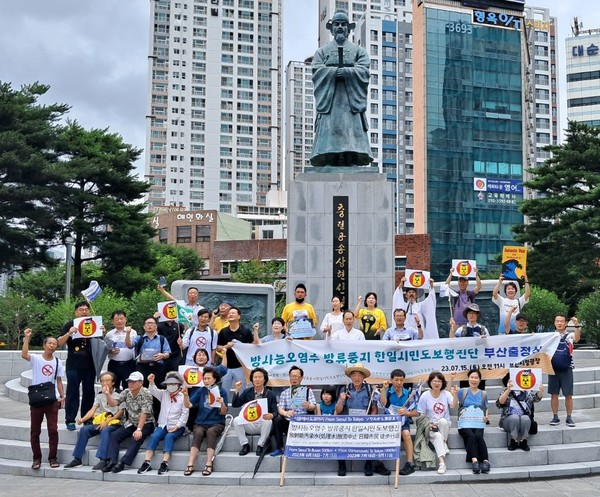

KBS Busan broadcasting station reported scenes of the rally and march.
[KBS Busan] Korea-Japan 1,600km long journey… Appeal to “stop discharging polluted water”



Edited by: Kim Mi-kyung, Editorial Member
Author Wonyoung Lee Shareholder leewysu@gmail.com
Original Article >> https://www.hanion.co.kr/news/articleView.html?idxno=29945
Translation Yoonhwa Cha
Categories: Korean-Japanese citizen walking march
 New Silk Road for Life and No-Nukes
Leave a comment