https://play-tv.kakao.com/embed/player/cliplink/rv2kn92od7c7jdht73nlvp0zj@my?service=player_share
0. Photo of the day is the evening of the 13th, a video of the procession of the citizens of Kyoto

0-1. This is a picture of the rear part of the procession of about 100 citizens arriving at the Kyoto City Hall after completing the two-hour march.

1. I revised the whole schedule on my day off. It’s a change of schedule and a few places.
https://m.cafe.daum.net/earthlifesilkroad/kUxW/39?svc=cafeapp

2. Until now, there have been more people who have informed us about the progress of the schedule in each region. This picture is the schedule sent by my comrades in Shiga prefecture. They were sent from the Gifu area and also from Nagoya city. I was busy checking, but I enjoyed the time.

3. In the evening, some Korean residents in the Osaka area prepared a welcoming table for us. Many are from Jeju Island. Jeju 4.3 is a historical issue that still needs to be resolved.
4. Accept donations gratefully.
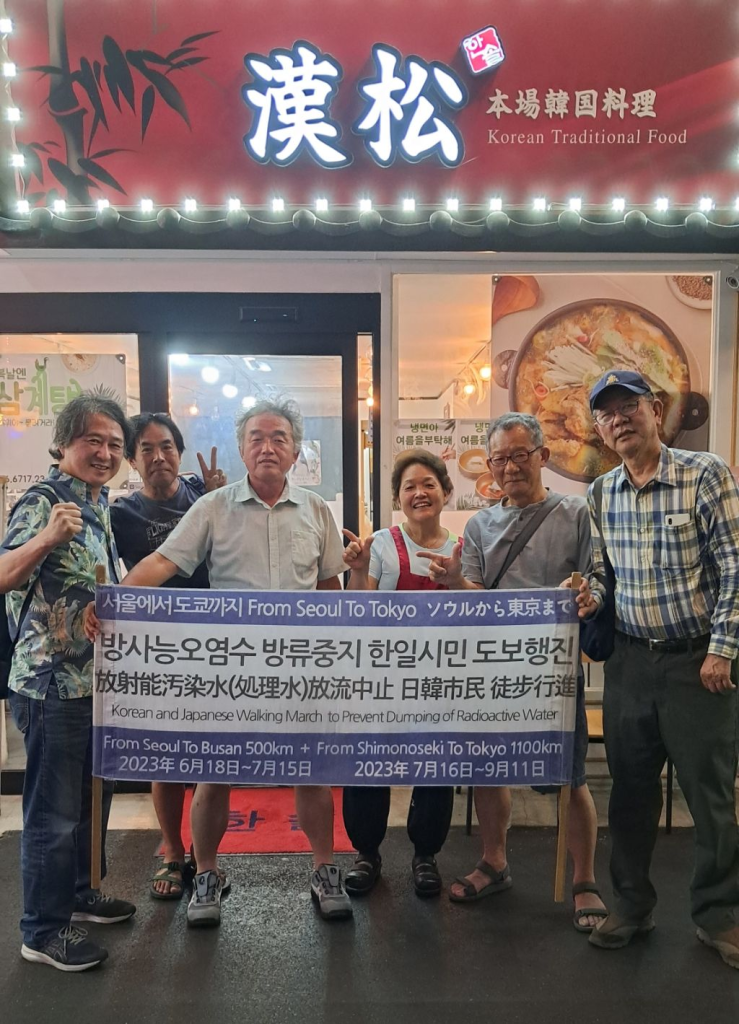
5. Commemorative photo with the owner of the restaurant who has treated us with much kindness.
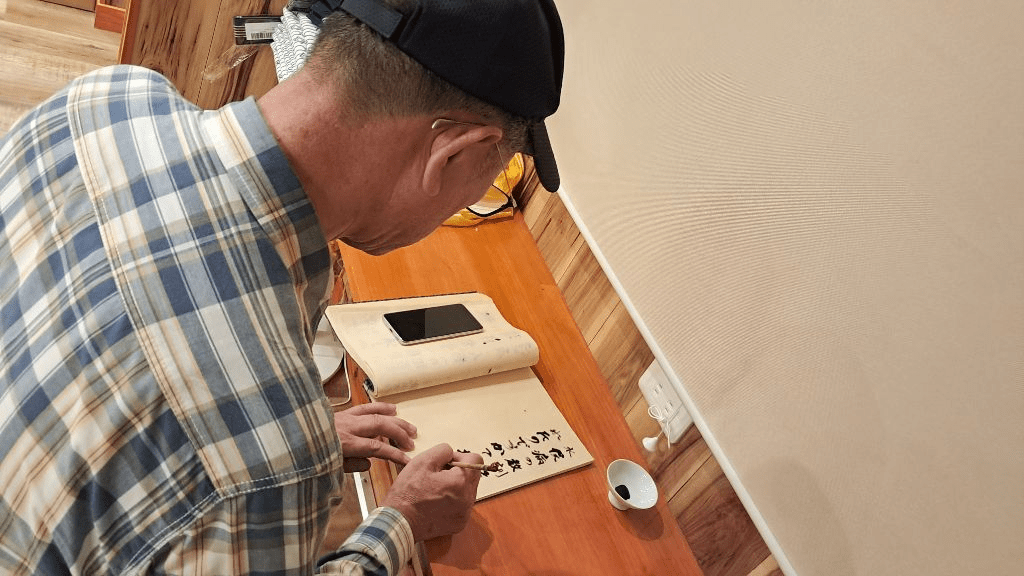
6. asked Kim Hanseung for a message.

7. Message from Kim Hansung.
Have you forgotten the lessons of Minamata disease yet?
By the time the damage is discovered, it is too late.
Never release radioactively contaminated water.
August 12, 2023 Kim Hang-sung
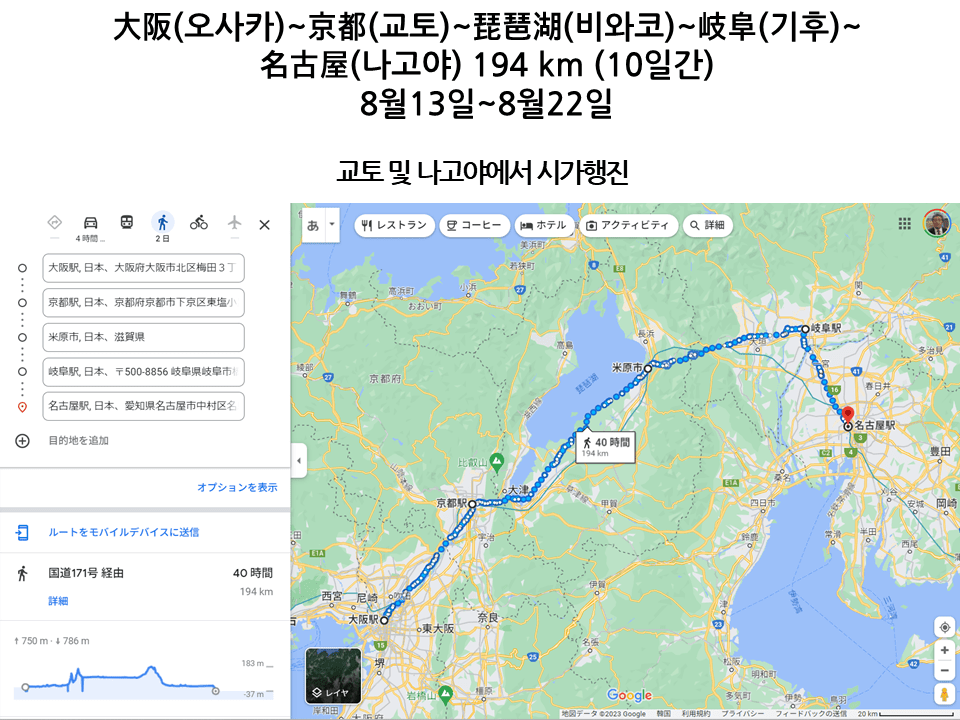
8. From now on, we will march through Kyoto to Shiga Prefecture, Gifu, and Nagoya for 10 days.
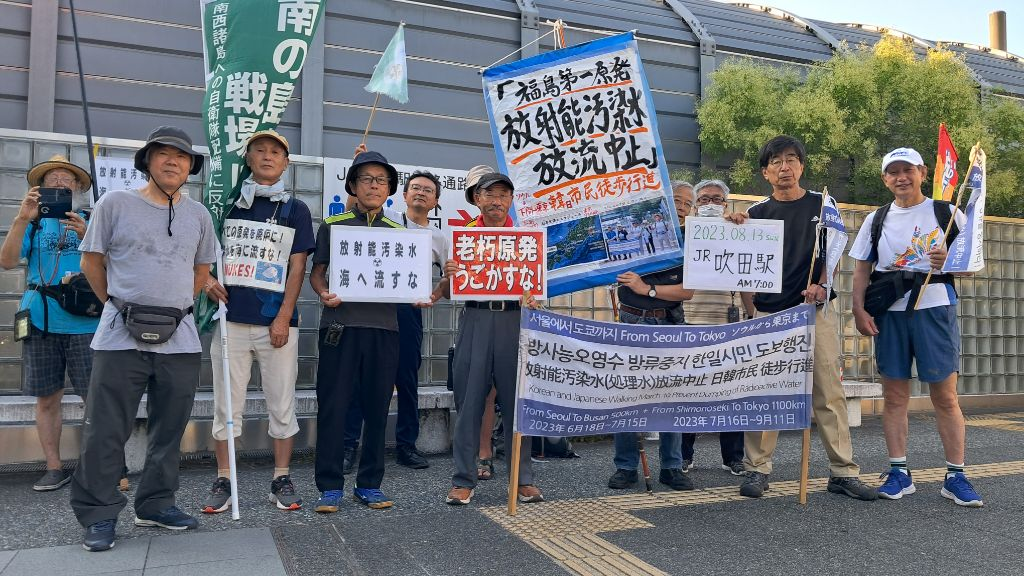
9. Many people came to Suita Station on the morning of the 13th, the day after the rest.
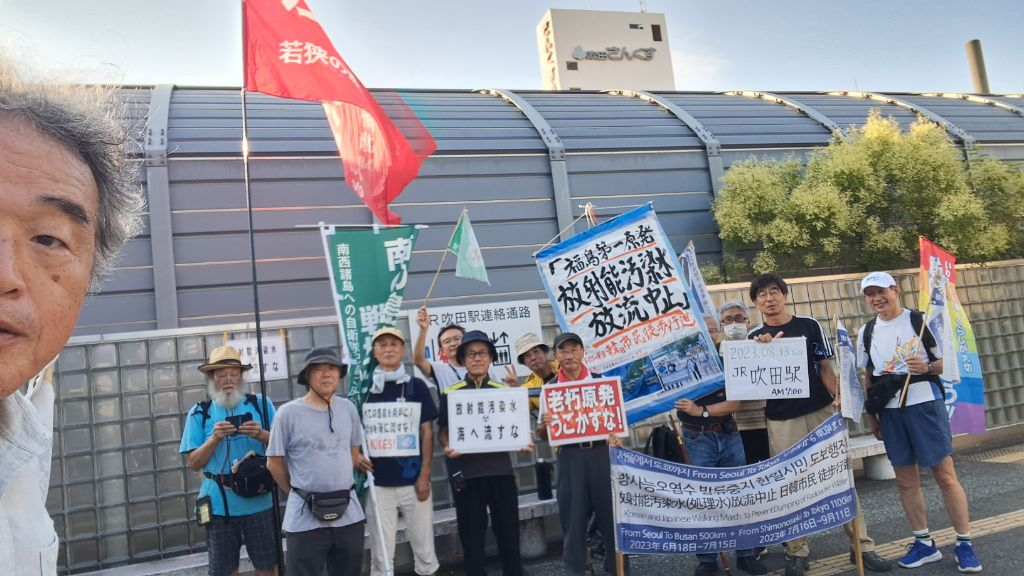
9-1.

10. After walking 14 kilometers by 11:00 am, we join the Kyoto Citizens’ March in the afternoon.

11. A group walking cheerfully.

12. Take a commemorative photo in the shade.

14. Beating the heat and sweating,

15. When we arrived at Takatsuki Station, many people came to meet us.

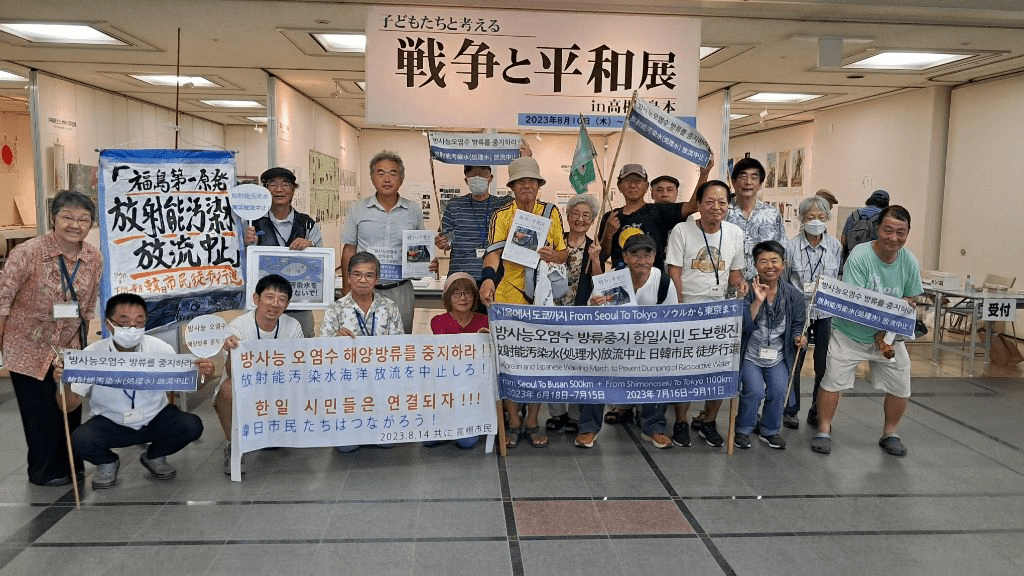
16.

17. Demo wagon with music.

18. Comrades who walked together until the end.
Nemoto Hiroshi
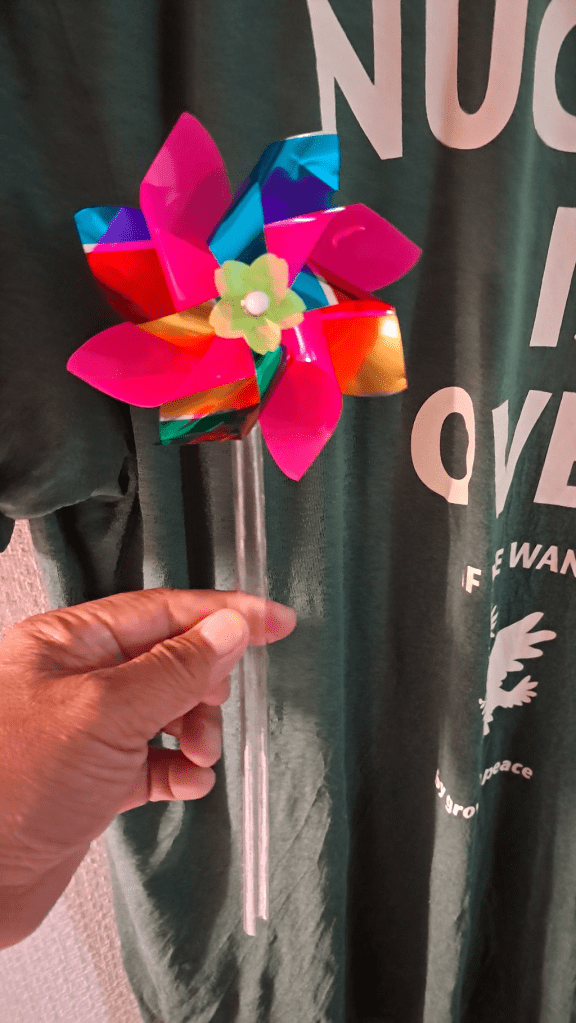
Huruhashi Masao
Yamashita Keiki
Akiyoshi Shoichi
Hara Tsunenori

19. Meet Kiyoko Mito, a Japanese denuclearization activist.
20. She has also supported the denuclearization movement in Buan and Samcheok, South Korea. After the death of her husband, a prominent anti-nuclear physicist, she has been an anti-nuclear activist for a long time.

21. The citizens of Takatsuki, led by her, treated me to lunch,
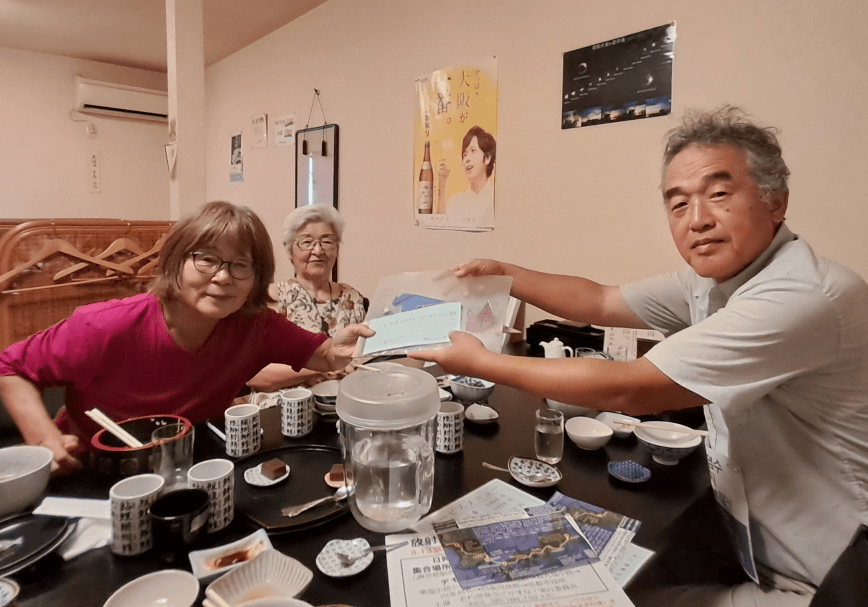
22. also gave me donations.
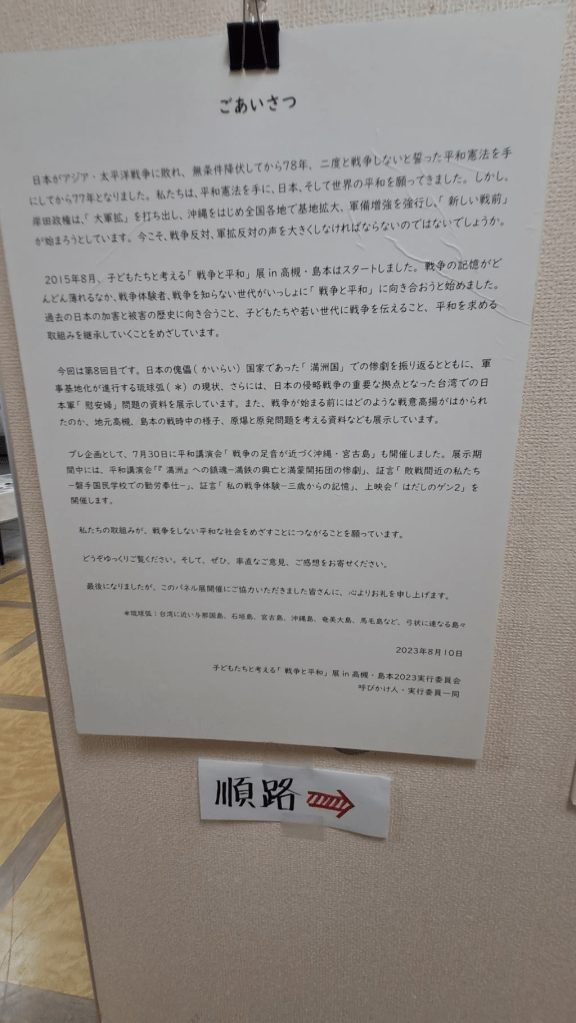
23. Attend an event held near Takatsuki Station. It is an exhibition that reminds us of the history of wars that Japan caused but not been included in textbooks.
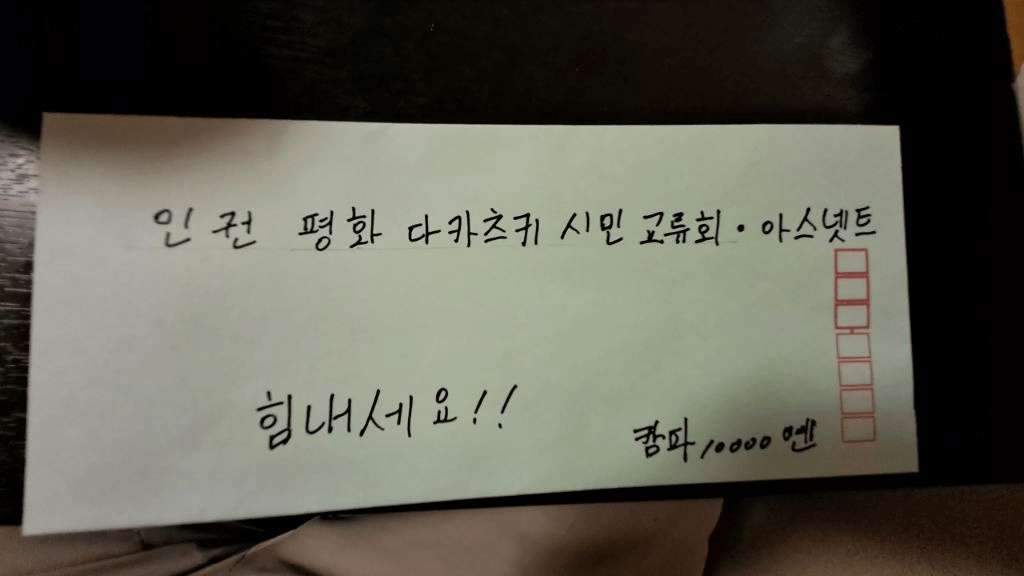
24. The support money I received here.
25. Commemorative photo with group members.
26. Arriving at the park on the west side of Kyoto Station after 4:30 p.m., many citizens are gathering to march.

27. A person from Fukushima whom I met a few days ago,
28. gives me the gift of a windmill. Is it a symbol of hope?
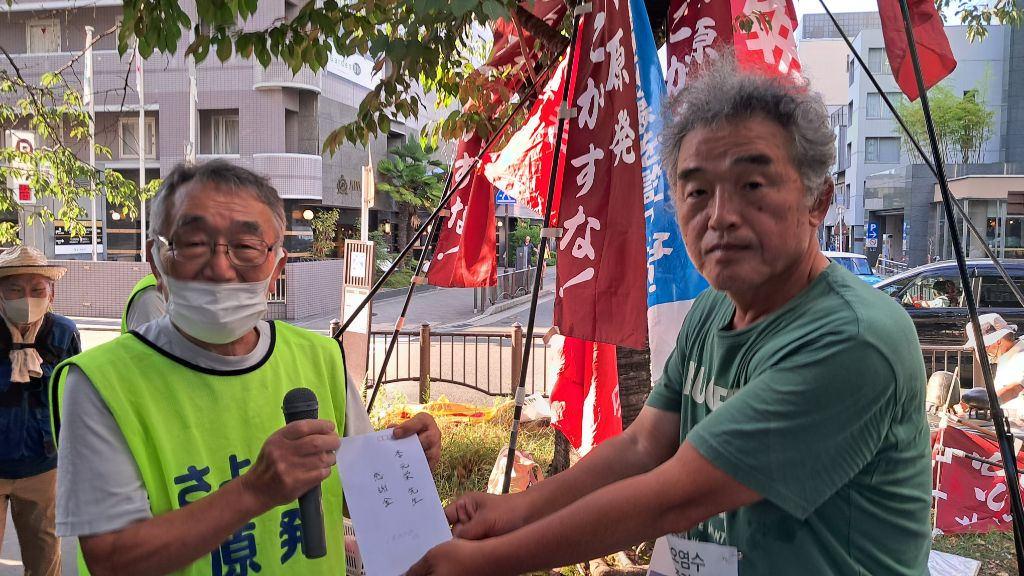
30. When the event started, Mr. Kihara, the organizer of the gathering, handed me an envelope containing donations from the people who gathered today.
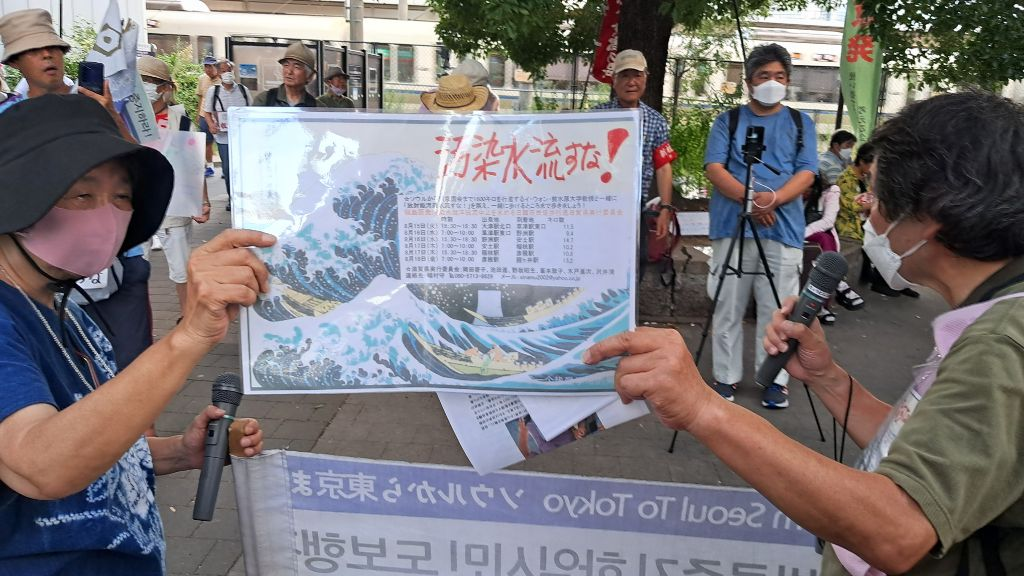
31. After the explanation of the march was given,
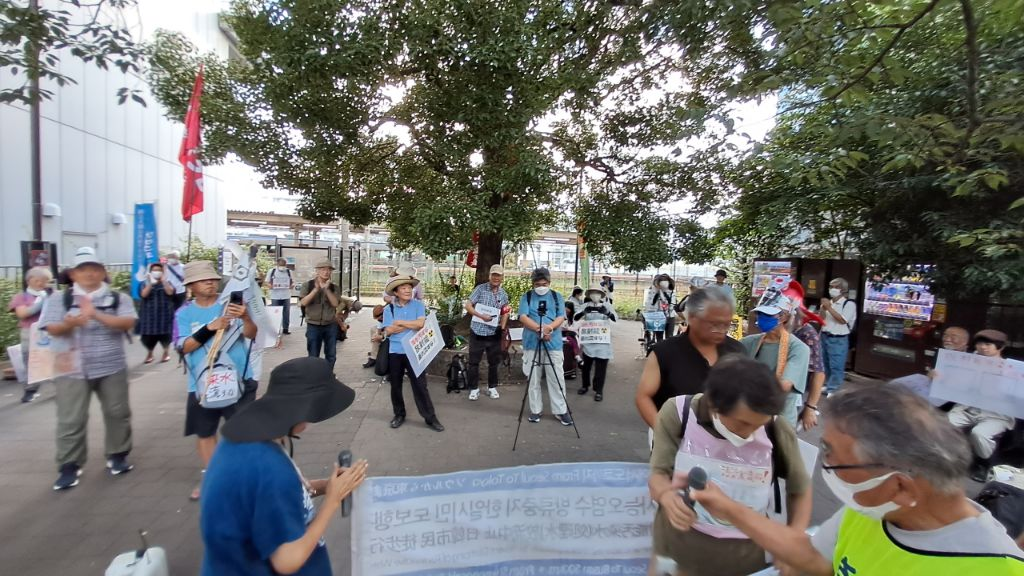
32. I made a remarks. My point is <Citizens of Kyoto can change if they march>
Hello. My name is Lee Wonyoung and I came from Seoul. As we walked, many citizens who had watched the march responded. They wave their hands towards us from inside the car. For example, elementary school students playing baseball in one town realized why a traveler from South Korea was walking. Children instinctively know what is true. After parting and walking for a while, one of them came after me on a bicycle and offered me food. I was moved. It is a march that children also support. At some point, the international community has gone out of order. Today, the strong nations that should lead the global village are completely unable to fulfill their original role. Humanity created the United Nations, but there is still more to come. When did the IAEA, the Japan Atomic Energy Agency, take the initiative? The United States and the United Nations are on the sidelines. We cannot leave the earth to them. From now on, the owner of the global village must stand up and correct it. The people should step in and take action. This Korean-Japanese citizen walking march is one of those steps. Kyoto is the bastion of Japanese conscience. I have high expectations for Kyoto citizens. Kyoto will play an important role in the process of full-fledged international solidarity of the people. Now is the time to show the way with action. We must gather our will through action and bring down the Japanese government. slogans for this walking march. Let’s shout together Don’t let polluted water flow! (Don’t flush contaminated water!) Do not throw away polluted water! (Don’t throw away contaminated water!) thank you.
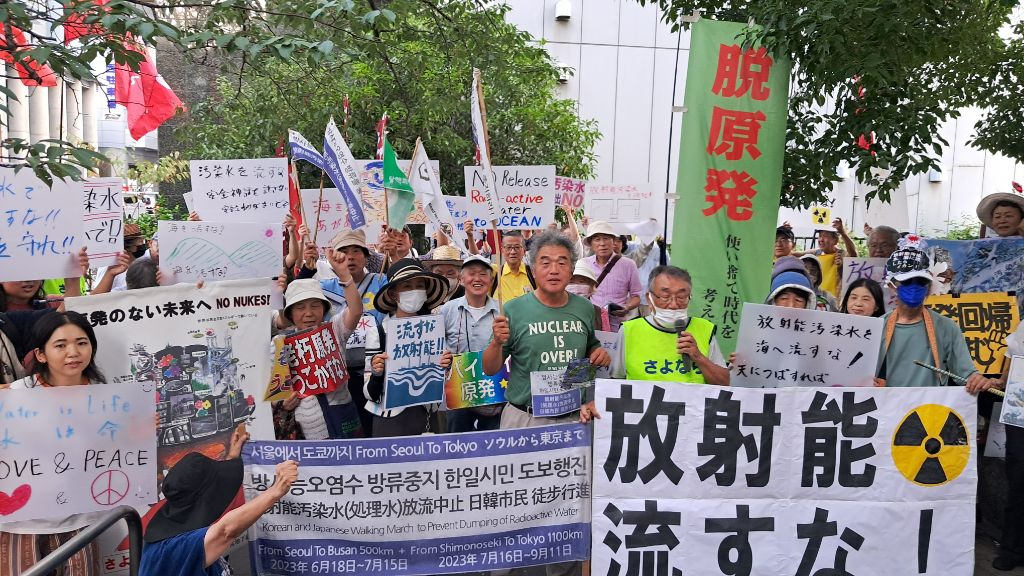
33. Commemorative photo before the start of the march. I heard later that about 100 people joined the march. It was more than twice as many as expected.

34. The lead car sign is cool. “Don’t let contaminated water flow.”

35.

36. It takes about two hours to march across central Kyoto. I was surprised by the reaction of the citizens standing on the street. In particular, many foreign tourists give a thumbs up without hesitation. We marched waving towards people just as waving to the cheering crowd at the Olympic stadium. At the request of the organizers, I occasionally made remarks during the march, and Mr. Nagatani immediately translated my remarks into Japanese resonating far distance. It was a fun and surprising experience.
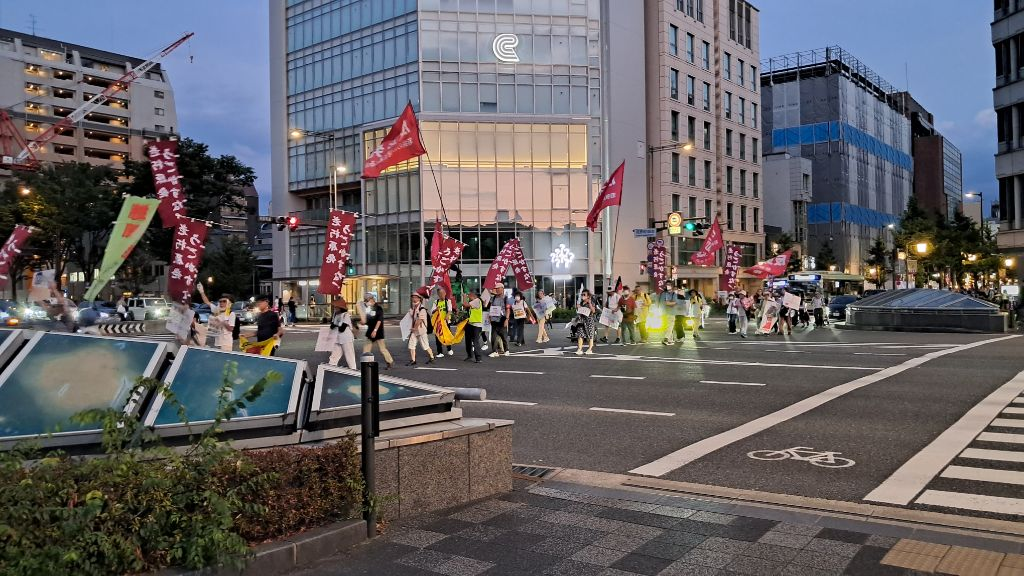
37. When darkness approaches, we arrive at Kyoto City Hall. The long lines are impressive.

38. Commemorative photo
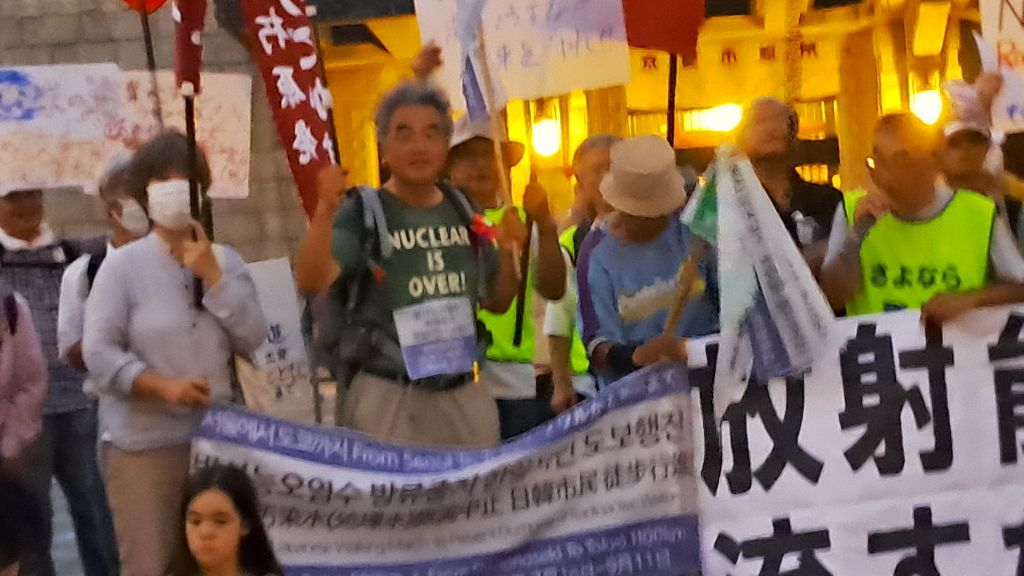
40.

41. my remark scene.
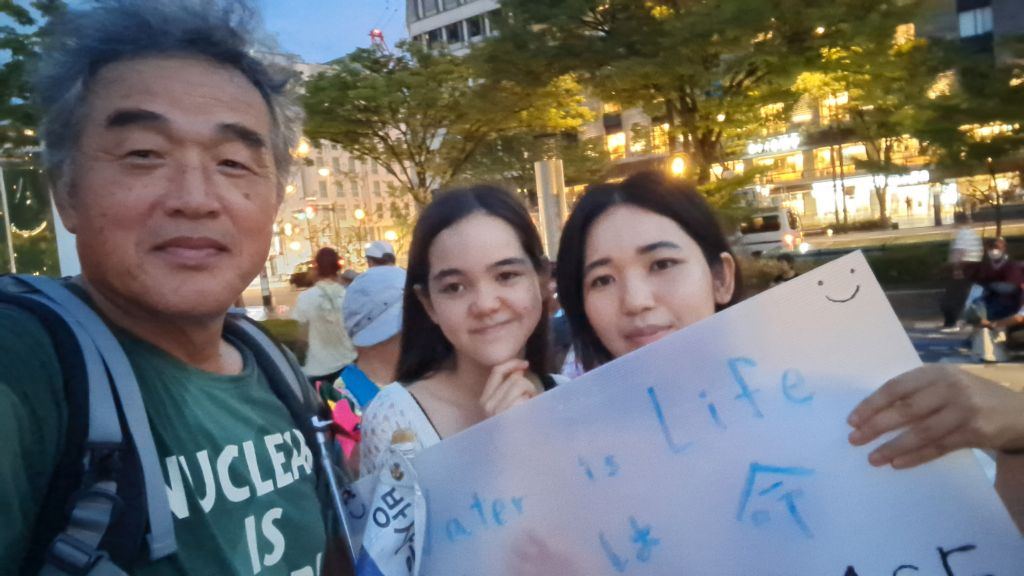
42. A mother and daughter from Nara City. Her 13-year-old daughter is a K-pop maniac.
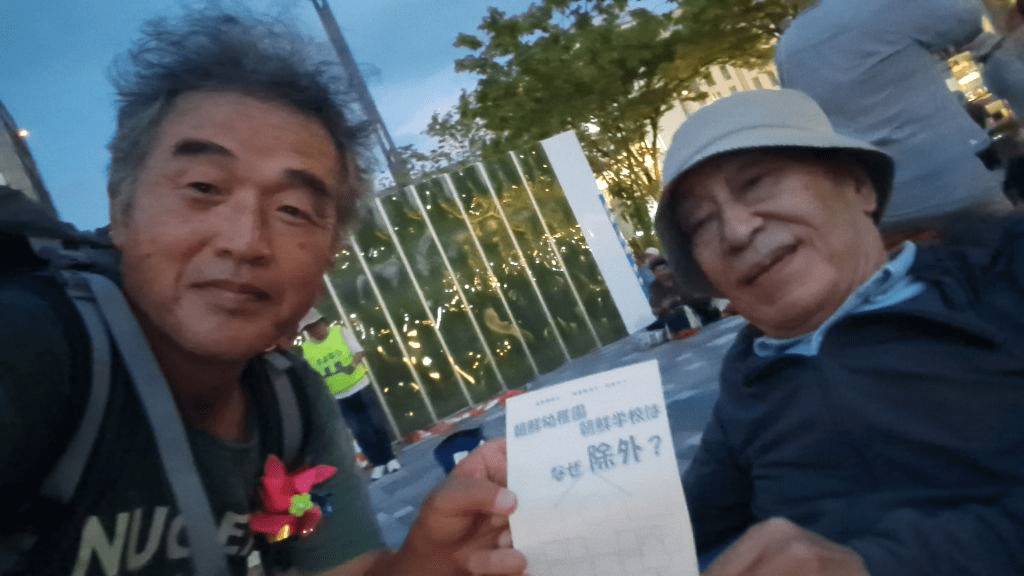
43. With a person who supports Korean schools
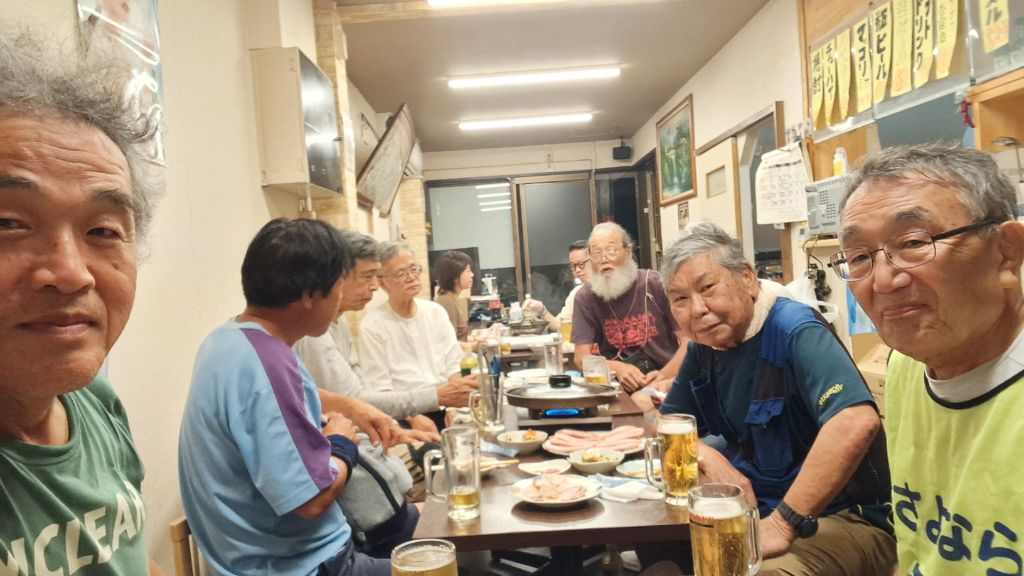
44. After the event, we had a party with Mr. Kihara who organized the event.

45. The name of the committee written on the envelope I just got.
It was an extraordinary day.
Categories: Korean-Japanese citizen walking march
 New Silk Road for Life and No-Nukes
Leave a comment