
0.Photo of the day is with Sakamoto-san couple, who have 14 grandchildren.

1. Today is a tough 23km course going up and down the hilly terrain.

2. A youth hostel in front of Saijo Station. It is a good quality accommodation for a low price.
Early in the morning, Nagashima-san came to pick me up.

3. He took me to the starting point, Nishi-Takaya Station. I asked him for a message.
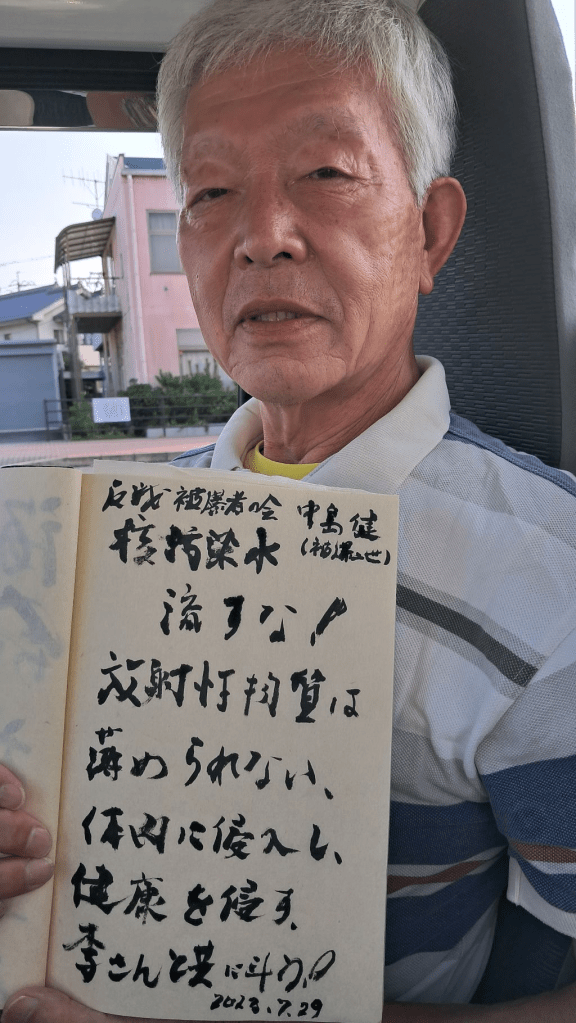
4. “Takeshi Nagashima, member of the group of anti-nuclear bomb victims
Do not discharge nuclear contaminated water
The amount of radioactive materials does not decrease
When it penetrates the body, it harms health.
I shout with Lee Won-young!
2023. 7. 29.”
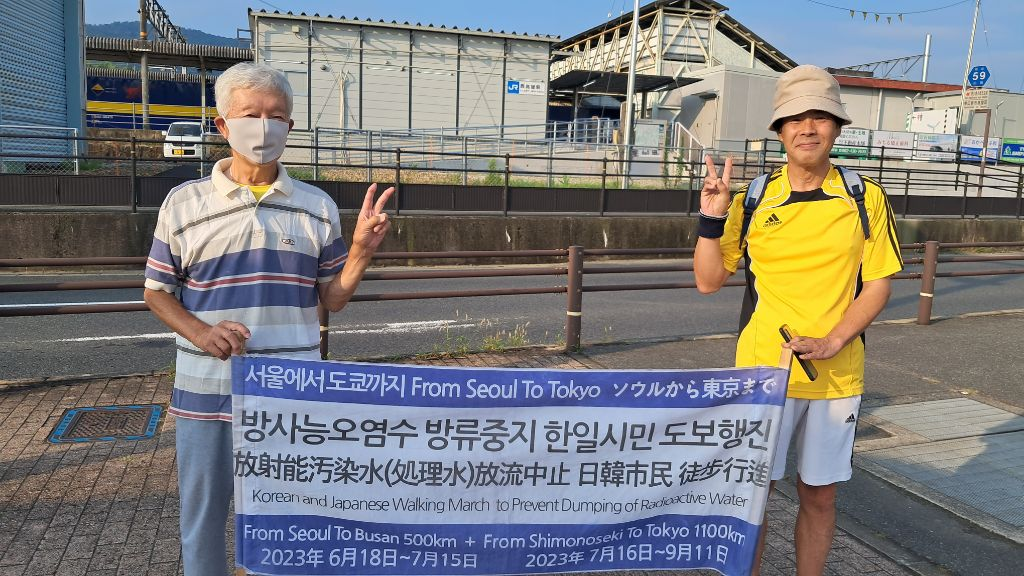
5. At this time, Hara san came hastily from Yamaguchi City, a distant place. He came to walk with me because today is his day off.

6.
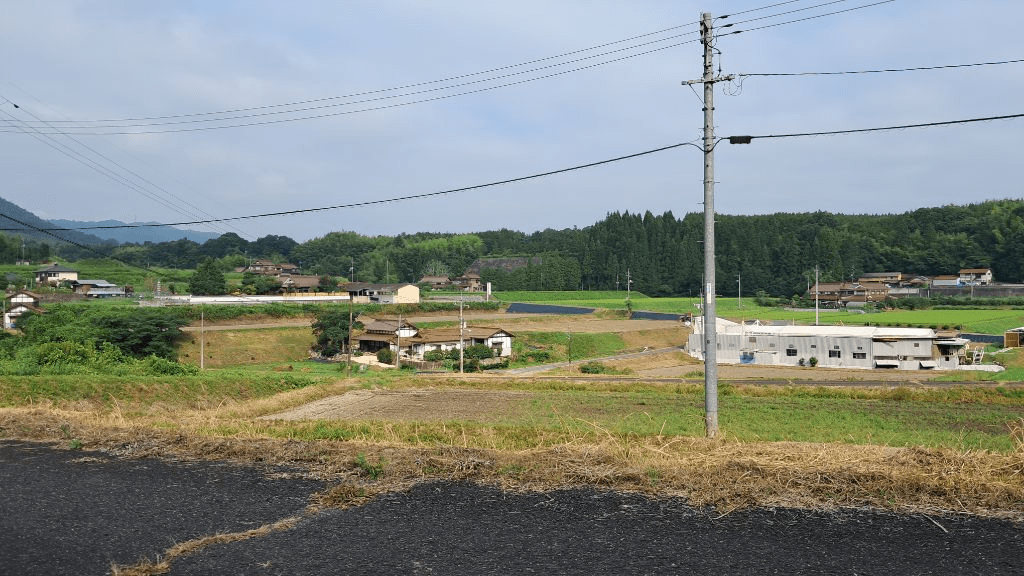
7. two of us walk through a rural area.
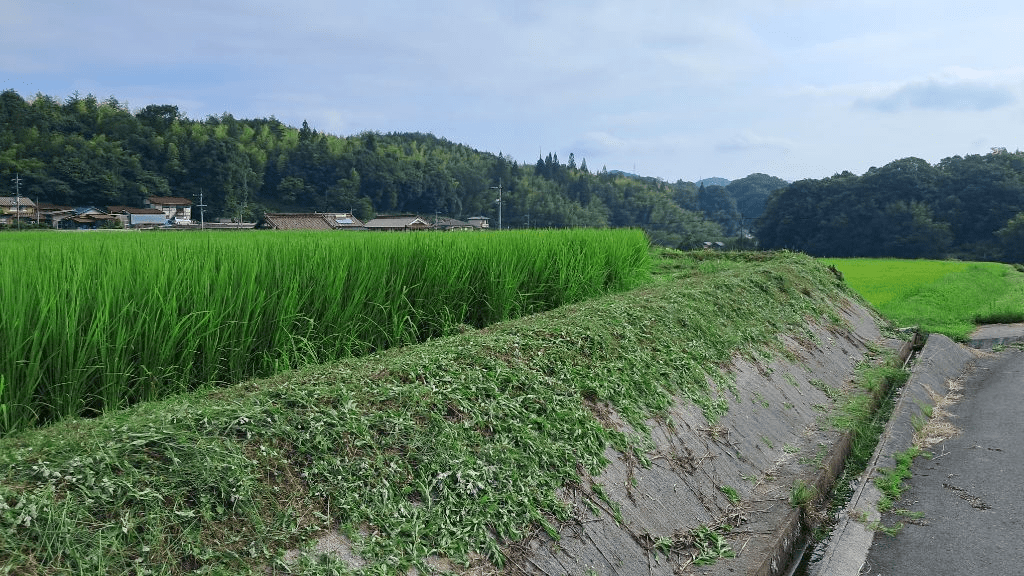
8. Looking at the cut grass on the rice paddy bank, I could feel the will and diligence of the farmer not to use weed killer.
The toxicity of herbicides kills even microorganisms in the soil, so the soil viscosity that supports rice paddy banks is incapacitated, which eventually leads to the collapse of rice paddy banks.
This reminds me of a journal from a lecture held in Daegu, Korea, in early July.
https://m.cafe.daum.net/earthlifesilkroad/kUxW/36?svc=cafeapp
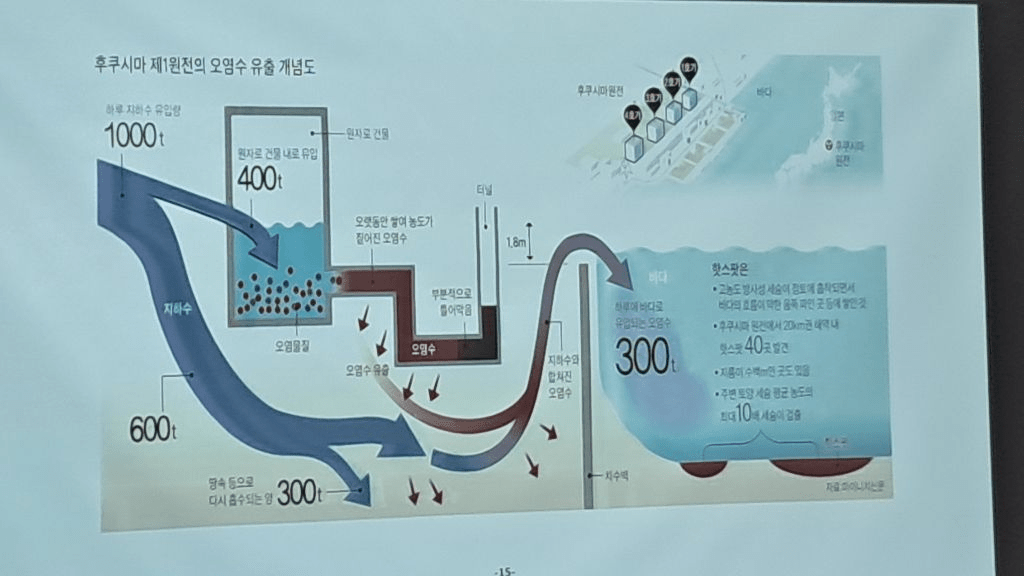
My point of view on her point is as follows.
‘I would like to point out the possibility of another risk that I still have as a hypothesis besides the danger of the base of the food chain.
It is that the radioactivity weakens the tensile force inside the soil by killing microorganisms while penetrating into the stratum. Soil construction is usually used as a finishing method for civil engineering. The principle is to utilize the dense tensile force of microorganisms in the soil. It is like a phenomenon in which the rice field bank collapses when weed killer is applied to the rice field bank, weakening the plant roots and killing the microbes that made the soil sticky.
The problem is that when that happens inside the sea, there can be different risks than on land. This is because of the enormous water pressure. There is a high possibility of causing cracks in the strata that are supposed to withstand the water pressure, which is likely to trigger an earthquake.’
Although it is still in the hypothetical stage, a fellow physicist at the university agreed that it was a valid reasoning.
I would like to ask a Japanese marine seismologist or marine geologist seriously about the possibility of my hypothesis.
If there is even a chance of success, the Japanese government must never dump nuclear-contaminated water into the sea.
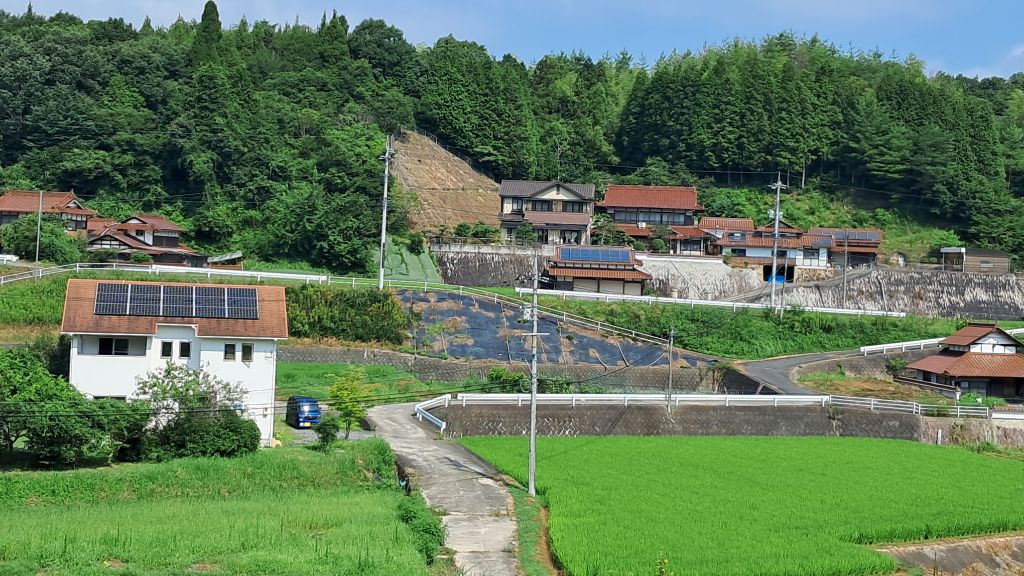
10. Rural areas in this region are getting solar power no less than Germany.

11. It must be related to the increase in idle farmland as the population ages.
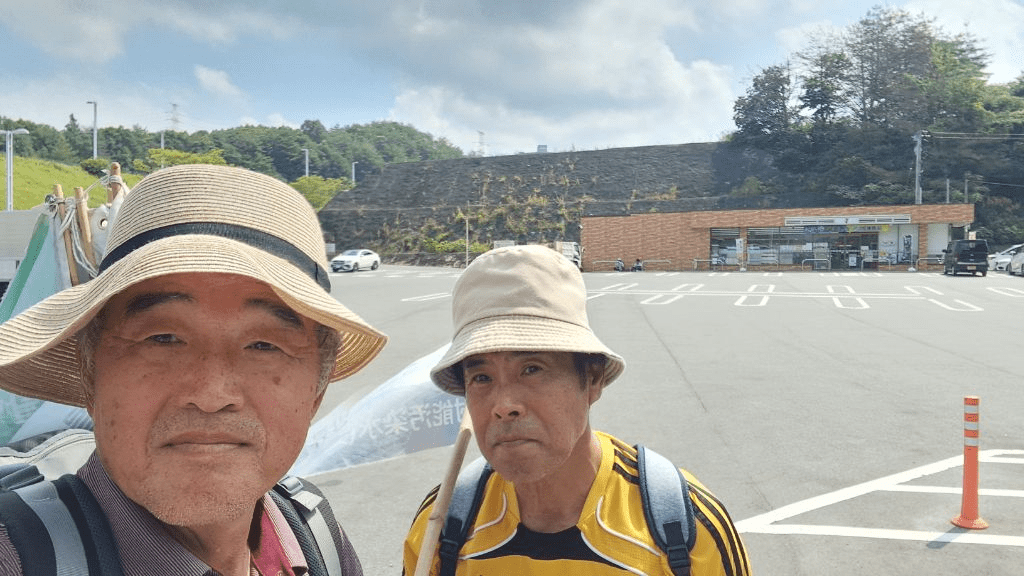
12. After going up and down several times, we came to a 7-Eleven convenience store, the halfway destination of the day.

13. Today is the first time that the middle destination is not a station. That’s how tough this course was.
Fortunately, a nearby hotel also operates an open hot spring. we just have to wait until 1:00pm.
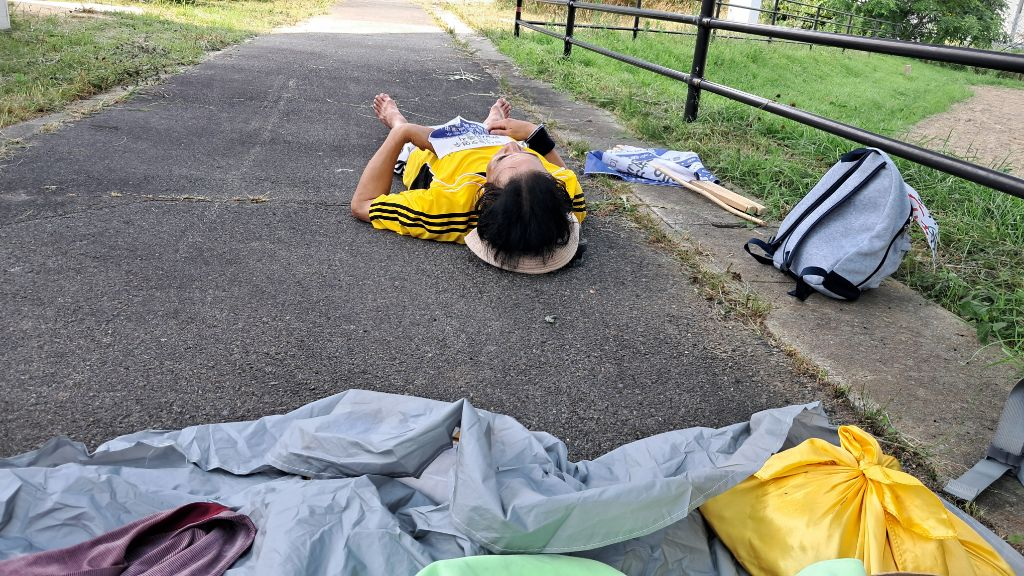
14. Until then, after finding a shade under the overpass, we lie down on a sprawl to rest.
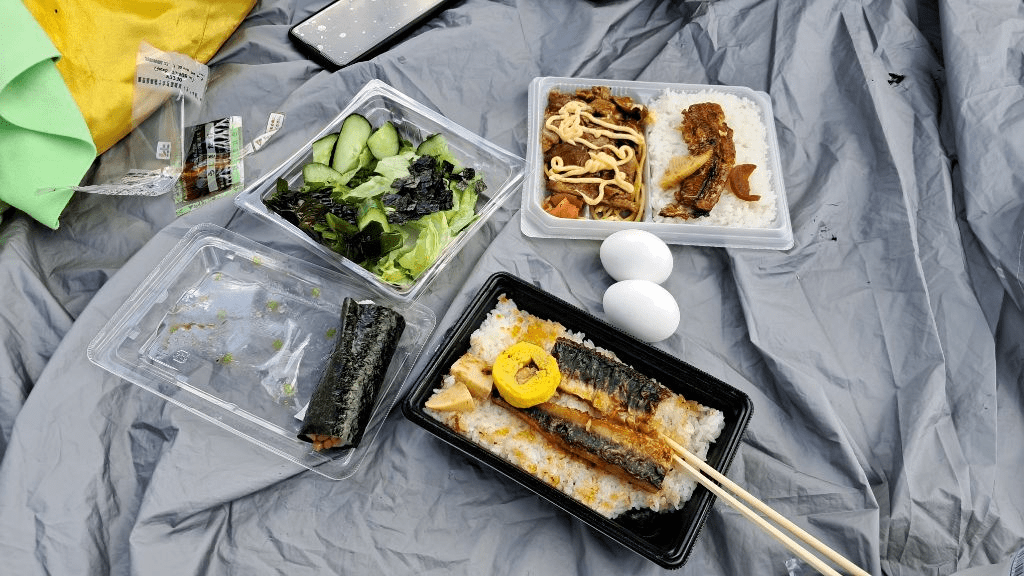
15. from someone’s recommendation, we decided to buy eel lunch box fpr lunch from a convenience store. It is a food for health maintenance. This alone is over 2,000 yen. It’s because of ‘Kampa’.

16. After bathing in the hot spring, take a rest in the tatami room. I feel a bit lucky.

17. during the break, looking at a map of the Osaka-Tokyo area. to specify the marching schedule.

18. Leaving the hot spring.

19. It’s departure at 4:00 PM going through the scorching heat.
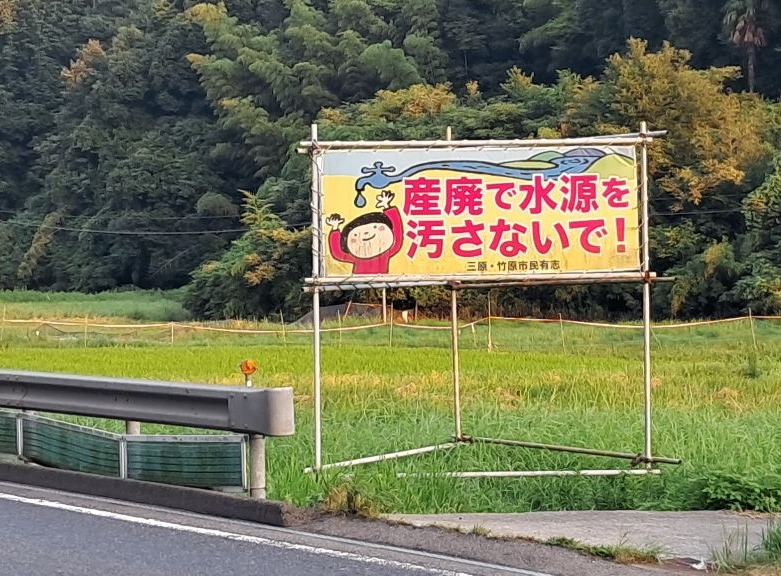
20. This slogan is useful.
“Please don’t pollute the water with industrial waste”
This commonly used phrase is hitting hard the Japanese government, which is trying to force the release of nuclear contaminated water.

21. Because I did not bother to check the map while walking along the main road, I ended up with detouring about 4km more.

22. I saw a large-scale solar panel installation field in idle farmland next to a darkened road. In the end, we couldn’t reach our destination, Hongo Station, and had to stop 3km ahead. I think we walked about 14 km in the afternoon alone. The rest of the distance will be walked early tomorrow morning. Sakamoto-san, who invited me, drove Hara-san to Hongo Station.
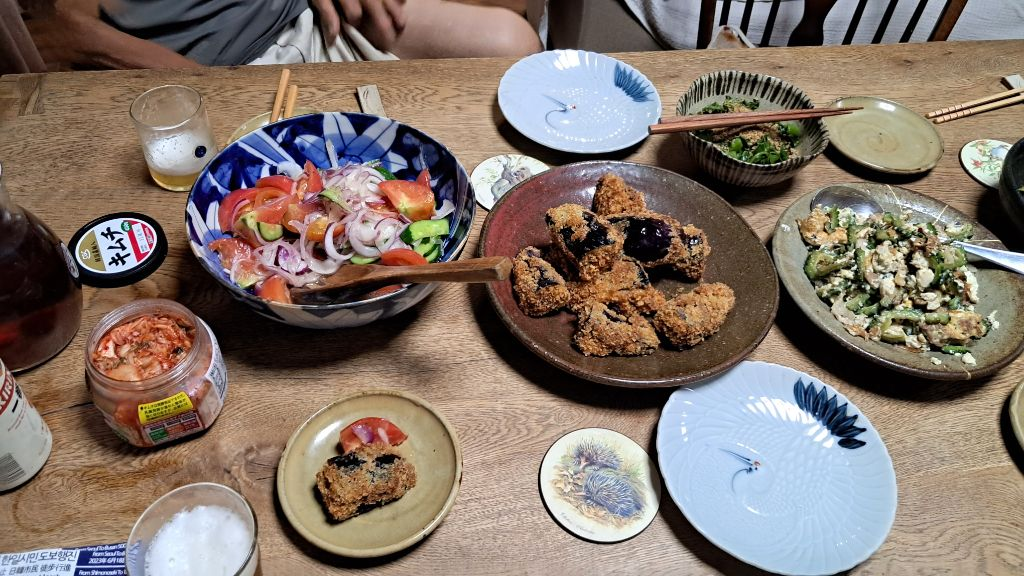
23. Sakamoto-san’s bountiful dinner is all made with his homegrown organic produce.

24. Indeed, the name of Sakamoto Farm is written in large print on his business card.

25. His wife, Keiko-san, is very good at cooking, and what is also surprising is the number of his grandchildren. From his four children, they are a whopping 14. i envy you. A commemorative selfie with photos of 11 of them.

26. Amisang, a forest planting expert who is fluent in Korean, also came in to join us. Tomorrow we will walk together for a while.
(by B.K.)
Categories: Korean-Japanese citizen walking march
 New Silk Road for Life and No-Nukes
Leave a comment