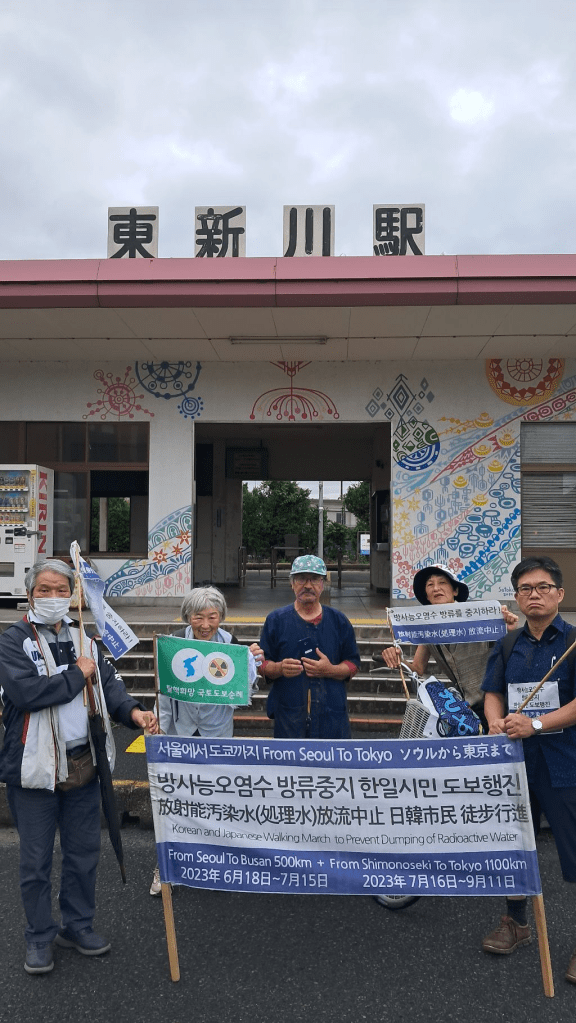
1. At 7:00 in the morning at Higashi-Shinkawa station, 6 people including Mr. Ando got together.

2.
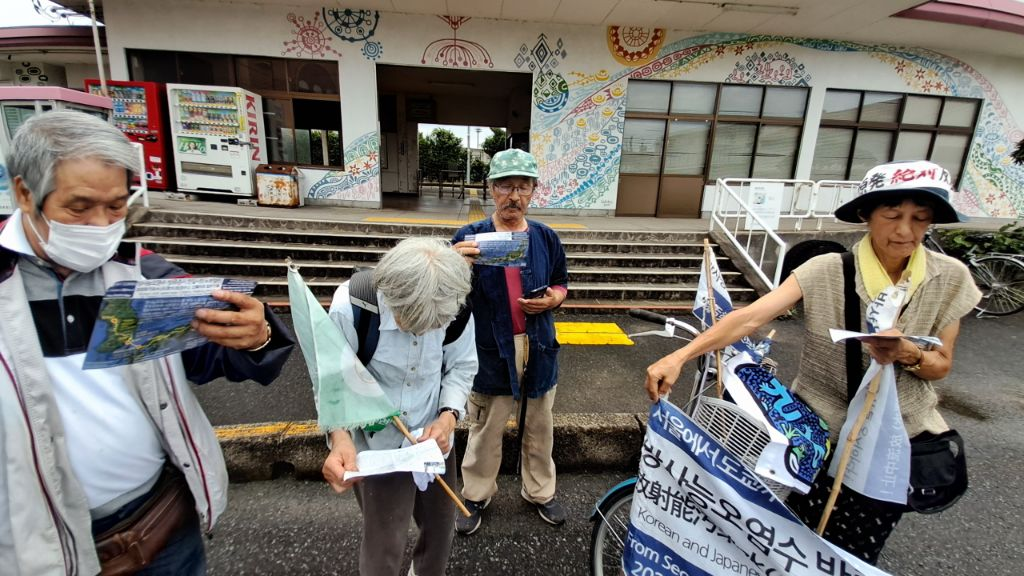
3. Read the March Declaration before departure.

4. The main theme of today’s course on the 19th is to visit the Chosei coal mine ruins. I decided to visit this place on purpose.
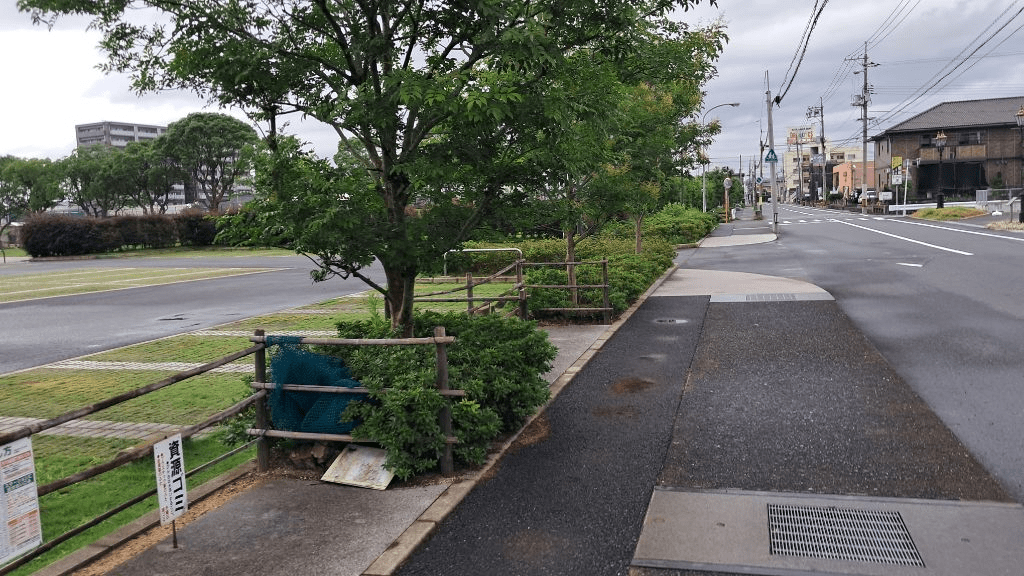
3. Together with Jung Young-hoon and Shizue Takasugi, the three of us walk down the street. A properly managed city.

4. After walking about 5km, Jangsaeng coal mine submerged are appeared.

5. Regarding submerged seabed coal mines. A coal mine at the bottom of the sea has collapsed and many people have died. Especially during the colonial period of the Japanese Empire, there were many victims of forced conscription of Koreans. We still haven’t been able to find the remains.
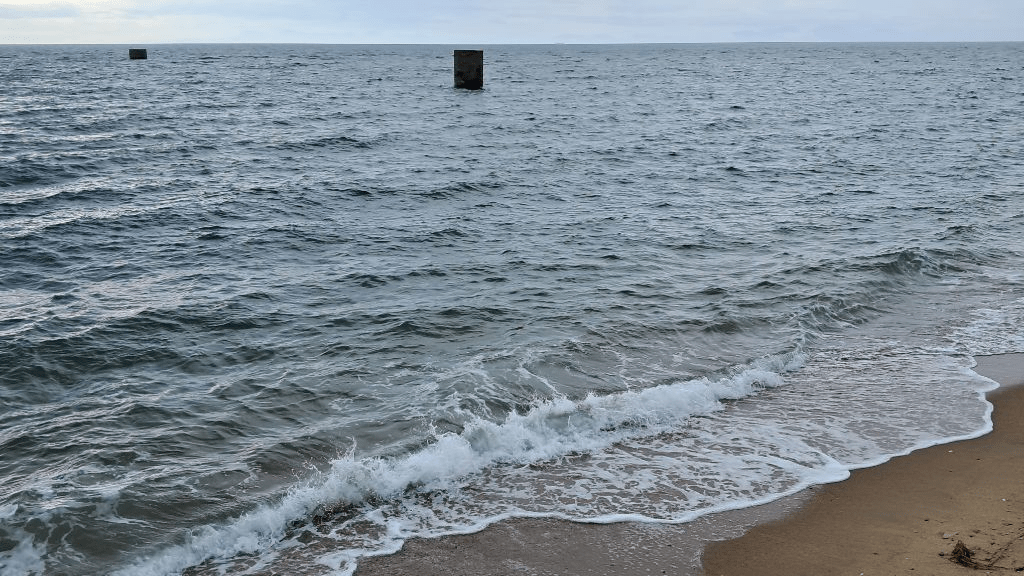
6. The pillars (piya, exhaust/drain pipes) of that time are visible above the sea surface.

7. A hypothetical cross section of submersion. After visiting here in June 2017, I wrote a related article for the Kyunghyang newspaper.
https://m.khan.co.kr/opinion/column/article/201709082053025/amp
introducing a sentence about it.
Chosei coal mine accident. From the recently screened movie “Gunkanjima”, this is the place where an even more urgent accident occurred in a deadlock in a tunnel. In February 1942, 136 Koreans and 47 Japanese were tragically submerged at this coal mine located in the sea in front of Ube City, Yamaguchi Prefecture. According to an article (written by Park In-sik) quoting “Records of the Forced Recruitment of Koreans”, “Jangsaeng Coal Mine has a seabed coal seam along the coastline, and there was no choice but to mine from the shallow strata. The workers were terrified that they might collapse because the sea was just overhead when they got off.When they stopped working and were eating their lunch, they heard the engine sound of a fishing boat passing overhead and the propeller was spewing water. A serious problem is that mining coal in this tunnel near the bottom of the sea has already suffered three accidents in 1911, 1915, and 1921 that submerged dozens of people. I feel extreme saddness. I can’t control my emotions. This is intentional lethality. The sins of the Japanese government at that time were too heinous. Who will say take responsibility? If we don’t reflect on this and take responsibility for it, it will happen again. This is exactly the point that sticks out. Even after the Fukushima nuclear accident, the Abe administration is promoting nuclear power again. And even after experiencing Three Mile, Chernobyl, and Fukushima, humanity is pushing nuclear power again. Yamaguchi and Global Village have heavy challenges.
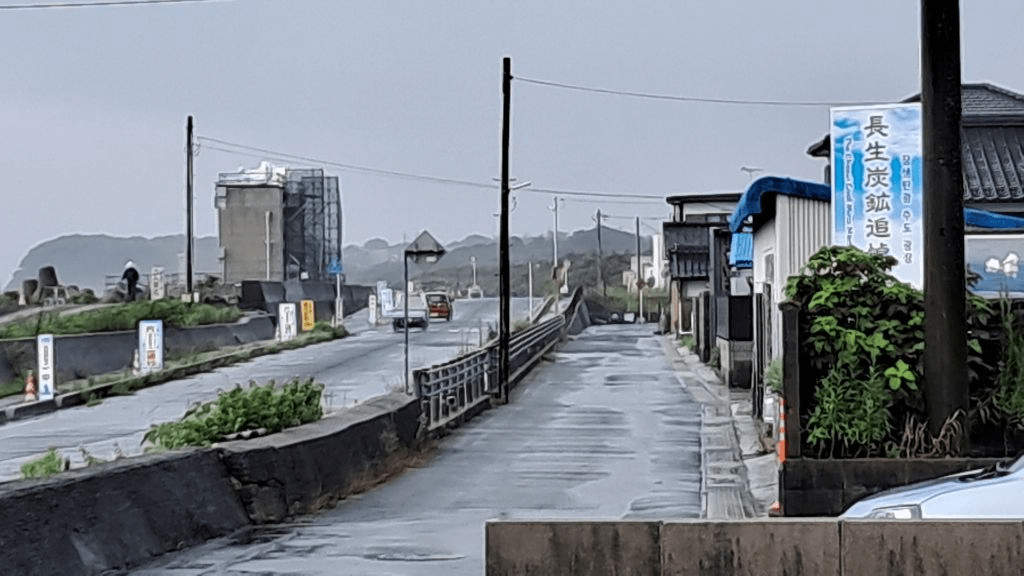
8. Go to the nearby memorial square built by civilians,
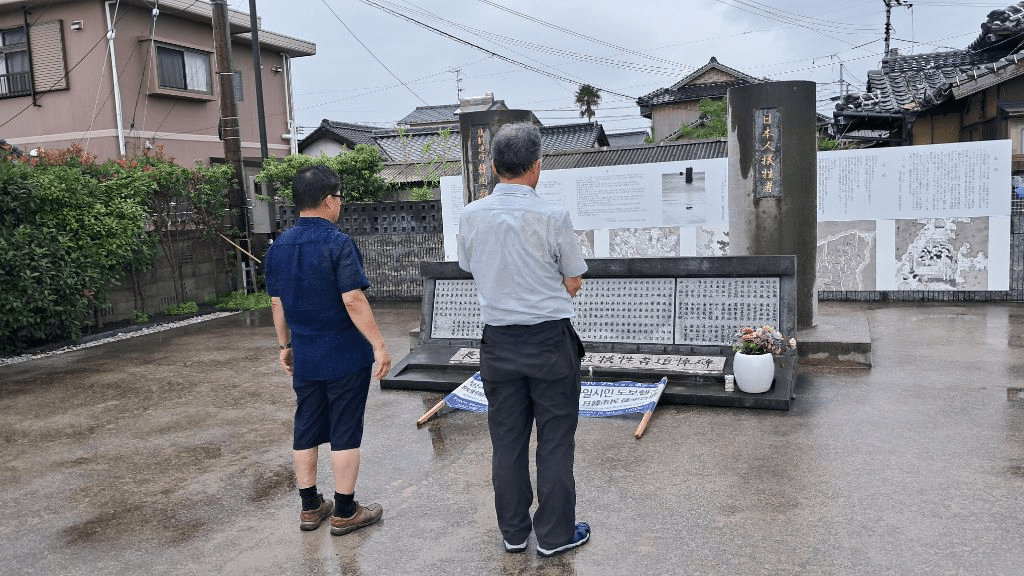
9. Visit and pray.
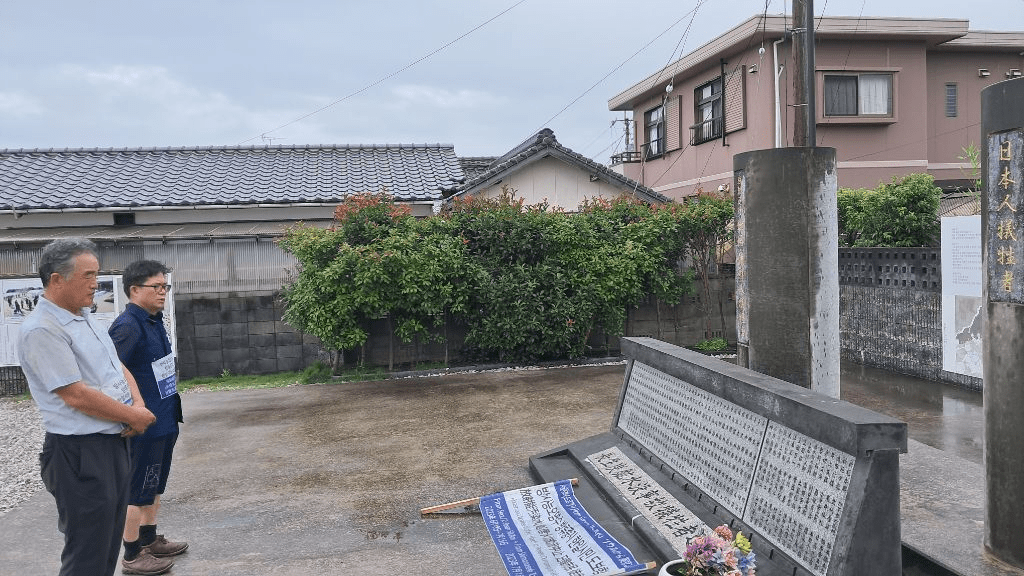
10. In fact, at this very moment, the Japanese government is repeating its mistakes. Isn’t the Japanese government lacking the universal values that humankind should have?
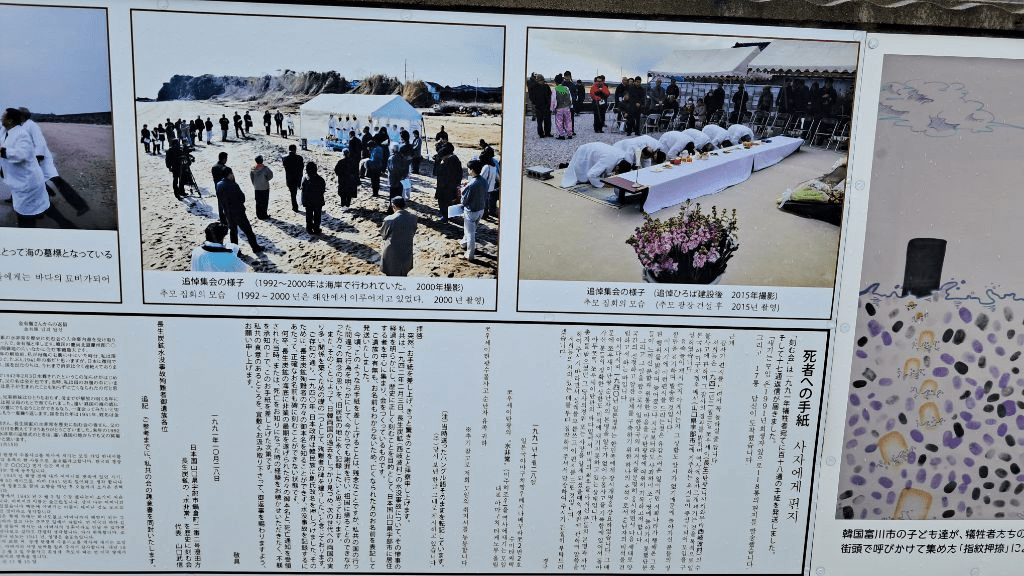
11. Japanese civilian volunteers have come together to persistently bring this matter to light and hold an annual memorial service.
12. It was raining heavily, and we took shelter from the rain under the roof. The second person on the left is Ms. Kaoru Takada, who kindly welcomed us and gave us an explanation.
11. At around 11:00 a.m., members of the civil society gathered at the memorial square to set up seats to cheer on the marchers. At this time, a reporter from Ube Nippo also came to interview us.

12. At the event, Ms. Yoko Inoue, the representative of the group, said, “We have yet to unearth the remains. This is something that must be done.”
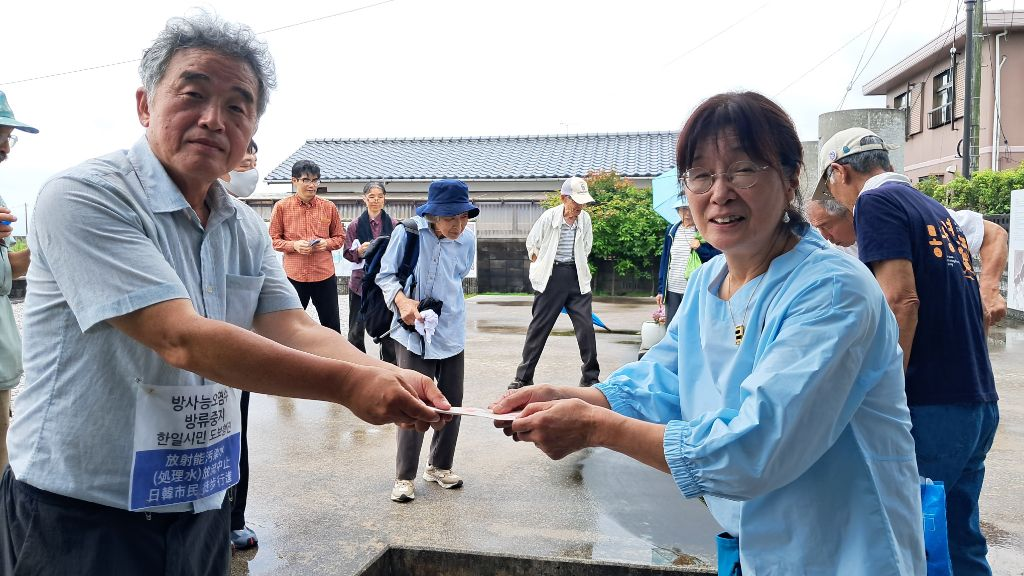
13. Receive a support money from Inoue representative.
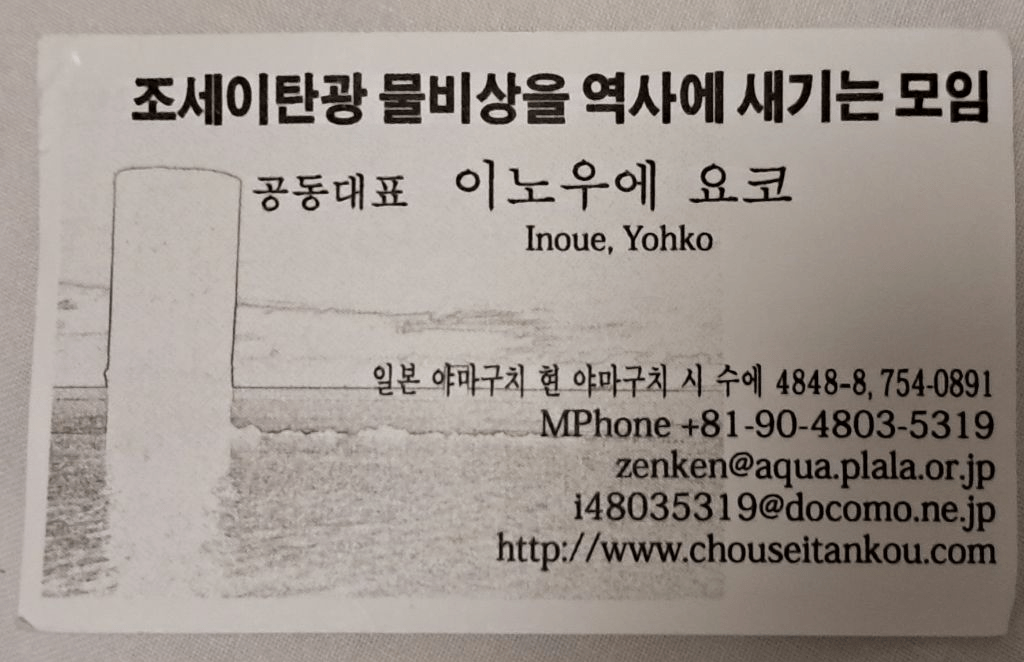
14. He also introduces to me his business card printed in Hangul, Korean language.
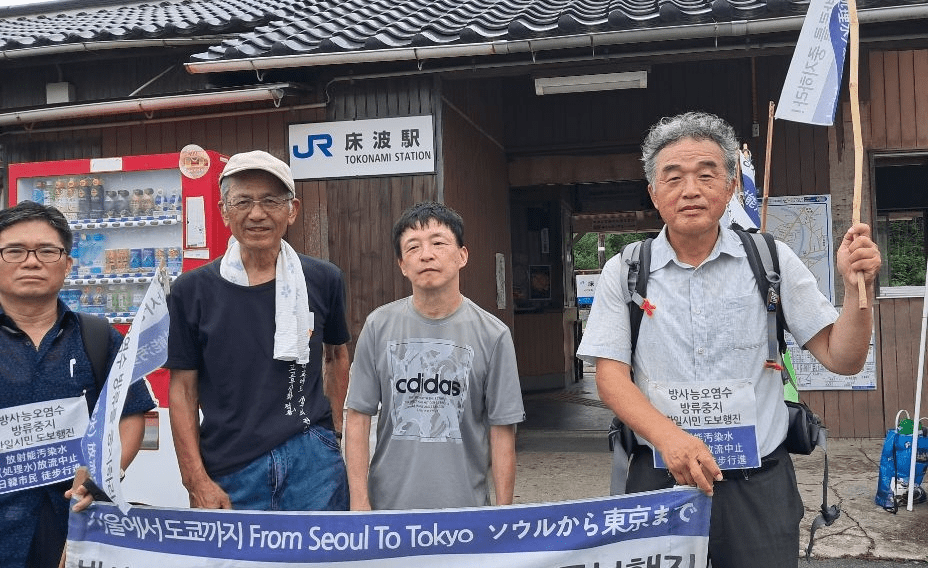
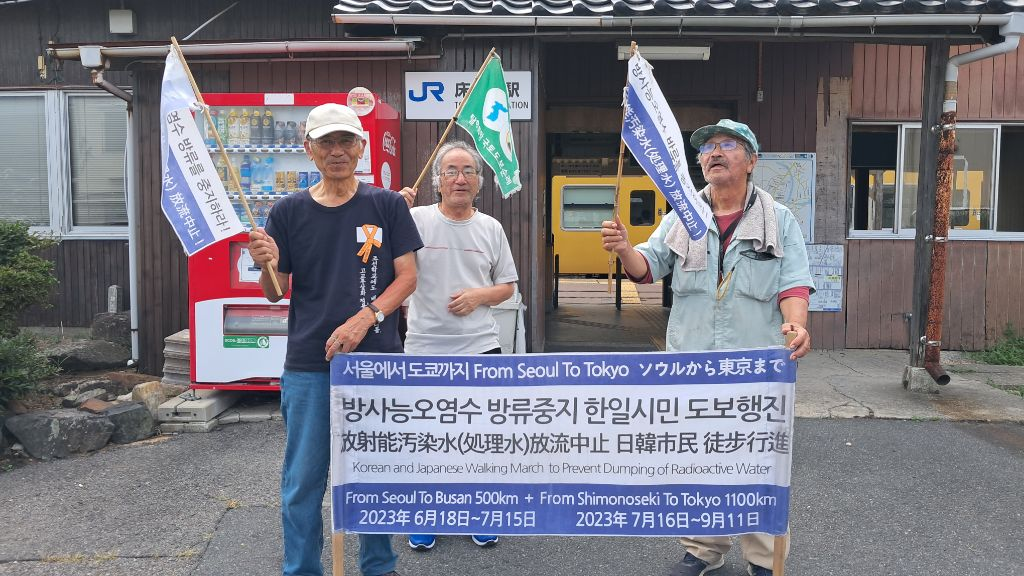
15. End the morning with a visit to Tokonami Station nearby.

16. During the break, I took a rest at the office of Mr. Miyamoto, former member of the Yamaguchi Prefectural Assembly, who is close to Mr. Kuwano.
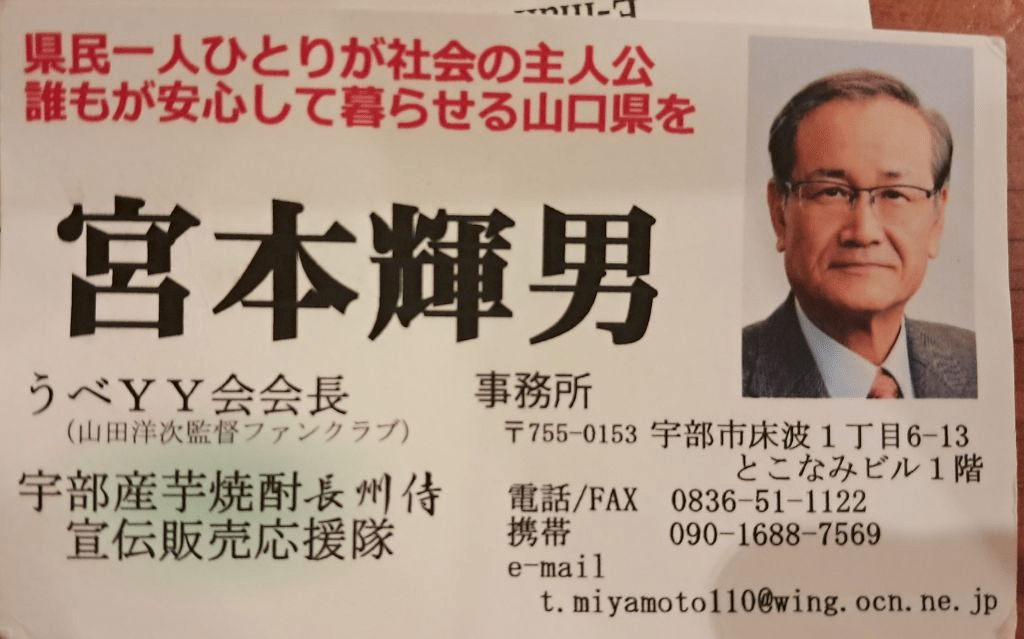
17. I look forward to his success.
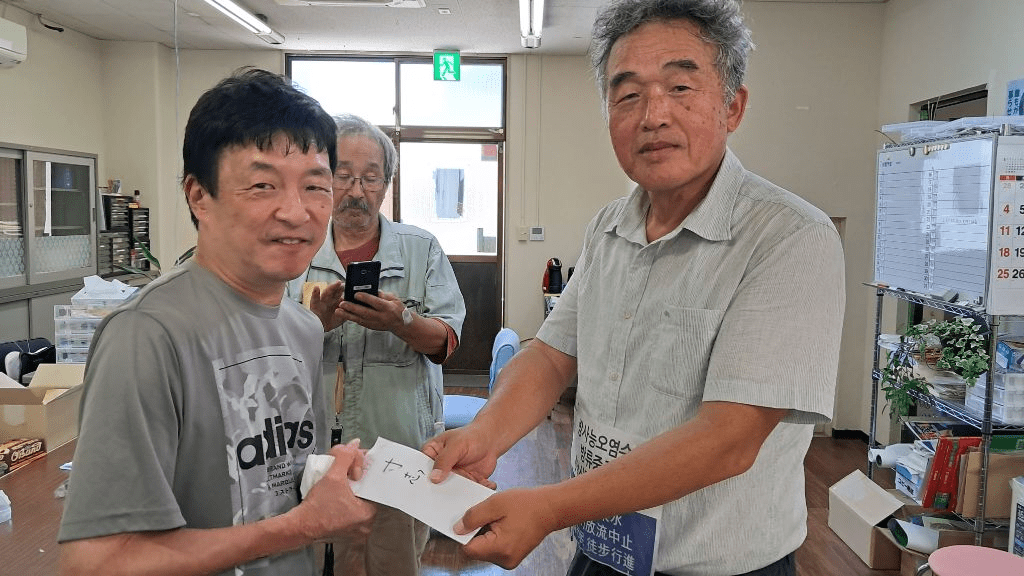
18. Mr. Masaaki Okamoto gave me a envelope of money in the name of the organization. A lot of money.
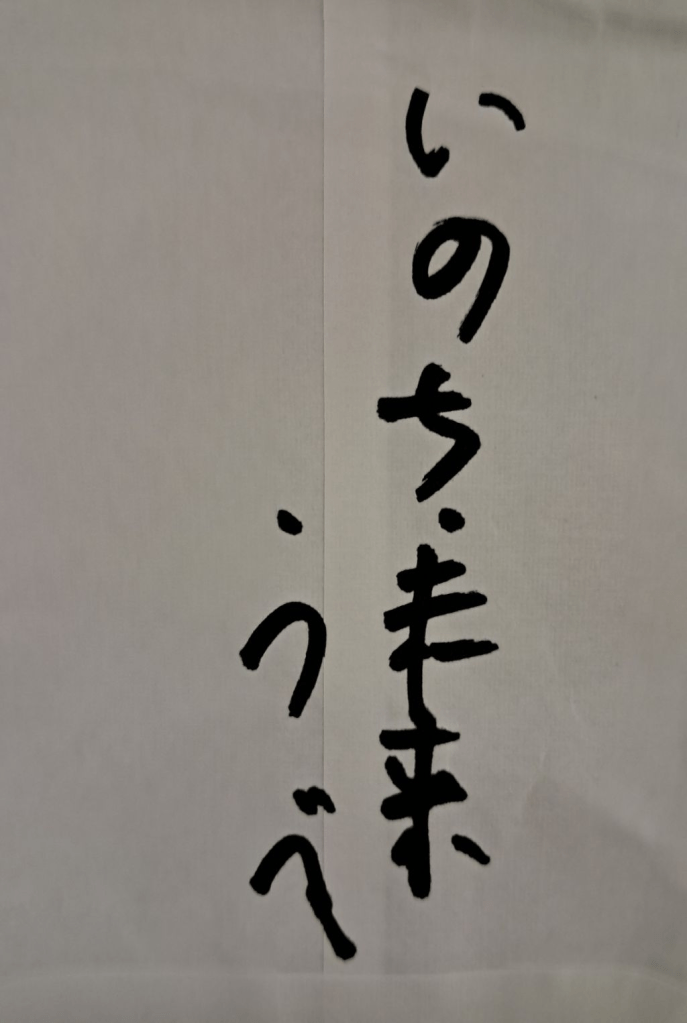
19. The name of the group is “Inochi Mirai Ube” it means “Life Future Ube”.
20. The time has come for Comrade Jung Young-hoon to go home. He returns to Shimonoseki and takes a boat bound for Busan. Commemorative photo at Tokonami Station with Japanese comrades seeing him off.

21. Comrade Jung Young Hoon standing on the platform. Although his time was short, he says he has a lot to write about. When he returns to Korea, he will continue to fight hard. By the time the marchers arrive in Tokyo, he intends to return to Japan.

22. I asked Mr. Ando for a message during the break.
23.
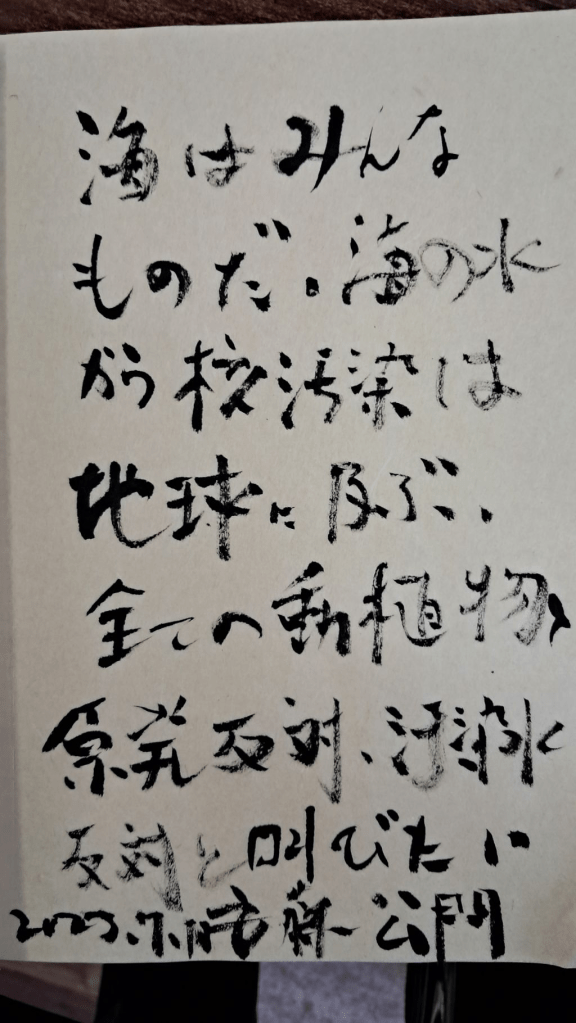
24. “The sea belongs to all living things. Nuclear contamination starting with sea water would eventually affect the entire planet earth. All animals and plants are shouting out loud that they are against nuclear power plants and against nuclear contaminated water.
2023. 7.18. Ando Kimito”
25.
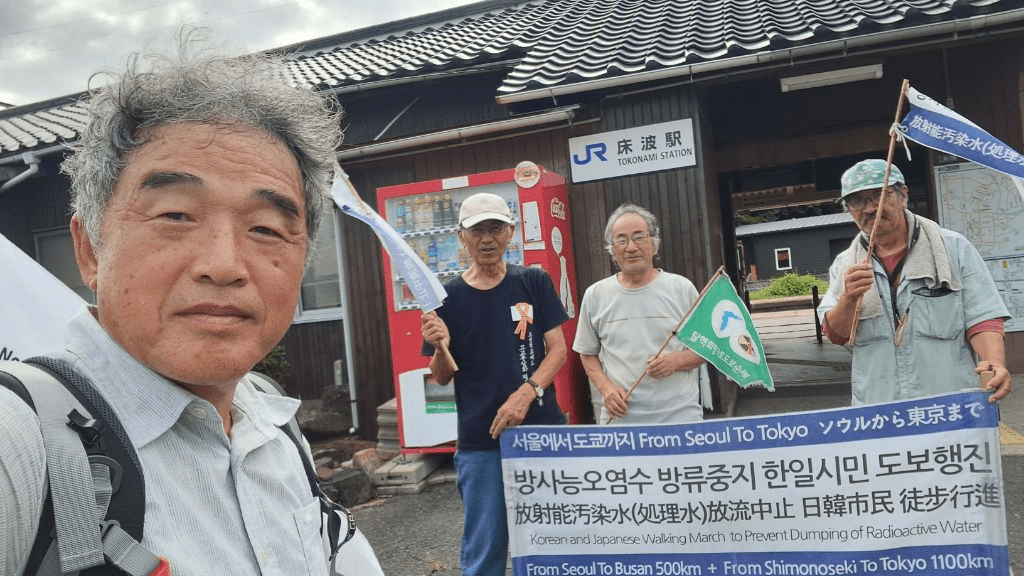
26. In the afternoon, three people see me off and I walk alone. The distance is 8.5km. Mr. Yasuhide Amagasaki, who is in the middle, gives me a suppot money.

27. Walking alone for the first time in a while.
The blue line on the narrow road in the photo is for pedestrians. Originally, it was two lanes wide and there was no blue zone. However, later, the central dividing line of the lanes was removed and a pedestrian space was provided as much as the width. A space for pedestrians. Urban design that puts people first deserves special attention. Walking is a human right.

28. When I was walking alone, I met junior high school students. As they passed by, they spotted Hangul as a catchphrase on my t-shirt and seemed to be piqued by curiosity, perhaps because they were schoolgirls. They were surprised by my words about walking from Seoul to Tokyo. When I pointed the QR code of the homepage in the pamphlet, they opened it immediately. When I put up the banner, they captured the scene with their cameras. I feltl good about this scene. and took a selfie with them.
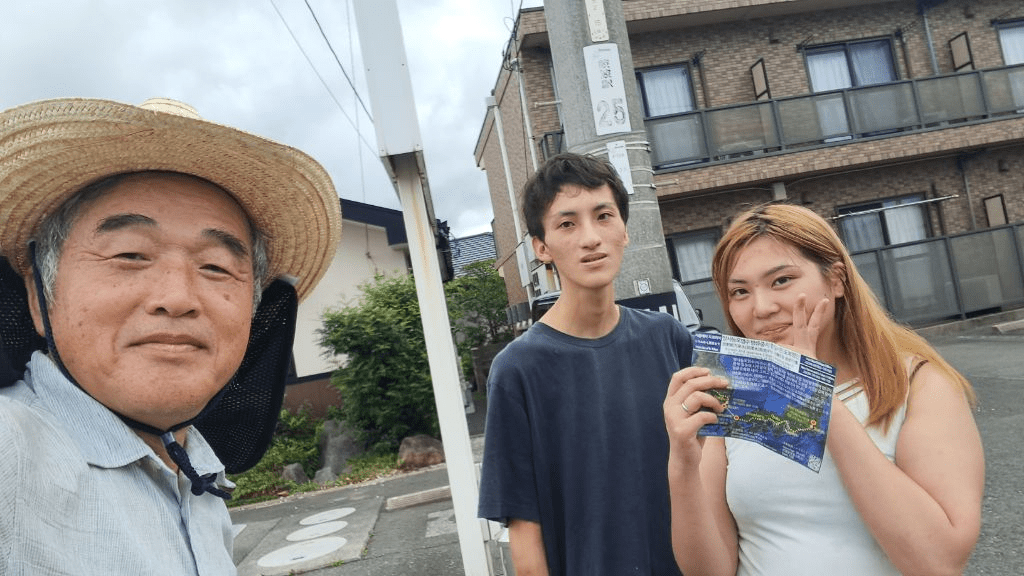
29. This young couple, whom I met soon after I started walking, also stopped in curiosity. seems to be surprised. a commemorative photo.
Walking alone may be easier to draw curious people making more approachable. It seems to have a different effect than multiple marches.
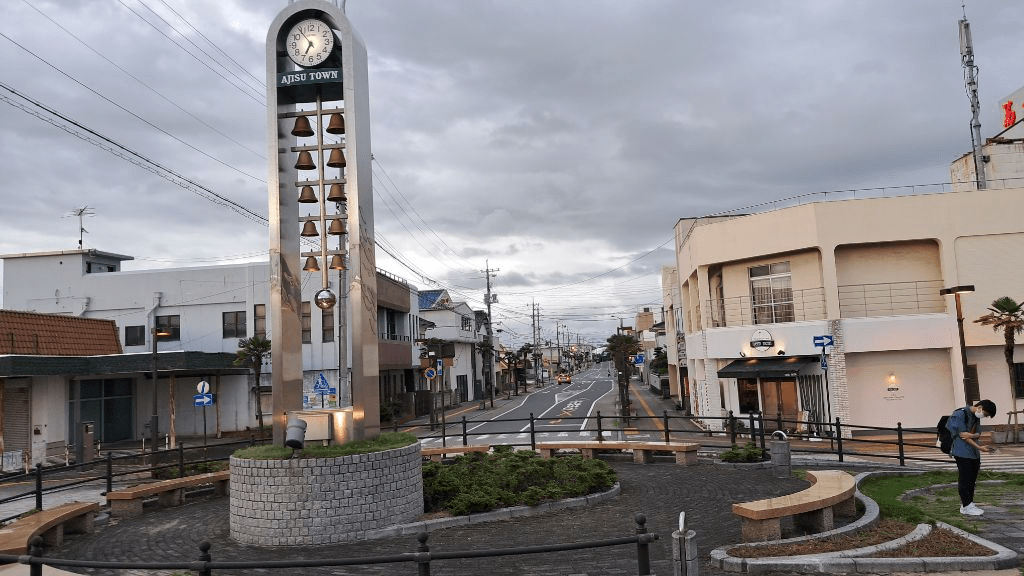
30. Finally arrived at my destination. The city area in front of the station is neat.
31. Ajisu Station.
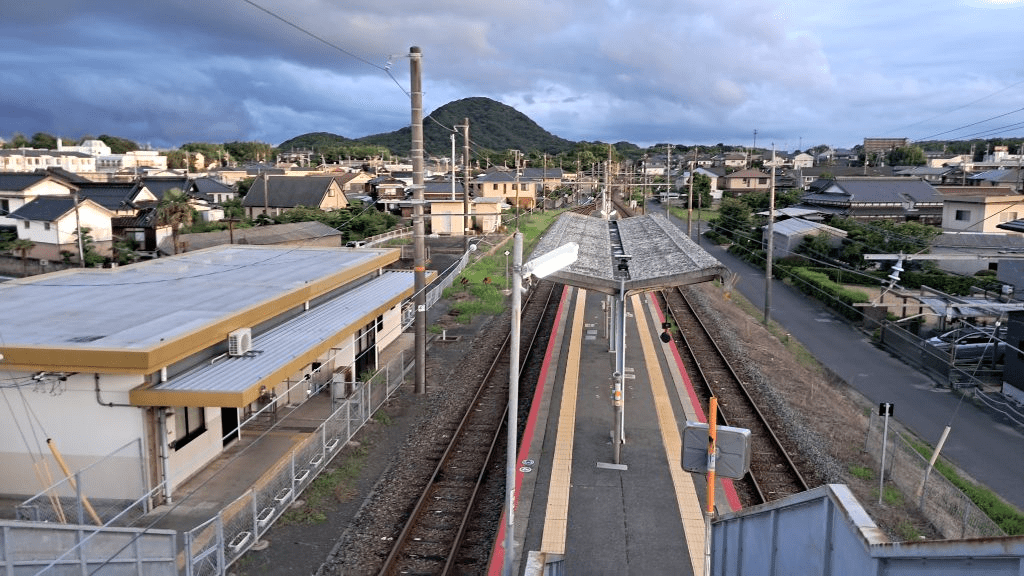
32. The station building and city area seen from the top of the stairs. Take the train to the lodgings in Shin-Yamaguchi for about 20 minutes, and will come back here tomorrow morning to resume the walking march.
Categories: Korean-Japanese citizen walking march
 New Silk Road for Life and No-Nukes
Leave a comment