
1. Four people this morning.
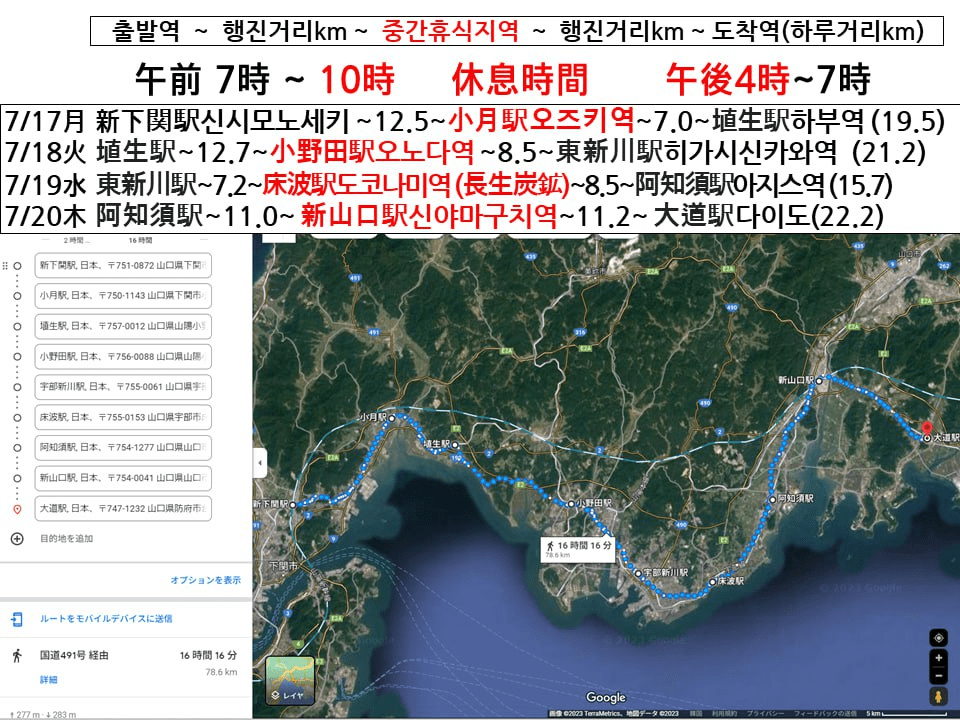
2. 12.5km long distance in the morning.

3.

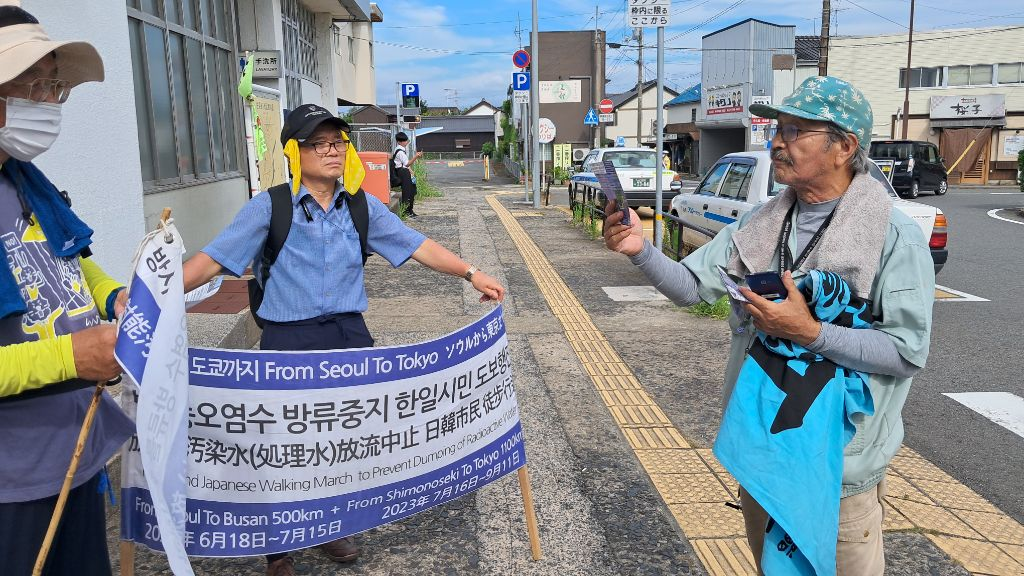
4. we met a member of the Yamaguchi Prefectural Assembly.
5. He is rooting for our march. Miyagi Prefecture’s recent public declaration of its opposition to the dumping of contaminated water into the ocean is a significant clue. If the will of opposition increases at the municipality level, the decision may be overturned. Now, the opinion of each member of the Diet of all prefectures is important. It is also the time when residents can change their minds through individual contact (with legislators).
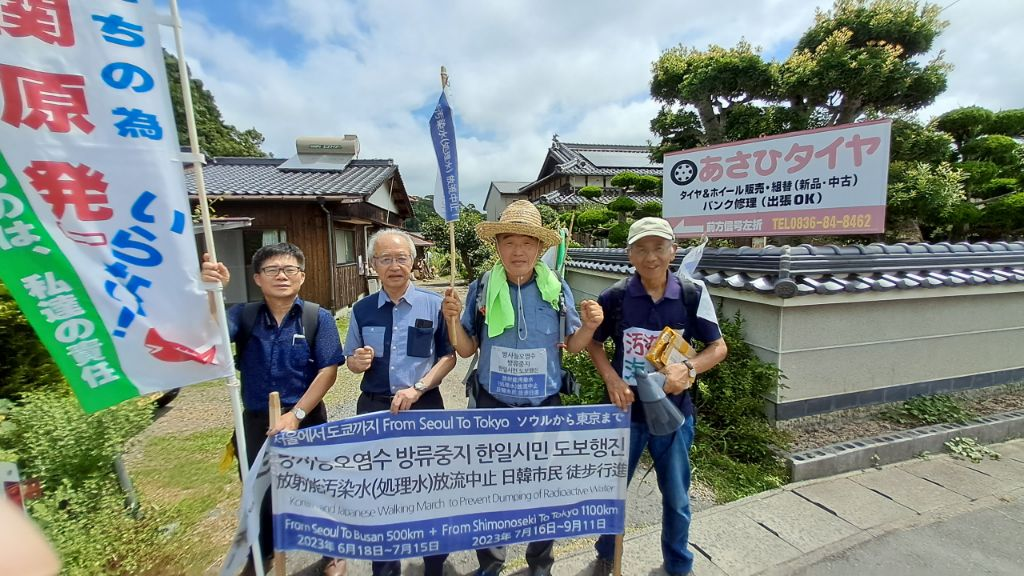
6. Take a photo with him.

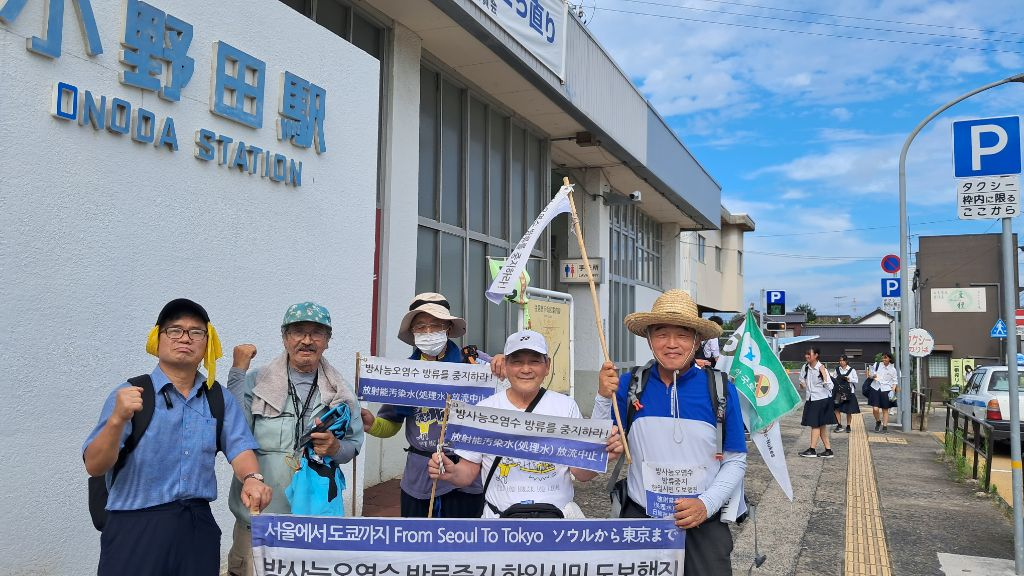
7. Overcome the heat and humidity and arrive at Onoda Station.

8. Han Ki-duk, a third-generation resident of Japan, is from Nagoya and settled in Tsushima a long time ago. Having lived in Korea for two years, he has not forgotten the Korean language and is fluent in it. At present, Tsushima’s pending issue is the direction of public opinion regarding the move to establish a nuclear disposal site. After this walking march, he decided to visit Tsushima to hear the pending issues.
Asked him, who looks concerned, for a message to convey to the Japanese government.

9.
“Although Japan has claimed that it has been the only victim of radiation exposure so far,
releasing it into the ocean would mean becoming a offender that inflicts radiation exposure on others.
2023. 7.18
Ki-deok Han 3rd-generation Daema Islander in Japan”
10. In the Afternoon, Comrades in the Long-Term Nuclear Power Generation
Kimito Ando and his colleague Kurata Tatsumasa Ishii Isamu
5 people departed.

11. After telling the story of this walking march to the high school student who took the photo of our departure, we took a selfie together. I hope it conveyed something to them who carefully looked at the pamphlet.
12.

13. Good response from the car. When I wave at a slow-moving car, those among the drivers who agree with the content of the banner nod or wave their hands.
Comrade Jeong Young-hoon, who was walking with the banner, is impressed by this scene.
Traditionally, marching on foot is a powerful method in the field of civic movements. The march of people walking has the power to make the viewer think. Gandhi is famous for mobilizing crowds through marches. There is also a case in South Korea. That is the 2015 and 2016 march to dismantle the aging Kori-1 nuclear power plant, which was led by professor Kim Hae-chang in Busan. Every weekend, as the procession grew to more than 100 people marching through the streets of Busan, politicians from the ruling and opposition parties scrambled to make pledges to scrap it, and in the end they succeeded.
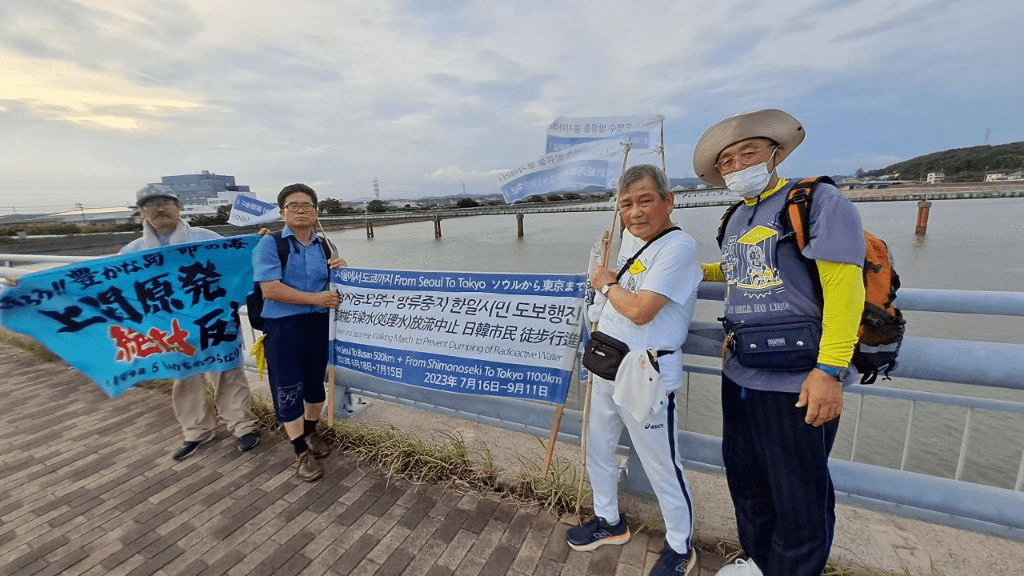
14. Pass by the big Koto River and take a commemorative photo.

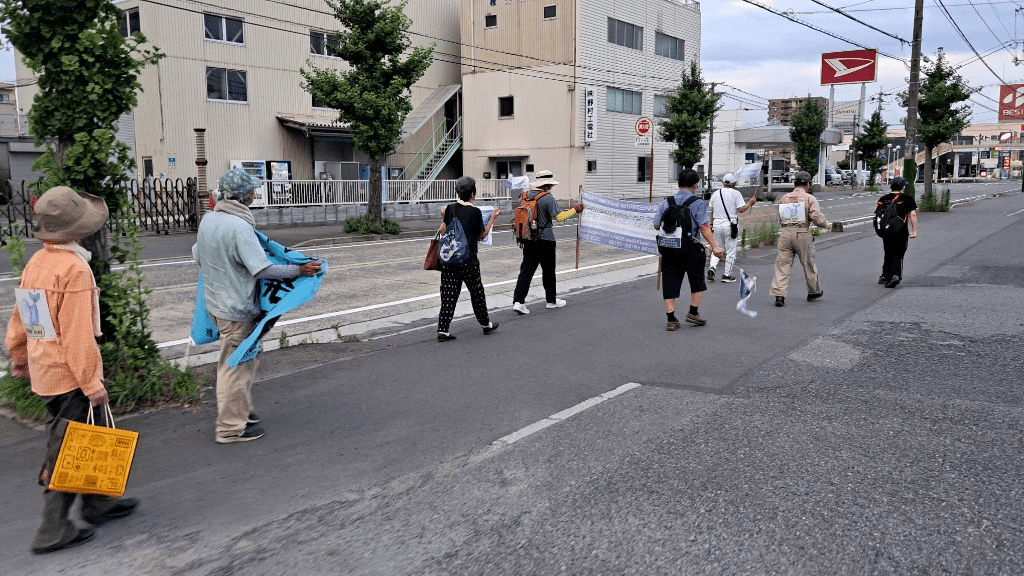
15. In the meantime, just over 5km from the destination, those citizens are waiting to join our march.
At this time, the people who waited and walked with
Okamoto Masaaki
Ohara Yoko
Hamano Miyoko
Hamano Masaru
Takasugi Shizue
16.
https://play-tv.kakao.com/embed/player/cliplink/rvunpgm5m3zqqc5wtmwmm7zyc@my?service=player_share
17. Mr. Masaaki Okamoto, who is disabled and leads the way.
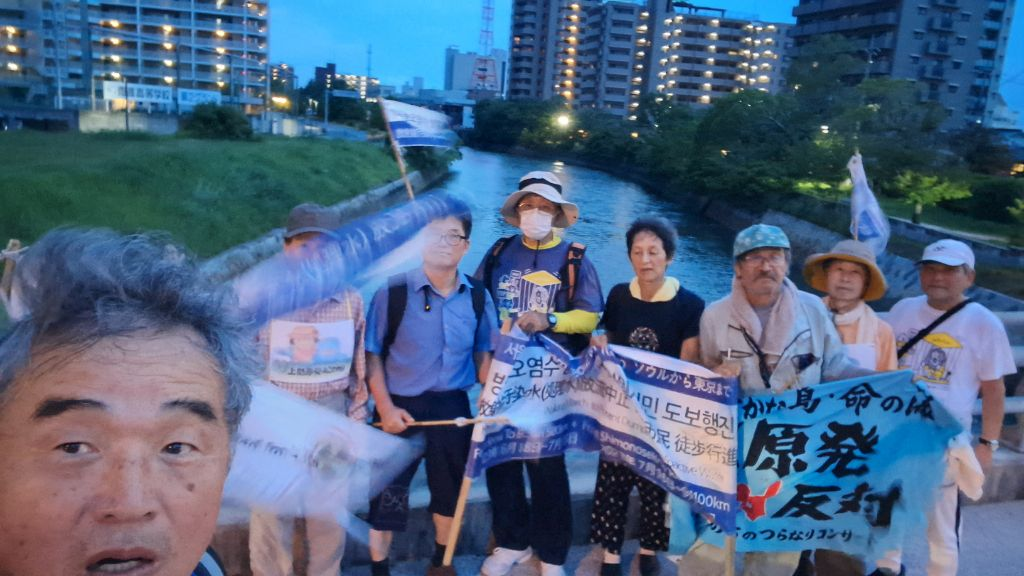
18. Arriving at the Majime River, take a commemorative selfie.

19. Late at night, we arrived at my destination, Higashi-Shinkawa Station.

20. Originally, the road that Google showed was 8.5km, but I took a way to a big road instead, so I walked a little over 13km.
Comrade Jung Young-hoon treats me to a hearty dinner.
Categories: Korean-Japanese citizen walking march
 New Silk Road for Life and No-Nukes
Leave a comment